

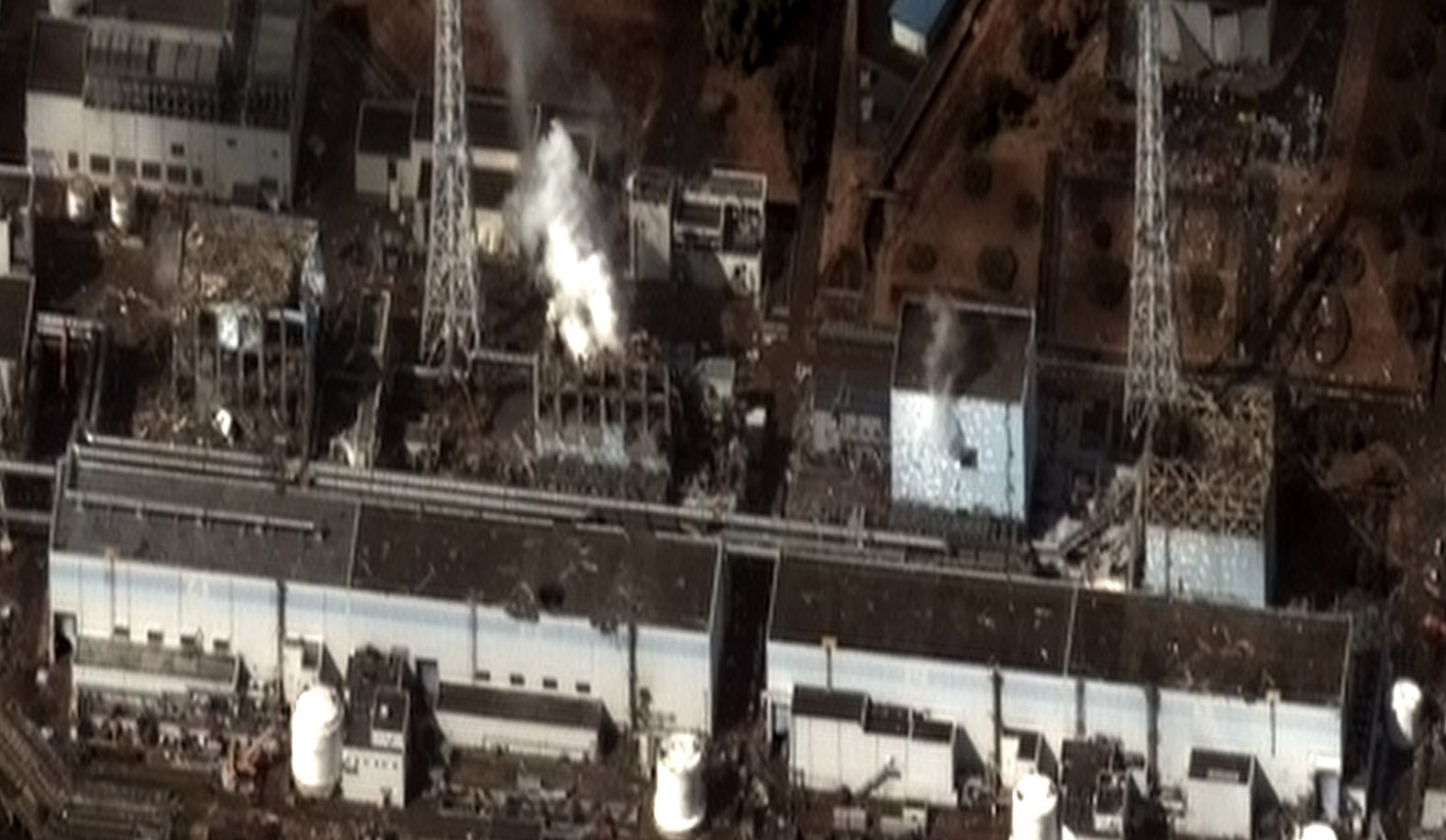
On March 11, 2011, not only the earth but also an entire system of ideas shook Japan. The earthquake, tsunami, and nuclear disaster in Fukushima created a rupture whose consequences extended beyond the improbable timeline of the event. How can one write about something that, precisely, resists any attempt at representation? How can one give literary form to a disaster whose consequences extend far beyond its immediate manifestation? These questions permeate the book. «Fukushima, a tale of disaster» (Fukushima, récit d'un désastre ) , published by Gallimard by Michaël Ferrier in 2012.
Fifteen years after the events, France Culture has released a five-episode radio adaptation, now available as a podcast. This offers an opportunity to revisit this remarkable work, one of the most important books in my library, whose reading fundamentally changed my perception of the modern world.
The uniqueness of Ferrier's vision lies above all in his refusal to reduce the catastrophe to its spectacular dimensions. Images of the tsunami, broadcast to the limit, seemed to exhaust the very possibility of narrative. And yet, as we know, the accumulation of visual documents in no way guarantees the comprehensibility of what they supposedly show. Between the visibility of an event and the understanding of its experience, there remains an unbridgeable chasm. It is precisely in this gap, in my view, that the necessity of literature lies. Not because it has privileged access to a truth ignored by other forms of discourse, but because it is capable of returning to the event its temporal, sensory, and, above all, human complexity. While information is conveyed through sequences, summaries, and restrictions , Michael Ferrier's highly precise writing style focuses on what eludes the conclusion of an event.
The book's structure reflects this ambitious vision. Three sections—«The Fan Handle,» «Stories Rescued from the Water,» and «Half-Life: A User's Manual»—construct a narrative that transcends simple chronology. The first section recreates the immediate experience of an earthquake, the sudden collapse of the perceptual beliefs that underpin our relationship with the world. The second section describes the author's journey to the devastated regions of Tōhoku, where encounters with survivors replace the abstraction of statistics with the uniqueness of individual lives. The final section is devoted to reflections on the long-term transformations of life under the threat of nuclear war. From the physical experience of the earthquake to the intellectual processing of its aftermath, Ferrier thus creates a genuine philosophy of disaster, the fundamental task of which is to understand how a catastrophe can continue to unfold after it has occurred. This temporal sequence constitutes one of the most remarkable dimensions of the work. Typically, a catastrophic event is defined by its suddenness: a «before,» an «after,» a clearly defined discontinuity. But Fukushima introduces a more radical shift. The nuclear disaster has no clear end. It extends far beyond, contaminating territories, bodies, travel arrangements, and transforming everyday actions. The time of disaster no longer coincides with the time of its occurrence. In this respect, «Half-Life: A User's Guide» is undoubtedly the most deeply political part of the book. Borrowing the (brilliant) concept of half-life from nuclear physics, Ferrier explores a new historical condition in which the consequences of human activity extend beyond individual existence, and sometimes even beyond several generations… But the critical strength of this text also lies in the way it questions the discourses used for management A catastrophe. The initial violence is followed by another form of violence, less obvious, but which can be described as the violence of procedures, normative thresholds, terrifying assessments, and intolerable mechanisms of standardization. Technocratic language claims control over events by making them measurable. It transforms uncertainty into parameters, populated areas into perimeters, and ruined lives into administrative categories. Ferrier thus masterfully demonstrates the blindness that this rationalization can entail when it fails to take into account the experience and uniqueness of individuals. This is clearly not a rejection of scientific knowledge, which should serve humanity, not profit, but rather a questioning of the political use of expert knowledge, which, when self-sufficient, can become a tool for suppressing dissent.
One of Ferrier's greatest literary achievements—and not the only one—lies precisely in maintaining this critical rigor alongside an almost endless attention to detail. Destroyed landscapes are never reduced to simplified aesthetic compositions designed to evoke horror. An unrecognizable road, a stale smell, a displaced object, a hushed conversation—sometimes these are enough to recreate what no generic image can contain. Writing does not seek to rival the power of images; it questions their limits. It restores a sense of presence to those whom the spectacle of catastrophe paradoxically risks rendering invisible. This attention to traces, gestures, and voices constitutes an ethics of representation. Witnessing cannot consist of appropriating another person's experience, much less transforming their suffering into literary material. On the contrary, it requires finding that extremely complex distance where the precision of writing allows a unique existence to retain its irreducibility. This requirement also distinguishes Ferrier from an entire tradition of travel writing, which uses the foreign as a backdrop for essentially personal experience. The writer, deeply familiar with Japan, where he lived for many years, never turns the country into something alien. His knowledge of the language, culture, and realities of Japan allows him to avoid the simplifications that too often arise when describing distant catastrophes. He writes from a position of intimacy that eliminates neither the distance necessary for reflection nor the obligation to acknowledge what eludes his own perception. This position imbues the book with exceptional authority, which never stems from a claim to omniscience, but from a profound awareness of the limitations of evidence.
Therefore, it becomes clear why the book « Fukushima: history disasters » goes far beyond a chronicle of contemporary Japan. The book questions our collective attitudes toward technological progress, political responsibility, the vulnerability of industrial societies, and, most importantly, the forms of denial through which civilization seeks to maintain the illusion of control. Catastrophe here emerges as a manifestation of the contradictions of modernity. Yet, Ferrier refrains from turning his narrative into an ideological demonstration. Thought emerges from sensory experience, not the other way around. Argumentation never replaces the people we encounter. It is in this constant interplay between perception, testimony, and reflection that a writing style of rare depth emerges.
The adaptation presented by France Culture, directed by Sophie-Aude Picon, featuring Bernard Gabet and original music by Anthony Laguerre, expands this exploration of the conditions of testimony in a new way. The shift from text to voice is essential for a work whose central theme remains the beauty of listening. Speech, with its intonations, pauses, and silences, can open a new path to the text. The radio drama, respecting the uniqueness of the work, does not simply transport it; it reveals new nuances of meaning. These five episodes, each approximately thirty minutes long, thus offer a valuable opportunity to rediscover Ferrier's work and, perhaps, to appreciate its magnificent scope even more fully.
I return to this book often. Some works accompany a particular period of our lives; others continue to shape our thinking long after we've read them. «Fukushima, history disasters , undoubtedly belongs to the second category. I consider it a masterpiece without hesitation, because it achieves what we have a right to expect from literature when it confronts the most extreme experiences: in other words, it simplifies nothing, embellishes nothing, and never denies the complexity of reality. Its beauty is not based on the aestheticization of suffering, but rather on its exceptional ability to combine rigorous thought, precision of observation, and the guiding force of emotion.
The importance of this book has not diminished in the least over the years; on the contrary, it has become even more obvious. After all, Fukushima reminds us that literature possesses a temporality that is uniquely its own. Indeed, fifteen years after the disaster, this book remains one of the most important works of modern literature, one that I strongly recommend you discover or rediscover at any cost.