

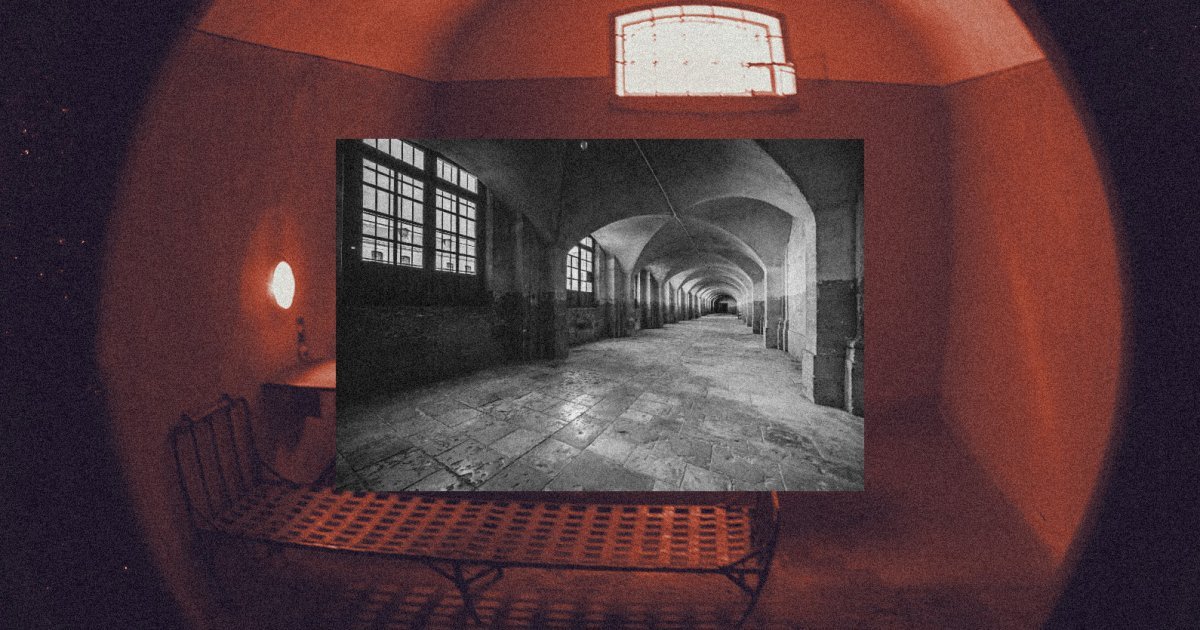
Peter Kropotkin. In Russian and French Prisons. Egalité, 2026

In the 1970s, a prison abolitionist movement emerged, formed by activists and criminologists. They advocated for the abolition of prisons as an institution, noting that the state-monopolized penitentiary system does more harm than good to society. One of the most prominent abolitionists, long before the movement itself, was the philosopher, scholar, and anarchist Peter Kropotkin, who wrote a series of articles that comprised the book «In Russian and French Prisons.» Today, with increased attention being paid to Russian prisons, Egalité Publishing has decided to republish this work, featuring an engaging essay by Jeff Shantz, editor-in-chief of the journal Radical Criminology, professor at Kwantlen Polytechnic University, and anarcho-syndicalist theorist.
The book consists of ten chapters in which Kropotkin describes in detail the state of Russian and French prisons. Finally, he offers an anarchist and criminological critique of both the penitentiary system and the state that devised and monopolized it. The author became acquainted with the Russian prison system as a young man, when he found himself in Siberia as secretary of the Transbaikal Committee for Prison Reform. In 1861, Alexander II abolished serfdom, and for a time the harsh tsarist regime relaxed, a breath of freedom was introduced, and a decision was made to conduct a large-scale prison review. Kropotkin, who at the time still believed that the system could be changed from within, energetically set about the task. The committee concluded that exile to Siberia in its current form «was a disgrace to humanity» and that reform was needed not only of the criminal code and judicial procedure, but of the entire prison system. But the emperor soon became alarmed by his own initiatives, and the Polish uprising became a convenient pretext for reactionaries to call for a swift return to the good old tyranny. The reforms Kropotkin called for were never implemented.
The tsarist regime wanted to present the state of affairs in Russian prisons in a positive light and, to this end, financed the trip of the English priest Lansdell, who wrote a book in which reality gave way to false flattery. Kropotkin felt compelled to respond. By this point, he had already acquired personal prison experience (two years in the Peter and Paul Fortress and three years in the prisons of Lyon and Clairvaux) and had added a colossal amount of literature to it—prisoner testimonies, official documents and statistics, and scholarly criminological works. «In Russian and French Prisons» was published in 1887, becoming a nightmare not only for the Russian secret police, who bought and destroyed every volume, but also for the British authorities, who only permitted its reprint in 1971. This is because this book is not simply a comprehensive analysis of Russian and French prisons but also a direct invective against capital and state power.
Descriptions of Russian prisons, transports, jails, and exiles to Siberia and Sakhalin read like pure horror. One of the main problems identified by Kropotkin was prison overcrowding: «By January 1, 1884, there were 73,796 prisoners in Russia, while there was space (in European Russia) for only 54,253. Some prisons, built for 200–250 people, now cram 700–800 souls into them.» Another widespread problem was the tyranny and cruelty of prison authorities, who beat prisoners and appropriated their rations. For example, General Trepov ordered the Populist revolutionary Alexei Bogolyubov bound and beaten for refusing to remove his hat in front of him; he and other prisoners who protested this violence were then sent to excrement-covered punishment cells for five days.
Of course, Kropotkin devotes special attention to political prisoners, whom the tsarist regime particularly feared. When the authorities realized that judges were unwilling to send people to hard labor simply because they were suspected of associating with revolutionaries, they transferred them to special courts, which were held behind closed doors, almost secretly. The book describes numerous trials of political prisoners, and the absurdity, opacity, and brutality of these cases, alas, are very relatable to today. Chernyshevsky was exiled to Siberia, where he spent 20 years in the mines, and then 13 years in the polar town of Vilyuysk, after which he was no longer able to write. The author also mentions the outrageous case of 14-year-old schoolgirl Victoria Gukovskaya, who was exiled for protesting the execution of the physicist and teacher Kovalsky in the street.
«Freedom of defense has become a thing of the past, and the few lawyers who attempted to display even a modicum of independence in their speeches while defending political criminals were unceremoniously sent into exile by order of the Third Section... The verdict in political cases and the extent of the punishment depend entirely on the administration or the State Police Department (a modified name for the former Third Section); thus, severe punishments—such as exile to the polar regions of Siberia, sometimes for life—are imposed solely on the basis of reports from the gendarmes... It goes without saying that full, reliable reports of political trials never appeared in the Russian press.».
Kropotkin describes in detail his exile to Siberia and Sakhalin—one of the most excruciating tortures imaginable. These remote territories were chosen for the purpose of colonizing them with prisoners and populating the numerous mines with cheap labor. The author recounts extensively the Peter and Paul Fortress, where he himself was imprisoned, and also lifts the veil of secrecy over the «oubliette,» the dreadful basements where prisoners languished and disappeared. Almost all the prisons were in appalling condition, the guards behaved like beasts, prisoner transport was a nightmare; disease, death, and violence—these were the briefest prison sentences under the tsarist regime.
In France, Kropotkin was imprisoned in Lyon and Clairvaux, where conditions were much better than in the Peter and Paul Fortress. The author describes the economics of prisons (the same cheap labor) and emphasizes that political prisoners have greater rights there than in Russia. However, he fails to find any fundamental differences between prisons in different countries, instead launching a fierce criticism of the penitentiary system as such.
Drawing parallels with medicine, Kropotkin notes that disease prevention, or hygiene, is the most progressive aspect of medicine. And in the case of crime, prevention should be the primary focus, not its consequences. The author also dismisses the possibility of reforming or somehow improving prisons—they should be completely abolished. One of his most compelling arguments in favor of abolitionism is that prisoners in prisons are transformed into biological machines, deprived of will and choice. A person reduced to such a state has virtually no chance of returning to normal life in society.
«But in prison, just as in a monastery, the prisoner is shielded from all the temptations of the outside world; and his relations with others are so limited and so regulated that he rarely experiences the influence of strong passions. Consequently, he rarely has the opportunity to exercise and strengthen his weakened will. He is converted into a machine and follows a predetermined path; and the few opportunities when he is presented with free choice are so rare and insignificant that it is impossible to develop his will in them. The prisoner's entire life is planned and scheduled in advance; all that remains for him is to surrender to its current, to blind obedience, under pain of severe punishment. Under such conditions, even if he possessed some firmness of will before his conviction, it disappears in prison.
Armed with statistics, Kropotkin notes that almost half of all people sentenced by the courts in England and France are repeat offenders. In other words, prison cannot make people better and more moral, as its creators intended. The author also points out that the punishment suffered by those closest to the prisoner is far greater than that suffered by those convicted. People eventually adapt to any conditions, but the state has no idea how a family deprived of a breadwinner and condemned by society can survive.
Kropotkin identifies three types of reasons why people commit crimes: cosmic (for example, climate-related), anthropological, and social. While the first two account for a small number of criminals, the third are the primary ones. Society itself, where there is a huge gap between a small circle of rich people and a mass of poor, where money and competition reign supreme, is criminal. Capitalism and the state are the two main sources of crime existing within the legal system.
«Two-thirds of all offenses, namely, all so-called crimes against property, will either disappear entirely or be reduced to an insignificant number of cases, once property, now the privilege of a few, returns to its true source—the community. As for „crimes against the person,“ their number is already rapidly decreasing due to the growth of moral and social habits, which undoubtedly develop in every society and will undoubtedly increase as the common interests of all become closer.».
Kropotkin's anarchist critique of prisons and the system that produces them seems incredibly relevant today. Monstrous class injustice has become one of the main causes of the recent youth protests that have swept across the world, leading to a certain amount of crime—smashing shop windows and looting. But what is the greater crime: smashing shop windows or the neoliberal system, in which the financial and political elite thrive on the oppression of the majority? We clearly see how a judicial system operates, favoring billionaires and uncompromising toward those without money. Not long ago, everyone was discussing the published Epstein files, but none of the American politicians and financiers involved in the abuse of minors have been punished, or likely ever will be. Abolitionists are convinced that prisons primarily benefit the capitalist system, protecting the rich from the poor. And the meaning of this movement is not simply the abolition of prisons, but the demolition of the dominant system itself and the global restructuring of society.
American philosopher and Harvard University professor Tommy Shelby places In Russian and French Prisons at the forefront of abolitionist literature. In it, Kropotkin, more than a hundred years ago, found innovative answers to the most radical questions:
«If our society is so organized that everyone will have the opportunity to work constantly for the common good—which, of course, will require a complete reorganization of the present relations between capital and labor; if we give every child a sound education, teaching him not only science but also physical labor, giving him the opportunity during the first twenty years of his life to acquire knowledge of a useful trade and the habit of an honest working life—we will no longer need prisons, judges, or executioners.».