


Ksenia Shashkova. My Lover Doesn't Watch My Stories. Moscow: EKSMO, 2026.
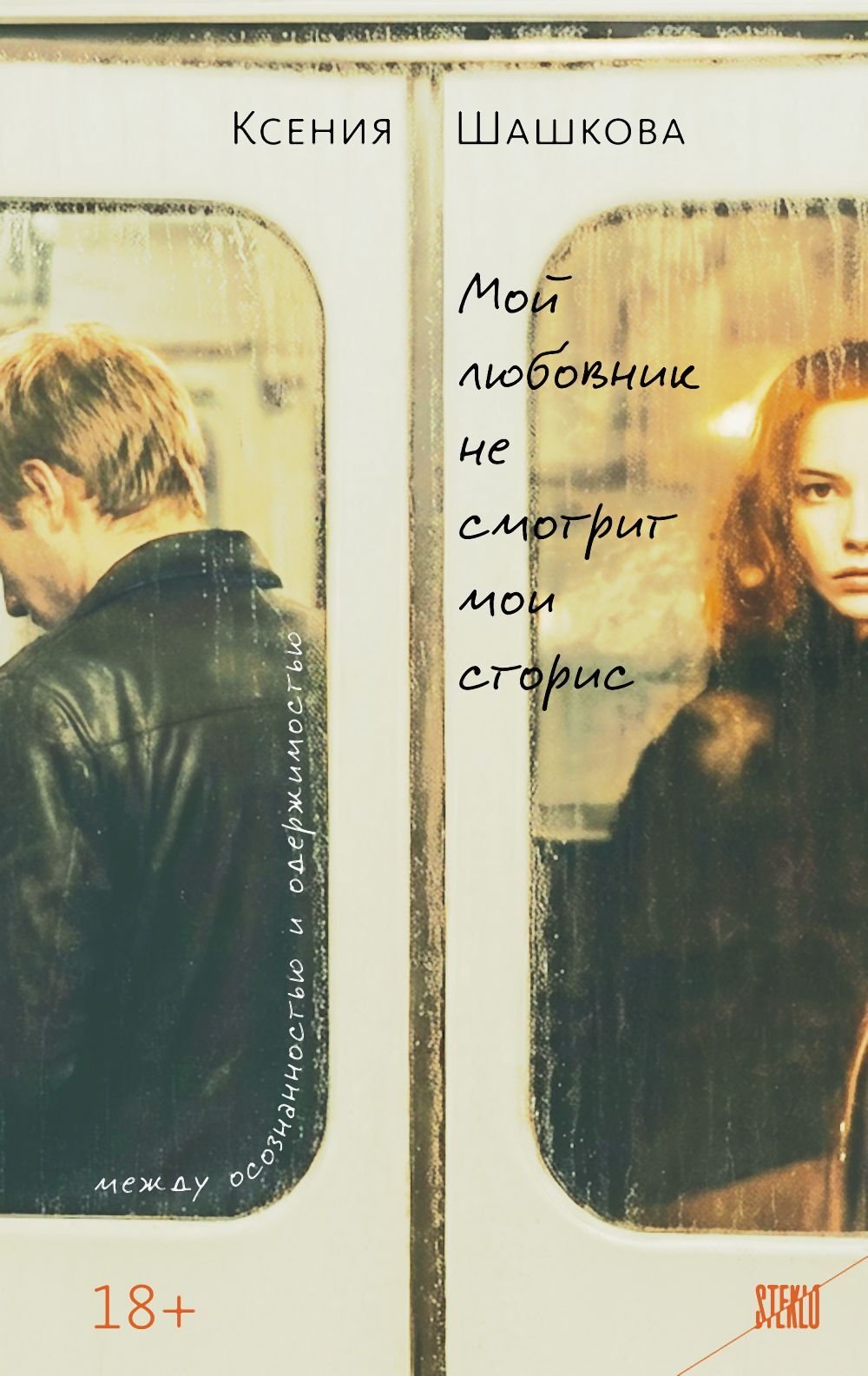
Eksmo Publishing House has released translator Ksenia Shashkova's debut novel, «My Lover Doesn't Watch My Stories.» Readers (mostly female readers) are divided on the new book: in the comments on the e-book, some express «delight and unforgettable emotions,» others note the author's «intense cringe» and «graphomania,» and still others call it a «stunningly bold» work. This book is a women's novel with elements of a psychological thriller. It's a classic love triangle: a married woman falls in love with a fellow student, and a ten-year marriage begins to crumble. Anna Karenina's passion, Katerina Izmailova's obsession, and Katerina Kabanova's infatuation all end tragically—Russian literature generally loves to punish unfaithful women. Shashkova examines: if a contemporary woman decides to openly discuss an affair with her husband, will it save her?
The novel's three parts represent three stages of betrayal. An attempted breakup will lead to a new round of relationships, and then to the heroine's painful self-reflection. After an intriguing prologue—a hand protruding from a trash bag, spotted by an outside observer—comes Yulia's confession: it all began, she notes, with her sister's divorce. She couldn't bear her husband's years of deception—a typical story. What if true intimacy means experiencing a shared interest in another? Which of the two sisters was luckier? And whose hand did the neighbor down the hall find?
«I don't like all this,» the heroine remarks in italics already in the first chapters, and «this» isn't just the tedious process of translating from German, bringing only «a moment of small triumph.» «This» is family life with cutlets for dinner and a torn toy bunny that needs repairing. «I thought,» Yulia shares, «life was flowing through the trees, somewhere up, past me, bypassing me.» Her husband and loved ones are nearby, and a "reclusive lifestyle" is a characteristic of her profession. Normalcy needs to be disrupted; well-being is stifling. The young woman's existential crisis leads to the end: the heroine enrolls in a psychology course attended by marketers, social media managers, makeup artists, and realtors. These are people who have barely managed to sort themselves out, so they can teach others how to cope with internal contradictions.
Matvey, repulsive from the very first lines (his voice is «quiet and femininely thin»), once admits that his role is that of «savior» in the relationship. It's convenient: he can gain control over the situation, over the other person. Manipulating to feel needed—that's what he excels at. But what attracts a grown woman to a man who drives his dad's car, lives in an apartment with his parents, and can't just date any single woman he likes? Yulia herself notices the parallel between her five-year-old daughter and her thirty-year-old lover: he, obviously jealous, «wanted to touch her toys and drink from her unicorn glass,» wanted Yulia «to be a kind of mother to him.» Surely, Yulia doesn't choose him out of the boredom of everyday translation! It defies rational explanation. It seems everyone here is unwell.
Dima, her husband, for example, expects a detailed report from Yulia after their dates. Sometimes common sense awakens within him, telling him that this affair could destroy their family, and yet, with masochistic persistence, he continues to watch his wife grow increasingly attached to another man. A man who will one day come to their home and fall asleep in their shared bed. Perhaps Dima is tired of his ordinary life, struggling with everyday life and saving for a mortgage? «The Big Lebowski,» Matvey's favorite film, suggests that the husband is trying to be philosophical about the affair. While the couple openly discusses what's happening, they legitimize it within the family narrative. At first, Dima asks to see messages from their correspondence, later setting a condition: Yulia and Matvey can see each other «once a month.» This isn't a classic story of infidelity: the couple has agreed on rules and voluntarily adheres to them. Dima's attempt to accept a new format for his relationship with his wife is unlikely to succeed. You can, of course, come to terms with an open marriage, but it's unlikely to work if you live in a patriarchal environment: roles in the family are distributed quite traditionally: while the husband earns money and pays for those very same courses, the wife takes care of the family and the home.
Their daughter Nata, an unwitting witness to the adults« misfortunes, is a source of great pity. Her whims occasionally interrupt the plot, while her mother, lost in her own feelings, absentmindedly feeds the child pasta or looks for a nanny. Nata is a nuisance: she »hangs on« to the adults at the wrong time, »whines« from fatigue, »throws tantrums,« and »finishes" the cakes left over from her lover's visit. The child's voice is barely audible—Yulia has no inner strength left for anyone but herself; her optics betray the reality of the situation.
The title «My Lover Doesn't Watch My Stories» is a fitting symbol of the times. Scrolling through photos on social media, reactions to messages—they reveal the dynamics of this unequal and uneven relationship. Not looking means they're ignoring, offended, or busy with someone else. Part of life shifts to virtual communication, where openness can be expressed («...we made the leap from „was recently“ to „was 1 minute ago“ or „online“»), a desire to distance oneself («a gray „was recently“ loomed again next to his name), and reminders of oneself in the form of reactions to previous, old messages. Correspondence, which begins as a casual exchange of jokes about classmates and the first experience of psychological counseling, soon transforms into a space that in many ways replaces real-life relationships. A fictitious code that people whose lives are located in different universes begin to use. Thus, the novel creates the illusion of intimacy. Yulia can't stop, can't stop scrolling through the messages, can't stop searching for hidden meanings. She falls into the dopamine trap that every psychologist knows about, making up rules for herself and then breaking them immediately. Thoughts of Matvey overshadow both her work and her care for her loved ones.
I wish this novel had a good editor. It's a very difficult read in places—it can be frustrating. Over the course of 372 pages, a story unfolds in which instant messaging, sometimes very personal, is filled with strange turns of phrase, like the heroine's «love-drunk» or her comments to her lover: «It was so sweet and sweet hugging you today.» The characters don't think about the future, absorbed in each other and their own experiences. Matvey might write: «I appreciated that you turned around when you left.» They speak monotonously, and the vocabulary of psychologists is quite boring even in everyday life—these words are often used in inappropriate situations, where they have no place. This is how they teach emotions in a therapist's office, this is how caring teachers teach children to talk about feelings. In the novel, however, we see a situation that is already too late to control. «The suffering from guilt at the beginning,» Yulia will write to her sister, "and the loss of connection with a loved one now—it's simply part of this experience..." I desperately want to see or hear something vivid, real, and deeply felt. And to cut down on certain scenes, to shorten the correspondence, to emphasize the madness that seems to be the very essence of the text. Is this how people in love talk? Is this how psychologists in love talk? The book's cumbersome language is the foundation of the story, and it bogs down the narrative itself.
The same can be said about the details that appear in the early chapters but don't work later. By the epilogue, which could have been a strong ending, it's hard to remember the beginning; you have to skim through the novel again. The image of Dima contains «guns» that are soon forgotten: a «grin masquerading as a smile» in the first chapters; a dinner that he «dismembers.» This is disturbing, but the hero soon transforms into a reserved person—hints that don't lead the reader to the solution. Dima's mother, who, according to the heroine, knows how to interfere in their lives even from a distance, disappears from the text after the first chapter, in which she rings on the phone. But everything is up to the artist.
The novel «My Lover Doesn't Watch My Stories» is a study of open, honest dialogue. Reconciliation won't happen; neither long years together, nor the characters' emotional intimacy, nor their child will help. Yulia's sister won't be able to forgive her husband and will leave—this will prove both safer and more natural than a sincere conversation between Yulia and Dima. Shashkova makes a precise diagnosis: therapeutic language has become so ingrained in everyday life that it also becomes the language of conversation with those closest to us, and this is always a vulnerable, delicate place. It teaches us to name feelings, but it will never help us understand how love arises and why it eventually fades. Expert advice, training courses—all this is useless where life defies logic. Perhaps this is for the best.