

Caesar Aira. Ghosts. New York: New Directions, 2009. Translated from Spanish by Chris Andrews

César Aira didn't care about rules. The Argentine writer writes intuitively, avoiding any clichés of writing—he doesn't plan a novel's plot in advance, ignores logical errors, never rewrites what he's written, and never spends more than a few minutes on a sentence. His prose resembles a living organism, evolving from the particular to the general. Reading Aira means breaking away from literary «manufacturing»; recognizing that the act of imagination is more important than the act of documenting it; accepting that a talented author can write not only well, but also quickly.
Ira writes with the speed of a Jamaican sprinter, typically two or three novels a year. Since 1991 (when the Argentine finally transformed himself into the literary equivalent of a Ford assembly line), he has published 77 novels. One could say novellas—Ira's books rarely exceed a hundred pages. But the short length doesn't prevent the writer from indulging in multi-page descriptions, sacrificing the narrative drive that novelists so cherish. A novel is still a novel, even if it's written in a couple of weeks.
Aira's priapic prolificacy certainly pleases his literary agent and fellow Argentines, but it infuriates the rest of the world, which hasn't yet mastered the basics of reading Spanish-Castilian. Translators suffer the most. Essentially, translating Aira kills one of the key characteristics of his work—spontaneity. Interpreters are forced to approach the writer's ethereal text with the analytical precision typical of their profession. As a result, the translator spends one sentence more than the author. But, as they say on the other side of the Atlantic, beggars can't be choosers.
New Directions has published 27 of Ira's novels in English. Among them is the phantasmagorical parable «Ghosts,» one of the most outlandish works in the author's vast bibliography. The 144-page novel takes place in Argentina, but not with Argentines. The book's heroes are Chilean migrant workers working on a skeletal construction site building a residential complex for Buenos Aires' elite. The stifling heat, low wages, and plumes of concrete dust don't stop the family of night watchman Raúl Viñas from enjoying life: the children joyfully run up and down the gray staircases of the high-rise, the adults tell stories and drink wine, and young Patry prepares to cross the line between childhood and adulthood.
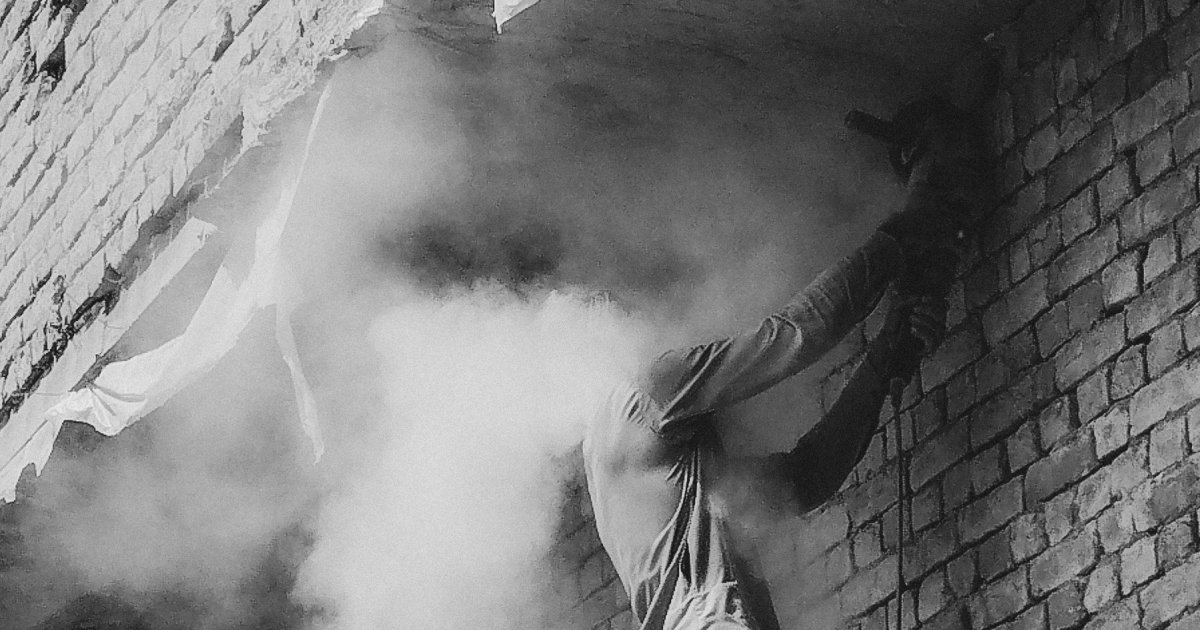
The quiet stream of honest (and very poor) life is not disturbed by the other inhabitants of the house on Calle José Bonifacio—ghosts covered in concrete chips, levitating from the ceilings of uninhabited rooms. They are the restless souls of other migrant workers who perished under the merciless rays of the harsh Argentine sun. The Viñas family views their neighbors stoically—after all, the dead cannot harm the living. But ghosts can tempt. In Aira's world, the living rarely laugh, but the spirits cackle all night long:
«She leaned over the front balcony and looked down at the empty street. A car sped past. She walked through the apartment, searching for her children, until she reached the back balcony, where she looked down too. The sun was blazing mercilessly; the apartment felt like an oven. She thought she saw a body falling—even faster than usual—the naked body of a ghost, covered in a fine white dust. Perhaps it was an optical illusion, but she realized it was not when she heard another wave of laughter—a loud chorus of laughter, so loud it seemed almost desperate.
Ira's dense, verbose style immerses the reader in a state of afternoon slumber, where a trip to the store for a bottle of wine and a game of cat and mouse with pale ghosts seem equally mundane, almost prosaic. The spontaneity of the writer's method is evident in every line of the text—certain details are repeated several times in a row, echoing the inconsistency of spoken language. Viñasa's Chileans feel like living people, not figments of Ira's imagination—they refuse to submit to any dramatic conflicts, stoically accepting the blows of fate.
In fact, for a book about the clash of the worlds of the living and the dead, «Ghosts» is surprisingly lacking in drama. Ira isn't interested in macabre, soap operas, romanticism, or detective intrigue. Who cares where the concrete spirits came from? They're already among us. And the author's critique of contemporary Argentina, accustomed to exploiting the slave-like labor of its less fortunate neighbors, is halfhearted. While the image of phantoms serves as a clear metaphor for cancerous capitalism, the focus of the text is on ordinary people who don't complain about their fate, but simply try to survive until their deathbed:
«Suddenly, sirens began to wail. It was approaching midnight. Men rushed to light a string of flares, which began to explode like a joyful burst of machine gun fire. Before the volley had even died down, Patry stood up and headed toward the back of the terrace. Her pace quickened, though she didn't break into a run. Suddenly, the others realized what she was about to do; and instead of being frozen in surprise, they stood up one by one and went to stop her: women, men, and children, shouting as the flares exploded, now near, now far away, and a thousand fireworks blossomed in the sky.
At times, Aira's spontaneity transports readers into the depths of the author's subconscious. For example, somewhere in the middle of «Ghosts,» the author launches into a lengthy discourse on the indigenous peoples of South America, concluding that the European desire to live in a concrete box is destroying indigenous traditions far more effectively than any genocide. Let's imagine this: On a fine morning in Buenos Aires, Aira arrives at her favorite café, carrying a notebook and a Montblanc pen. She orders a coffee and begins writing about another hot afternoon with the Viñas family. Then she realizes: «I want to waste a few pages on a completely unnecessary, yet so interesting, lyrical digression.» And she does.
The power of Ira's books lies in the ease with which the author approaches his novels. He's unafraid to stray from the pace, lose the thread, or bore his readers. «Ghosts» is certainly not a stream of consciousness. But the outlandish term «literary improvisation» fits the text like a glove. Translator Natasha Wimmer rightly called the Argentine classic «the Latin American Marcel Duchamp.» Like the father of Dadaism, Ira never separated «free» from «beautiful.» A work like «Fountain» astonished his contemporaries with the boundless will of a creator capable of transforming an ordinary urinal into an object of art without interfering with the elegance of the original object's form (yes, a urinal can be elegant). Ira astonishes with his disregard for literary conventions, yet treats his readers to passages of pure literary orgasm:
«When the master of the house lay peacefully asleep in bed, covered only by a thin layer of wine-sweat, Eliza asked Patry to do her a favor, a great favor (she emphasized these last words with some irritation), and go get the children, who should never have run away. Patry, who was a model of good manners and respect, suppressed an exclamation of „Ah!“ but couldn't quite suppress a sigh, which immediately made her feel ashamed, although it was barely perceptible, like a breeze in the distant heights of the sky.».
Incidentally, being a fan of César Aira in Russia has become unexpectedly convenient. Over the past five years, a whole slew of the Argentinean's works have appeared on the pages of three issues of «Foreign Literature»: short novels (the magazine lists these works as stories and novellas—I can't agree with most of the genre attributions) «New Life,» «Linguists,» and «The Dressmaker and the Wind,» a lecture «On Contemporary Art,» and an essay from the book «The Reading Wave.» It will be very interesting to read the translation of «Ghosts»—the Russian version of this novel has every chance of surpassing Chris Andrews's overly analytical English translation.