

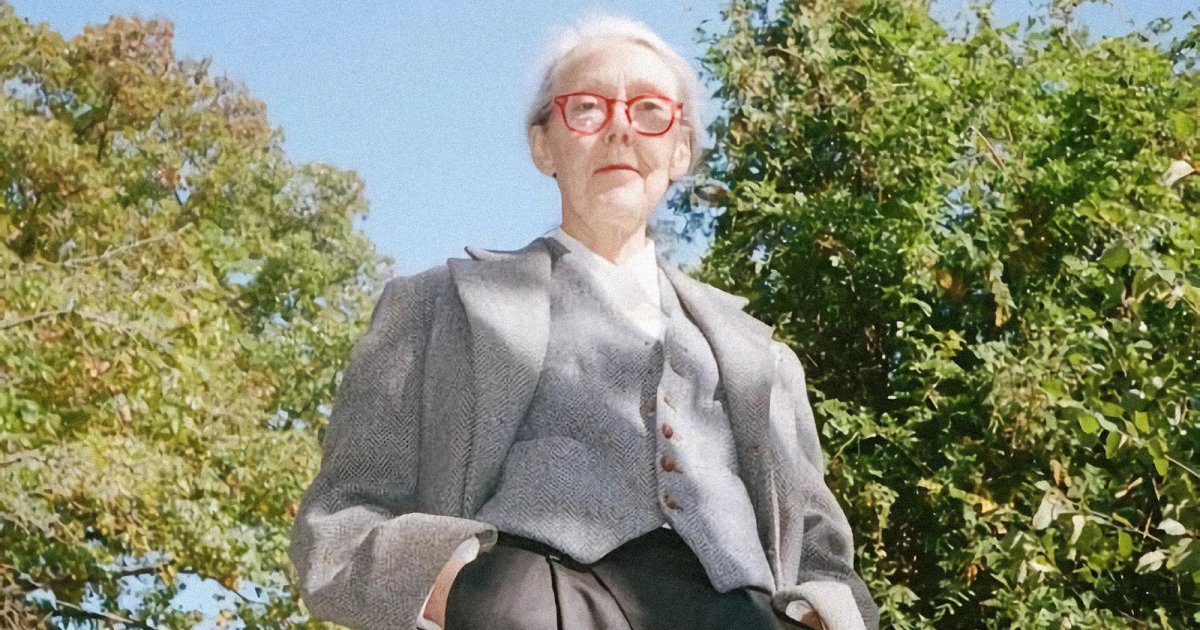
In recent years, a literary prize of any magnitude has seemed more like a necessary ritual to restore the integrity of a crumbling world than an influential cultural event. The impact of the appearance of yet another name—often completely unfamiliar to the general reader—on the list of Nobel laureates lasts only as long as journal editors are willing to stretch the vague line from the committee's announcement into an extensive biographical footnote. Typically, two to three weeks.
Following the reputational crisis of 2018, the Swedish Academy has chosen a middle path: the prize is increasingly awarded to writers of impeccable technique and undisputed academic standing. Their candidacies avoid political unrest, easily accommodate public tension, and rarely linger in the memory for long.
If the laureate's name is also confined to a dusty antique fold, the chances of persuading anyone to rush to read their few books translated into Russian, let alone those available only in the original, are extremely slim. Here, echoing this year's Nobel laureate, classical philologist and writer Anne Carson, it's time to «get to the heart of the matter: „What did Carson do?“».
The familiar way of talking about her lies within the realm of genre. Brochures collected in a transparent plastic case, a lecture on the history of skywriting, a handwritten free translation of Sophocles's «Antigone» with drawings on translucent tracing paper over the text, a fragmented travelogue-pilgrimage, interviews with the dead, tiny one-paragraph prose conversations about the joy of being properly loved, Ovid and sleeping stones—this is just a brief summary of the writer's experiments.
Yet, the awareness of Carson's free handling of the verbal material doesn't reveal much about her writing itself. The poet's quirky syntax, the juxtaposition of names from different eras and traditions, the interspersed emphatically academic statements—not the most friendly characteristics at first glance—turn out to be directed at extremely atomic and simple things. It's commonly said that Carson begins with the root of the word, with its etymology. But it seems she digs deeper, and beneath the layer of scholarship in her texts lies a classical impulse to search for the origins of things.
The whole, Carson writes, must be smaller—small enough to say something about people. The writer collapses the gigantic and vast into a tiny, paragraph-sized space. Far more than a call from the secretary of the Swedish Academy, she is captivated by small things: «listening to the wind,» questions of time and space, defloration, inexhaustible love, Van Gogh's yellow sky, immortality.
«What does distance look like?» is a simple, direct question. It «stretches from the immeasurable / within to the boundary / of what can be loved.».
Carson manages to uncover the core of phenomena of varying magnitude and bring them to a single order. She has free rein over the structure of the world—in Lecture on the History of Skywriting recreates existence in six days, in Sappho's translations If Not, Winter gives voice to the void, Short talk on Major and Minor delineates the field of importance and unimportance. A good warhorse, pretexts, and the election of a king prove more significant than the names of philosophical schools, bad moods, or the right time.
The ease of shifting and mixing scales creates a sense of the absence of a center. She herself, in an interview with LouisianaChannel elevates the title of the collection Wrong Norma to the author's method. The beauty of irregularity and disproportion is a feeling both in her texts and in her life as a Canadian, suspended between America and Iceland. Under one cover, Carson effortlessly coexists Homer and bees, Flaubert and a painful breakup, snow and a federal court.
Historical and cultural figures leap out of their time: Stesichorus gives a modest interview, Augustine's Confessions flows beneath Hopper's paintings, Ovid weeps over letters under the soft green light of a radio, Zeus discusses nuclear reactions and galaxies, and Thucydides directs Virginia Woolf on the set of The Peloponnesian War.
Words are arranged independently and abnormally on the page—floating somewhere in the middle, running diagonally, overlapping with drawings and clippings. They are unconstrained by layout rules, unaffected by margins or external noise. Whether on a printed page or in a crowded lecture hall, they always have space, always able to breathe easily.
Carson's language loses its balance and, as critic Kevin McNeilly observes, oscillates between high and low registers, existing on the periphery of the classical philologist's vocabulary. The writer admits to lining her text with everyday phrases, like walls, allowing the written word to remain human-sized.
If such leaps, ruptures, and deviations prove difficult, «you are not alone,» Carson reassures in the pages of the fortunately translated and unfortunately withdrawn «Autobiography of Red.» She herself doesn't always find it easy to maintain a connection to the past: she has to speak to the dead in the language of the living, without the distance of a museum.
Carson returns to tradition not so much as a scholar, but as a traveler, constantly deviating from the path. In translation, she is drawn to the gap between languages—the space of errors that disorient her. The canon consists of everything in the margins: marginalia, little-known texts, crossed-out and forgotten passages. The Beauty of the Husband Carson, instead of Keats's overused lines about truth and beauty, gives voice to his unsuccessful fragments and edits.
«In the end, the only rule of travel is don't go back the way you came. Find a new way.».
Don't be fooled by the number of names, dates, and philosophical concepts: Carson can be funny and playful, and this is perhaps her most underrated quality. She calls fighting boredom her life's work, and she manages it quite well. On the pages Short Talks advises homeless people to wear several hats at once and immediately remove those that get wet. Creon in Antigonick It allows one to rejoice like a street urchin («I'm free, I can't take any bribes»), and the chorus to remind Antigone of how Brecht forced her to perform the entire play with a door tied to her back. Even «Bittersweet Eros,» which grew out of a doctoral dissertation, reads almost like a detective story about why loving means falling short.
In the preface to «The Autobiography of a Red Man,» the writer calls adjectives the latches of existence—these tiny mechanisms that anchor each thing in its place. In Homer, the latches never open—the blood in his epics is invariably black, and the laughter of the gods is unquenchable. Stesichorus, according to Carson, was the first to unlatch them, and the things of the world hung in the air, freed from their familiar definitions. Carson herself does the same: in her, desires, round as peaches, bloom all night, the sick Kafka scatters glass phrases across the floor, and names fall upon Hölderlin with a hiss.
The Nobel Committee's formulation, if you look closely, also rests on adjectives—«bold,» «inventive,» «modern»—that pin Carson to her designated place for the coming months. The latches, however, as the writer demonstrates, can be unfastened. In the same preface, she recalls Gertrude Stein's description of Picasso: «He worked.» Of Stesichorus, she herself adds: «He made adjectives.» Of Carson, we might say: «She gave words a breath—both of our time and of the past.».