

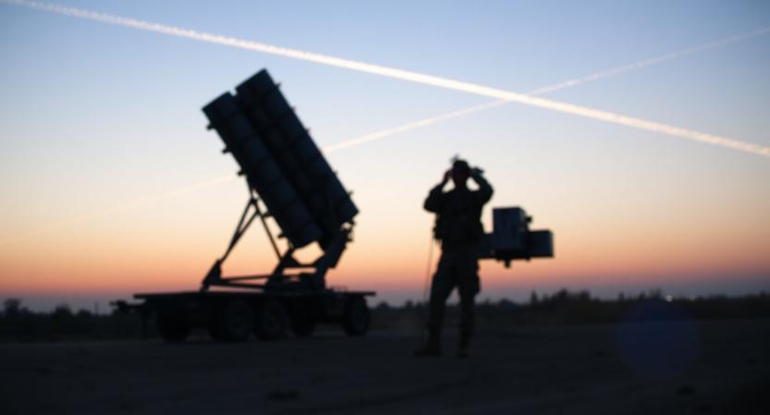
Air and missile defense They sound almost identical, but behind the acronyms lie two different philosophies: one protects cities and troops from aircraft and cruise missiles, the other catches ballistic warheads in space.
Description: We explore the differences between air defense and missile defense, when the line is blurred, and why this is important for armies and civilians.
In military documents, these terms are often confused, but in practice, the distinction between them is blurred: modern anti-aircraft systems are capable of engaging ballistic targets, while anti-missile systems sometimes intercept aircraft. Let's examine how the Russian and American systems differ in their original concepts and why their roles can reverse at a critical moment.
Definitions: where air defense ends and missile defense begins
- Air defense is traditional air cover: air defense systems, anti-aircraft guns, portable systems capable of shooting down aircraft, helicopters, cruise missiles, and sometimes short-range ballistic missiles.
- A missile defense system is a narrow specialization: an interceptor capable of catching an intercontinental ballistic missile during its exit phase or mid-trajectory.
The difference isn't in range, but in the target's speed: if an object flies faster than 3 km/s and enters from space, it's within the missile defense zone. Russia formally divides the functions: the S-400 is classified as air defense, while the A-135 and A-235 are classified as missile defense. The US, for its part, manages missile defense through the Missile Defense Agency, while air defense is managed separately by the Army and Air Force.
Russian example: S-400 Triumph – an air defense system that fires upwards

The S-400 was adopted as a surface-to-air missile system, meaning it serves as a classic air defense system. Its range against aerodynamic targets is up to 400 km, and its altitude is 30 km. However, the 48N6DM can track targets at a speed of 4.8 km/s, which theoretically allows it to engage tactical ballistic missiles such as the ATACMS. During exercises in Kapustin Yar, the S-400 repeatedly intercepted target missiles simulating Iskander missiles. As a result, the system effectively performs missile defense missions, but remains classified as an air defense system according to doctrine. This is due to the lack of satellite target designation and specially designed interceptors: the SAM operates within the atmosphere, not in space.
American example: THAAD – a missile defense system that shoots down aircraft

THAAD was originally designed as a mobile, ground-based component of a global missile defense system to protect against medium-range missiles. The interceptor flies toward its target at an altitude of 150 kilometers and a speed of up to 7 kilometers per second. However, during the 2018 White Sands test, THAAD successfully engaged a manned MiG target simulating an attack aircraft. Control was transferred to the Patriot air defense system, but the missile defense battery launched the missile. This demonstrated that if an aircraft flies at extremely high altitudes and near the speed of sound, THAAD is capable of tracking it. In fact, the interceptor performed the role of a SAM system, although its official specifications call for protection against ballistic missiles.
When the Line Blurs: Tactical Flexibility
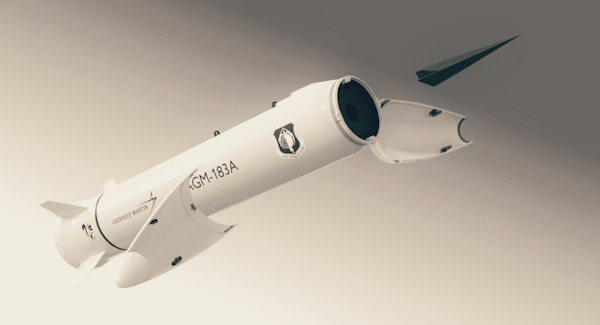
The reality of the modern battlefield is hypersonic missiles that fly in the atmosphere but at the speed of ballistic missiles. The Russian Tsirkon and the American AGM-183A do not fit the classic definition of either air defense or missile defense: they maneuver at an altitude of 30-40 km and reach speeds of Mach 5-6. In response, both countries are developing "hybrid" interceptors. The S-500 Prometheus has already been declared a "new-generation air defense and missile defense": its 77N6-N interceptor missile is capable of striking ballistic targets at an altitude of 200 km and simultaneously tracking aircraft. In the US, the Glide Phase Interceptor program envisions the Standard-3 naval missile defense system intercepting hypersonic cruise missiles as they reenter the atmosphere. In fact, the new systems are being developed from the ground up for both missions.
Requalification criteria: how they decide what to shoot
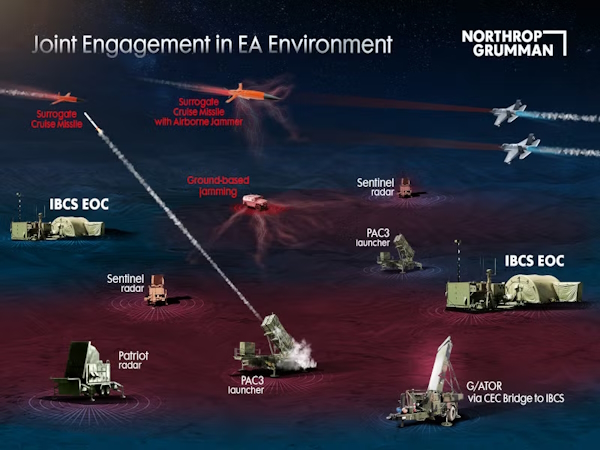
The decision to "change roles" is made in seconds and depends on the algorithm of the combat information and control system (BIUS). In Russia, this is the Polyus-SB, and in the US, it's the IBCS. The system evaluates the target's speed, altitude, trajectory, and signature. If an object flies above 100 km and at a speed exceeding 3 km/s, the missile defense mode is automatically engaged. If the target descends and loses speed, the task is transferred to the air defense system. However, the battery commander can manually override the mode if there is a threat of a breakthrough. It turns out that, technically, a SAM system can receive the command "fire as a missile defense system," while a missile defense interceptor receives the command "fire as a SAM system." The error is critical: a miss on a ballistic missile costs a city, and a miss on an aircraft costs the lives of soldiers.
Example from the exercise: Patriot vs. SRBM and F-16
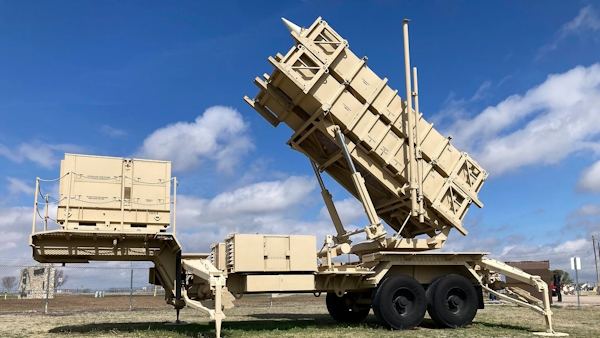
During the joint Iron Dome exercises in Israel, American Patriots and Israeli Iron Domes were operating in the same echelon. During approach, two targets appeared: a tactical ballistic missile and an F-16 attack aircraft simulating a low-altitude attack. The algorithm assigned the Patriot to the SRBM, and the Iron Dome to the aircraft. However, due to jamming, the tracking became confused, and the Patriot was ordered to intercept both objects. The MIM-104F interceptor successfully intercepted the ballistic target, but failed to retrain for the aerodynamic target and missed. The result: the air defense platform accomplished its missile defense mission, but failed its own. This episode became the argument for the creation of a unified command post, which prevents "role conflict.".
Risks and benefits of hybridization
Combining functions into a single system saves money and reduces logistics. Instead of two batteries, a single one is sufficient, taking up less space and requiring fewer calculations. However, there is a risk of mission "leakage": the system may not have time to switch from air defense to missile defense if a hypersonic target suddenly changes its flight mode. Furthermore, the software becomes more complex, making it more vulnerable to cyberattacks. Therefore, Russia and the United States maintain separate training schools: air defense officers train in Omsk and Gatchina, while missile defense officers study in Balashikha and Huntsville. Combining roles requires retraining, which takes years.
The Future: A Unified Air and Missile Defense Space

By the 2030s, both countries plan to deploy systems initially capable of "double-shot" missiles. In Russia, this means the S-550, which will combine the capabilities of the S-500 and a mobile missile defense system. 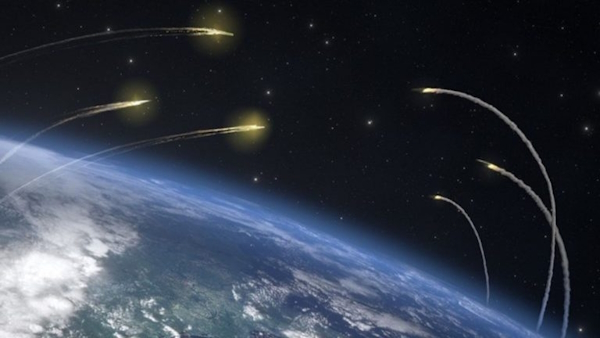 In the US, the NGI (Next Generation Interceptor) is capable of operating in a single network with Patriot and THAAD. The concept is called IAMD (Integrated Air and Missile Defense). It envisions each interceptor being capable of engaging any target, with the decision on the type of munition being made in the cloud. Clearly, the distinction between air defense and missile defense will disappear completely: what remains is simply "defense against everything that flies.".