


Cocaine and heroin — two drugs that are often mentioned in the context of illicit trafficking and addiction, but their differences are significant and affect health, behavior, and society in different ways.
Both substances have a long history of use, from medicinal purposes to the criminal market, making their study important for understanding their effects. In this article, we will examine the differences between cocaine and heroin in terms of origin, chemical composition, effects, and consequences of use.
These drugs attract attention not only because of their dangers but also because of the differences in perception: one is associated with energy and the elite, the other with apathy and marginalized individuals. Their effects on the body and mind, as well as their distribution routes, create unique challenges for medicine and law enforcement.
Let's dive into the details and find out what makes each one special and why comparing them is so relevant.
Origin and production

Cocaine Cocaine is extracted from the leaves of the coca plant (Erythroxylum coca), which grows in South America, particularly in Colombia, Peru, and Bolivia. The process begins with extracting the cocaine alkaloid using chemical solvents such as kerosene, followed by purification into a powder or crystalline form (crack). In the 19th century, cocaine was used medically as an anesthetic, for example in eye surgery, but by 1914 it was banned in the United States due to its addictive properties. Today, Colombia produces approximately 701 TP3T of the world's cocaine, according to 2023 data.

Heroin It is derived from morphine, which is extracted from the opium poppy (Papaver somniferum), grown primarily in Afghanistan, Myanmar, and Mexico. Production involves the acetylation of morphine using acetic anhydride, which converts it into diacetylmorphine—the chemical name for heroin. First synthesized in 1898 by Bayer, it was marketed as a cough medicine but was soon deemed dangerous. Afghanistan supplied approximately 851 TP3T of the world's heroin in 2022, underscoring its dominance in this sector.
Chemical composition and form
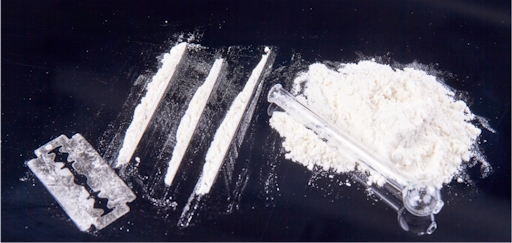
Cocaine is a stimulant chemically classified as a tropane alkaloid (C17H21NO4). It is commonly found as a white powder for snorting or as crystalline crack for smoking, which accelerates its effects. Its street purity ranges from 20% to 80%, often cut with sugar or lidocaine. Rapid absorption through the mucous membranes or lungs makes its effects almost immediate.

Heroin is an opioid with the formula C21H23NO5, most commonly sold as a brownish powder or sticky resin (black heroin). It can be injected, smoked, or snorted, with injection providing the most potent effects. Marketed, it often contains adulterants such as fentanyl, which increases the risk of overdose. Unlike cocaine, heroin acts more slowly when smoked but more quickly when injected, reaching the brain within 10–15 seconds.
Effects on the body

Cocaine stimulates the central nervous system, causing a surge of energy, euphoria, and heightened concentration. Its effects last from 15 minutes to an hour, depending on the method of administration, increasing dopamine levels in the brain by 2-3 times the normal level. However, this is accompanied by increased heart rate, hypertension, and the risk of heart attack—in the United States, approximately 20,000 deaths in 2022 are related to cocaine. Long-term use damages the nasal septum and causes psychosis.
Heroin, on the other hand, depresses the nervous system, producing a feeling of relaxation, warmth, and apathy that lasts for 3-6 hours. It activates opioid receptors, increasing the release of endorphins, making it highly addictive—dependence can develop within 2-3 weeks. Overdoses, often due to fentanyl, claimed more than 70,000 lives in the United States in 2022. Chronic use leads to respiratory failure and venous collapse.
Consequences and dependence

Cocaine is psychologically addictive, but the physical withdrawal symptoms are less severe than those of heroin. After the effects wear off, a "cocaine crash" sets in—depression and fatigue, leading to relapse. Research shows that approximately 15% users become dependent within a year. Treatment is difficult due to the lack of specific medications, and therapy is often required.
Heroin causes both physical and psychological dependence, with severe withdrawal symptoms—convulsions, nausea, and pain—lasting up to 10 days. According to 2023 data, approximately 75% of heroin users transition to regular use. Treatment includes methadone or buprenorphine, but relapse occurs in 60% of patients. This makes heroin more damaging in the long term.
High dependence and mortality

Heroin causes stronger dependence, than cocaine, due to its effect on the brain's opioid receptors. This leads to the rapid development of both physical and psychological dependence, sometimes after just a few weeks of regular use. Heroin withdrawal is accompanied by severe withdrawal symptoms: seizures, nausea, and severe pain, making quitting extremely difficult and leading the user to return to use to avoid the suffering. Cocaine, in turn, also creates a strong psychological craving associated with the desire to experience euphoria again, but does not cause such pronounced physical withdrawal. Thus, heroin surpasses cocaine in both the potency and speed of addiction, making it more insidious in this regard.
In terms of lethality Heroin is also more dangerous than cocaine, primarily due to the high risk of overdose, which causes respiratory depression. This condition can lead to respiratory arrest and death, especially if heroin is mixed with other substances, such as fentanyl, which enhances its toxicity. For example, in the United States in 2022, opioids, including heroin, were responsible for over 70,000 deaths, far exceeding the approximately 20,000 deaths caused by cocaine. Cocaine also poses a risk, triggering heart attacks and strokes, but it is less likely to cause immediate death because it does not suppress the respiratory center as strongly as heroin. Consequently, heroin is a more lethal drug, posing a greater risk to human life.
Social perception and dissemination

Cocaine is often associated with bohemian culture and the elite—in the 1980s, it was called the "Wall Street drug." It is popular in clubs and among young people, especially in cities like Toronto and New York, where more than 10 tons were seized in 2022. Its high price (around $100 per gram in the US) limits access, but demand remains consistently high.

Heroin is perceived as a marginalized drug, associated with poverty and street crime. Its prevalence is greater in rural and depressed areas, such as Appalachia in the United States, where a 30% increase in overdoses was recorded in 2023. Its lower cost—around $20 per dose—makes it accessible, but it also exacerbates social problems, including rising homelessness.
Cocaine as a medicine

In the late 19th and early 20th centuries, doctors used cocaine for medical purposes as a local anesthetic, especially in eye surgery and dentistry.
Its ability to block pain made it a popular painkiller. For example, in 1884, Austrian ophthalmologist Karl Koller first used cocaine in eye surgery, marking a breakthrough in medicine.
However, due to its subsequently discovered addictive properties and serious side effects, such as psychosis and heart problems, its use was gradually restricted.
Conclusion
Cocaine and heroin are two distinct drug worlds, differing in origin, effects, and consequences. One provides a short-term rush of energy, the other a long-lasting stupor, but both are devastating to health and life. Their differences highlight how chemical and social factors shape addiction and perception, making combating them a challenging task for society.