

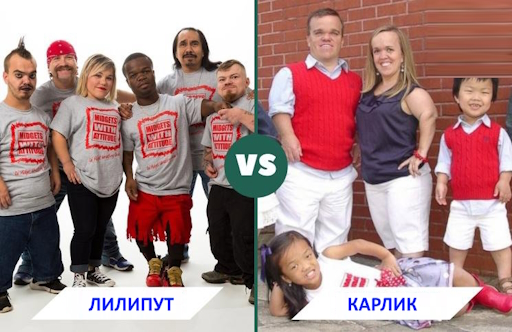
Terms “midget” (midget) and “dwarf” (dwarf) are often used synonymously in everyday speech, but in medicine and science there is a clear distinction between them.
Description: How a midget differs from a dwarf in terms of medicine, genetics, and body proportions, without stereotypes and with a scientific approach to terms and diagnoses
Failure to understand these differences leads to social stereotypes, misdiagnoses, and even stigma. To understand the issue accurately and thoroughly, it is important to rely not on rumors and common parlance, but on clinical data, classifications of endocrinological disorders, and anatomical features. This article aims to systematically clarify the essence of these concepts from the perspectives of medicine, genetics, and the sociocultural context.
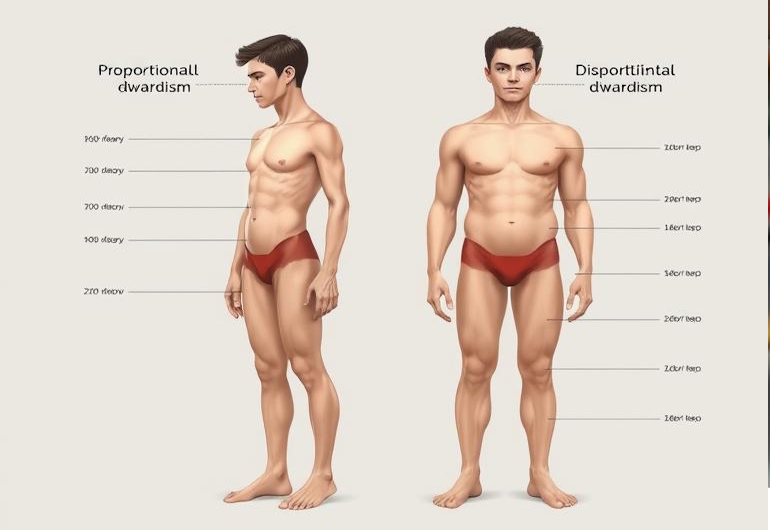
The differences between midgets and dwarfs are based on two key aspects: the causes of short stature and body proportions. Dwarfs exhibit body disproportion caused by abnormal bone growth or endocrine disorders. In contrast, midgets maintain body proportionality—all body parts are reduced in size to approximately the same degree. This is due to congenital pituitary hypoplasia or other forms of proportional hypopituitarism, in which overall height is reduced, but the body structure remains balanced.
Medical basis for the differences
Dwarfism (disproportionate dwarfism) is a medical term encompassing dozens of conditions, most often hereditary. The most well-known is achondroplasia, which disrupts the growth of tubular bones. In this case, the arms and legs become noticeably shorter in proportion to the torso, and the skull becomes enlarged. This type occurs in approximately one in 25,000 newborns. Achondroplasia is caused by a mutation in the FGFR3 gene, which regulates bone growth, and it is this mutation that blocks the normal formation of cartilage.
In contrast, people colloquially referred to as "midgets" maintain their body proportions. The scientific term for their condition is proportional pituitary dwarfism. It is associated with a deficiency of growth hormone (somatotropin) caused by underdevelopment or damage to the pituitary gland. With timely hormonal therapy in childhood, height can be partially or completely restored, but without treatment, the individual remains short in stature with normal body proportions.
Differences in appearance and functionality
People with achondroplasia and other forms of disproportionate dwarfism often experience limited mobility, spinal curvature, spinal cord compression, and associated orthopedic problems. In contrast, proportionally short people (known as midgets in the everyday sense) experience unrestricted mobility, with the exception of rare complications.
Furthermore, achondroplasia is characterized by characteristic facial features: a prominent forehead, a flattened bridge of the nose, and short fingers. In contrast, in pituitary dwarfism, the facial features and skeletal structure are normal, albeit at a reduced scale. These differences allow even a non-specialist to visually distinguish between the two conditions.
Social context and terminology
It's important to emphasize that the word "midget" is not a medical term. It originates from literature, specifically Jonathan Swift's novel Gulliver's Travels, and has become popular over time. Today, it is not used in professional circles because it can be considered derogatory. Modern science prefers the terms "nanism," "pituitary dwarfism," "achondroplasia," or "short stature" to avoid stigma. Official medical documentation and classifications (such as the ICD) also exclude language with potentially negative connotations.
It's worth noting that even people with identical forms of dwarfism can have significant individual differences—from intelligence to physical activity level. Therefore, judging them solely by appearance is inaccurate and scientifically unfounded. Furthermore, a movement for inclusivity and the rejection of discrimination based on body type, including against individuals of short stature, is gaining momentum in modern society.
Conclusion: What are the differences?
To sum it up, the main differences between Lilliputians and dwarfs can be identified:
| Criterion | Lilliputian (proportional dwarfism) | Dwarf (disproportionate nanism) |
|---|---|---|
| Body proportions | Are saved | Violated |
| Cause | Growth hormone deficiency | Genetic mutations in bone development |
| Frequency of occurrence | Rarely | Relatively more often |
| Appearance | Reduced but normal anatomy | Shortened limbs, bone deformities |
| Possibility of treatment | Hormonal therapy | Correction is limited, mainly symptomatic |
| Medical classification | Proportional pituitary dwarfism | Achondroplasia and other forms of bone dysplasia |
Understanding these differences is important not only for doctors but also for anyone who wants to use correct language and avoid discrimination. In the 21st century, precision in language and respect for biodiversity are becoming not just the norm, but part of a civilized approach to society.