


Comparisons between the F-22 Raptor and the F-35 Lightning II often spark debate among military aviation enthusiasts, as both fighter jets are fifth-generation and feature advanced technologies.
Description: We examine the key differences between the F-22 Raptor and F-35 Lightning II: purpose, maneuverability, stealth level, speed, armament, and role in modern military strategies.
However, despite their common affiliation with the high-tech segment, these aircraft were created with different missions, operational concepts, and strategic roles in air operations.
- A total of 195 F-22 aircraft were built (including prototypes and pre-production versions).
- The program is limited to the United States: US law prohibits the export of F-22s abroad.
Origin and concept of creation
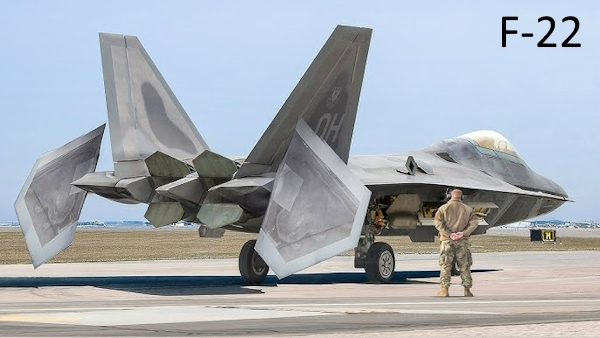
The F-22 Raptor was developed as a dominant air superiority fighter with a focus on close- and long-range air combat. It was created in a post-Cold War environment, when the primary threat was perceived as high-tech aerial adversaries.
The F-35 Lightning II was later developed as a multirole modular platform for tactical missions, including ground attack, reconnaissance, electronic warfare, and battlefield control. Its goal is to become a universal "working tool" for a wide range of countries and scenarios.
Role and purpose
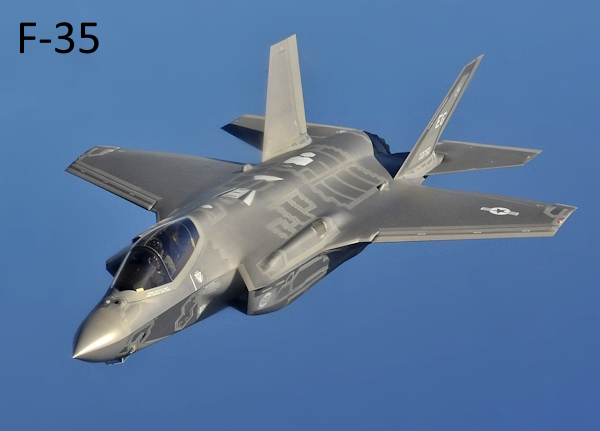
The F-22 is a specialized air superiority fighter. Its priority is to destroy enemy aircraft before they can detect them. Its exceptional maneuverability makes it highly effective in aerial duels.
The F-35 is a multirole aircraft capable of operating both air and ground, integrating into networked battle management systems. It is primarily focused on reconnaissance, stealth penetration, strikes against strategic targets, and cooperation in combined forces.
Stealth technologies and visibility
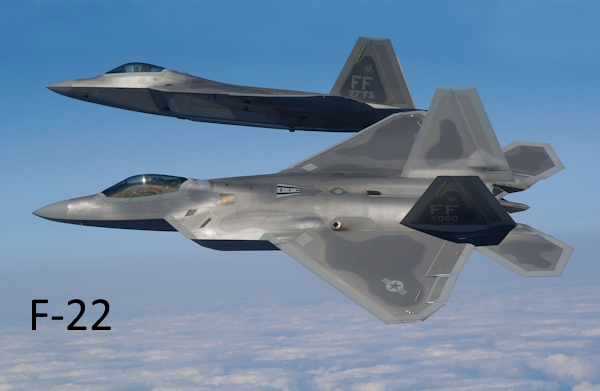
Both aircraft are stealthy, but the F-22 has advanced airframe geometry and coatings optimized for frontal combat. Its shape is designed for stealthy approach to airborne targets.
The F-35 has a more compromised stealth configuration, as its airframe is adapted for a wider range of missions, including ground attack. It is optimized for stealthy penetration of air defense zones, but is inferior to the F-22 in terms of frontal stealth.
Maneuverability and aerodynamics
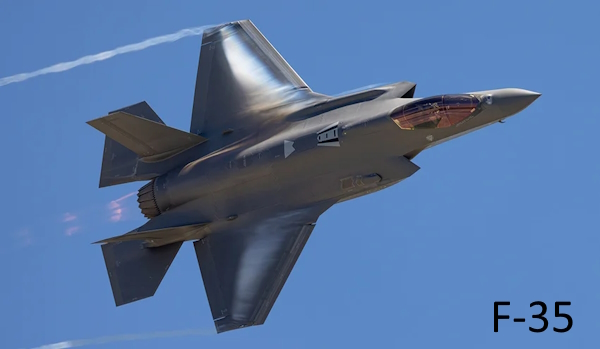
The F-22 is equipped with thrust vectoring, allowing it to perform complex maneuvers with high stability. It is designed for close-quarters dogfights and is capable of performing sharp turns at negative airspeed.
The F-35 is inferior in maneuverability because it is designed as a general-purpose tactical fighter. It is not designed for sustained close-quarters dogfights, but compensates for this with high-tech threat detection systems and long-range capabilities.
Speed and altitude

The F-22 has the ability to achieve sustained supersonic flight without afterburners (Supercruise), reaching speeds of approximately Mach 1.8–2.0, with a maximum speed exceeding Mach 2.25. It is also optimized for high-altitude combat.
The F-35 has a top speed of approximately Mach 1.6 and does not have such sustained supersonic cruising capability. This is due to its multirole nature and design limitations.
Armament and combat use

The F-22 is primarily equipped with long- and medium-range air-to-air missiles, as well as a limited suite of ground-attack weapons. Its armament is optimized for air-to-air combat.
The F-35 not only has the capability to conduct air-to-air combat but also employ a wide range of strike weapons, including precision-guided bombs, missiles, electronic warfare systems, and reconnaissance pods. It is designed for a wide range of scenarios, including air defense suppression.
Avionics and Sensory Perception
The F-22 has highly capable air-to-air target acquisition systems, but its architecture was originally designed for a less networked era.
The F-35 features an integrated sensor system with a 360-degree view, a helmet-mounted interface, and a system for merging data from drones, satellites, and other aircraft in real time. It is a "flying data center.".
Production and export
The F-22 was produced in limited quantities by the United States and was not exported, making it exclusive to the US Air Force.
The F-35 is produced in large quantities and exported to many US allies, including the UK, Italy, Israel, Japan and other countries as part of a strategic partnership.
Cost and operation
The F-22 was extremely expensive to produce and maintain, leading to its program being shut down as too costly.
The F-35 is more affordable and designed for optimized maintenance, modularity, and long-term, high-volume operation.
Conclusion
The F-22 Raptor is an air superiority fighter designed to destroy high-end adversaries in the skies. It is fast, maneuverable, and virtually invisible in aerial combat.
The F-35 Lightning II is a versatile, multirole fighter capable of operating in networked combat systems, performing reconnaissance, ground strikes, and providing information superiority. It is less maneuverable, but significantly smarter and more widely applicable.
If the F-22 is a sharp sword that fights face to face, the F-35 is a multi-functional tool that can control the battle and strike where the enemy might not even notice.