


Starlink — is a revolutionary satellite internet system developed by SpaceX that aims to provide high-speed access to parts of the world where traditional communications infrastructure is nonexistent or unreliable.
Launched in 2019, the network expanded significantly by 2027, covering increasingly more regions, including remote villages and islands. This article will detail how the Starlink system works and how to connect to it, using the latest data and examples.
Introduction
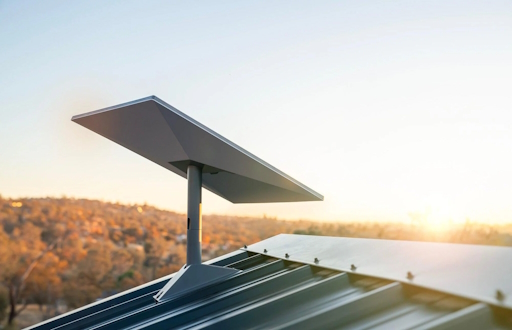
Starlink SpaceX is redefining the global internet by delivering connectivity to places where wires don't reach. By March 2027, the network will cover more than 901,000 people worldwide, including unexpected places like Antarctica and the deserts of Africa. Imagine: schoolchildren in remote villages in Kenya gaining access to online lessons for the first time, and researchers in the Arctic connecting with the world in real time—all thanks to thousands of satellites in low orbit.
Starlink works like this: thousands of small satellites fly low above the Earth and pick up signals from your internet connection. You set up an antenna at home, it connects to these satellites, and they send the data to larger stations on the ground that are connected to the internet. Then everything returns to you the same way—quickly and easily, so even in the middle of nowhere you'll have decent Wi-Fi.
Interesting fact: Starlink user terminals are so smart that they automatically locate satellites using built-in GPS and phased array antennas, and installation takes just 15 minutes. In 2024, a New Zealand farmer connected his pasture to the internet by simply installing an antenna on the roof of his barn, achieving speeds up to 200 Mbit/s. This makes Starlink more than just a technology, but a true bridge between isolated corners of the planet and the digital age.
Starlink doesn't directly conflict with local providers, as its primary goal is to provide high-speed internet in rural and remote regions, where traditional providers often lack the necessary infrastructure. In urban areas, local companies continue to serve customers with consistent quality and a wide range of services, so the interests of both parties complement each other, allowing them to coexist in different market segments.
Starlink System Structure
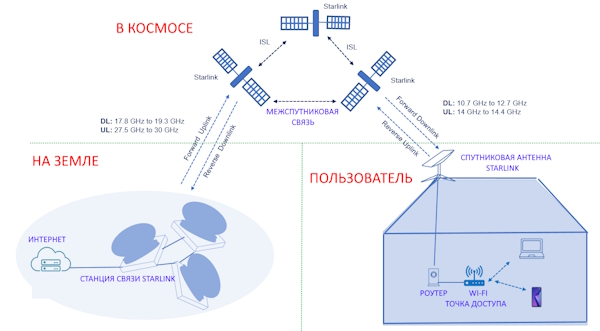
Starlink — is a complex network consisting of three main components that work together to provide Internet access:
- Satellites: The system comprises thousands of small satellites located in low Earth orbit (LEO), at an altitude of approximately 550 kilometers. Launched on Falcon 9 rockets, these satellites act as relays, transmitting data between user terminals and ground stations. Their low orbit reduces latency, providing speeds comparable to terrestrial broadband internet. By March 2027, more than 6,000 satellites were in orbit, covering over 901,000 people on Earth.
- Ground stations: These are ground-based facilities that connect the satellite network to the global internet. They receive data from the satellites, transmit it to the internet backbone, and send responses back. By 2027, Starlink had built more than 1,500 such stations around the world, including Antarctica, a remarkable step toward ensuring connectivity in the most extreme conditions.
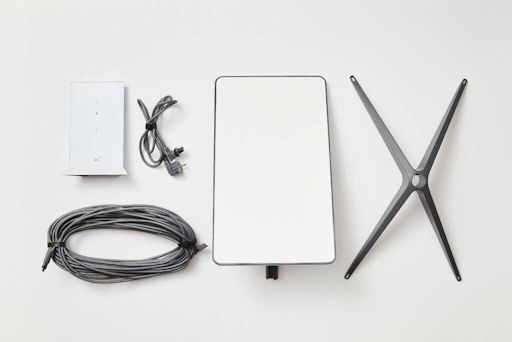
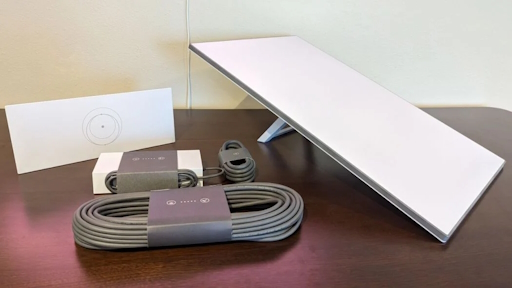
- User terminals: These are devices installed by end users to connect to the network. The terminals consist of compact phased-array antennas, a router, and the necessary cables. They are designed for easy installation, with automatic alignment, making them accessible even to those without technical skills. For example, a farmer in Siberia was able to connect by installing a terminal on the roof of his house in 15 minutes.
So, here's a brief overview of how Starlink and its components work:
- SatellitesLow orbit, 550 km, data relay. For example, signal transmission in Antarctica.
- Ground stationsInternet connection, over 1,500 stations. For example, data processing in Australia.
- User terminalsAntenna, router, automatic alignment. For example, installation by a farmer in New Zealand.
Here's what the satellites look like from Earth. They're not UFOs, as the uninitiated often mistake them for, but rather man-made objects:

How data is transmitted in the Starlink network
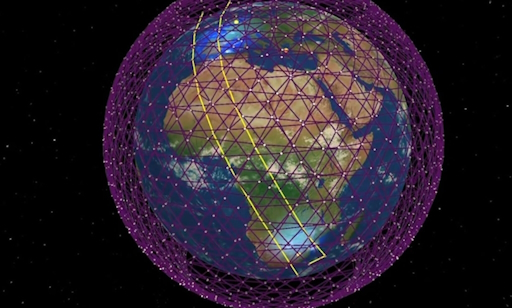
Starlink's data transfer process is simple yet efficient thanks to the satellites' low orbit:
- When a user sends a request through their terminal, the signal is routed to the nearest Starlink satellite.
- The satellite transmits this request to a ground station, which connects to the global Internet to receive the data.
- The response returns along the same path: from the Internet through the ground station, the satellite, and finally to the user terminal.
This design ensures low latency, which is especially important for online gaming, video conferencing, and streaming. For example, testing in Australia in 2024 showed a latency of just 20 milliseconds, comparable to the best terrestrial providers.
A step-by-step guide to connecting to Starlink
To connect to Starlink, follow these steps, which will be even easier by 2027 thanks to interface improvements:
- Availability check: Visit the Starlink website and enter your address to find out if the service is available in your area. If not, you can sign up for notifications about coverage expansions. For example, in March 2027, the service became available in remote areas of the Amazon, which was previously considered impossible.
- Order a set: If the service is available, order a Starlink Kit, which includes a user terminal, router, and cables. The kit price varies by region, but by 2027, the average price was around $500, including shipping.
- Terminal installation: Choose a location with an open view of the sky, free of obstructions such as trees or buildings. The terminal automatically aligns itself using GPS and a compass, which takes about 5 minutes. For example, a resident of Greenland installed the terminal on his roof and had internet access within an hour.
- Service activation: Log in to your account on the Starlink website and follow the activation instructions, including address verification and choosing a plan. By 2027, the process will take no more than 10 minutes, with chatbot support.
- Connecting devices: Connect your devices to the router via Wi-Fi or Ethernet. Make sure they are using IP addresses provided by the Starlink network. For example, a school in Kenya connected 50 computers, allowing students to study online.
Additional aspects
As of March 2027, Starlink does not officially operate in Russia. SpaceX, the developer, has not received permission from Russian authorities to provide satellite internet services, and the country is on a list of countries where the service is not planned to launch, along with China, Iran, and others. Although the satellite signal can physically reach Russian territory, network access is blocked due to the lack of a license and the use of geofencing, which limits the operation of terminals in unauthorized regions.
- Tariff plans: By 2027, Starlink will offer a Standard plan with typical speeds and a Priority plan with higher speeds, especially during peak hours. For example, the Standard plan in Europe provides up to 200 Mbps, while the Priority plan offers up to 500 Mbps.
- Coverage expansion: Starlink continues to launch satellites, and by March 2027, it had covered more than 951 TP3T of land, including the Arctic. This was made possible by 300 launches in 2024.
- User support: The company provides support via its website and mobile app, assisting with installation, troubleshooting, and account management. For example, in January 2027, the app received an update with a signal diagnostic feature.
In conclusion, let us answer a very common myth: “Starlink's internet is free."”:
- Starlink does not offer free plans; you must purchase equipment and sign up for a paid subscription. For example, in the US, the basic plan for home users starts at $4,000 per month, with an additional $4,000 for equipment. However, in special cases, such as natural disasters, the company may provide free internet access to affected areas.
Conclusions about the system
Starlink is an innovative system that is transforming internet access, especially in remote areas. Understanding its structure and connection process helps users utilize this technology effectively. By 2027, Starlink will become a key tool for global connectivity, providing stable access even in the most remote areas.