

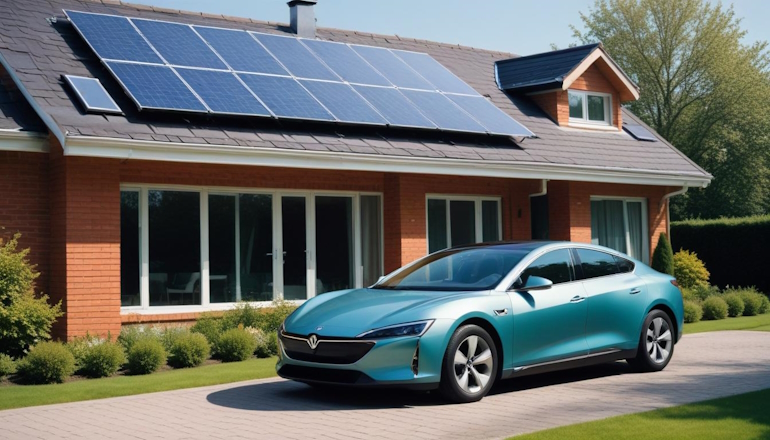
Plug-in hybrid vehicles (PHEVs) are modern vehicles that combine the advantages of a traditional gasoline engine and an electric motor.
These vehicles feature unique technology that allows users to use both electric and gasoline power. Plug-in hybrids are becoming increasingly popular due to their ability to reduce fuel consumption and CO2 emissions, while also providing greater travel flexibility.
By the way, if you're confused by the abbreviation "PHEV," we've previously written about deciphering the symbols and inscriptions on cars.
In this Q&A, we'll take a detailed look at how a hybrid plugin works, its main components, and its features.
Main components of plug-in hybrids

Plug-in hybrids combine two powertrains: a gasoline engine and an electric motor. The gasoline engine typically provides more power and range, while the electric motor allows for short, all-electric trips.
- Electric motorThis component is used to propel a vehicle over short distances without using gasoline. The electric motor can be powered by a battery that is charged from an external power source, such as a charging station or a regular electrical outlet.
- Gasoline engine: Functions as an additional energy source. It is activated when the electric motor's battery is depleted or when additional power is needed to achieve high speeds or cover long distances.
- BatteryA vital component that stores electrical energy to operate the electric motor. Plug-in hybrid batteries have a higher capacity than conventional hybrids, allowing for longer range on electric power alone.
- Control systemThis is an electronic unit that controls both engines and determines when to use electric or gasoline power. It also monitors the battery charging process and can optimize energy use for increased efficiency.
How a Plug-in Hybrid Works

Plugin hybrids offer multiple operating modes, making them flexible and efficient:
- Electric modeIn this mode, the car runs entirely on battery power. This is ideal for short trips around town when high power isn't required. A fully charged battery allows for several dozen kilometers of electric driving, making these trips environmentally friendly.
- Hybrid modeWhen the battery charge level drops, the plug-in hybrid automatically switches to the gasoline engine. In this mode, both engines can operate simultaneously, providing additional power and increasing range.
- Charging modeIn this mode, the gasoline engine is used to charge the battery when it's completely discharged. This allows you to continue your journey without having to find a charging station.
- Save modeSome plug-in hybrid models have a mode that preserves the battery for future use, such as for city driving that requires electric propulsion. This mode uses only the gasoline engine to propel the vehicle.
Drive is carried out using a special unit (AMI) – Auxiliary Motor Integration (Auxiliary Motor Integration), which is used to integrate an auxiliary motor or component with the vehicle's main powertrain. In other words, it is a device that connects the auxiliary electric motor to the main engine of a hybrid vehicle.
- AMI allows the auxiliary engine to operate in synergy with the main internal combustion engine (ICE). This may include controlling additional electric motors or motor-generators, which help increase the vehicle's overall power or improve its fuel efficiency.
- In plug-in hybrid vehicles, AMI provides support for the hybrid system, enabling additional electric or hybrid operation. This is particularly important for improving the vehicle's performance and versatility.
- AMI can participate in the energy recovery process, where energy that would normally be lost during braking is recovered and transferred back to the battery.
Advantages and disadvantages of plug-in hybrids
Advantages:
- Fuel economy: Plug-in hybrids significantly reduce fuel consumption, especially on short trips when using electric mode.
- Eco-friendliness: Reduce CO2 and pollutant emissions thanks to the ability to drive electric.
- Flexibility: The ability to use both energy sources allows you to cope with various road conditions and long journeys.
- IncentivesIn some countries and regions, plug-in hybrid owners may receive tax incentives or other benefits.
Flaws:
- High costPlug-in hybrids can be more expensive than traditional cars due to the complex system and additional components.
- Limited electric rangeAlthough the batteries have a large capacity, the electric range is still limited.
- Need for charging: For maximum efficiency, plug-in hybrids require regular charging, which may be inconvenient for some owners.
Conclusion
Plug-in hybrids represent an evolution of hybrid technology, offering users the option of hybrid and electric driving. They offer excellent fuel economy, reduced emissions, and flexibility in using multiple energy sources. However, they also have their limitations, such as high cost and the need for regular charging. Nevertheless, plug-in hybrids continue to attract attention due to their environmental and economic advantages, making them an attractive choice for modern drivers.