

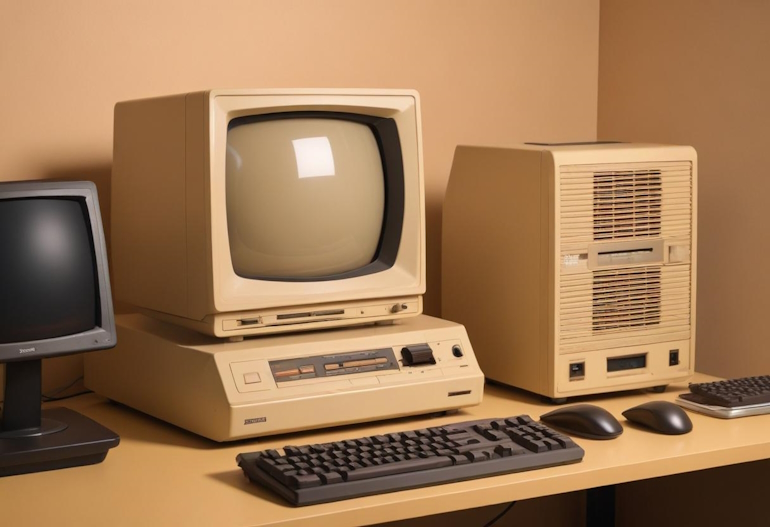
Computer, or a personal computer (PC), is a device capable of performing a variety of tasks thanks to a complex system of hardware and software.
Computer hardware
The computer consists of several key components:
- central processing unit (CPU), which is the "brain" of the computer, processing data and instructions.
- Random access memory (RAM) is used to temporarily store data, providing quick access to information.
- A hard disk drive (HDD) or solid state drive (SSD) is used for long-term data storage.
Computer operation
The computer's operation begins the moment it is turned on, when the operating system (OS), such as Windows or Linux, is loaded.
This process involves initializing hardware components such as the processor, RAM, hard drive, and other devices. The operating system acts as an intermediary between the computer hardware and the user, providing an interface for interaction.
When the operating system is loaded, the user can launch various programs and applications that run on the computer. These programs perform a variety of tasks, from word processing and image editing to gaming and internet browsing. The operating system manages the computer's resources, ensuring programs have access to the processor, memory, and other devices needed to complete their tasks.
It's important to note that operating systems have different interfaces and features, allowing users to choose the most convenient option based on their needs and preferences. User experience largely depends on the efficiency and reliability of the operating system, which ensures ease of use and accessibility of the computer's functionality.
Operating system and applications

An operating system (e.g., Windows, macOS, Linux) provides the interface for working with a computer. User programs, such as text editors, web browsers, games, and other applications, use the computer's resources to perform tasks.
An operating system is the primary software on a computer, managing all its resources and providing the interface for user interaction with the device. Examples of operating systems include Windows, macOS, and Linux, each offering unique features and capabilities.
The operating system provides access to user programs such as text editors, web browsers, games, and more. These applications use the computer's resources, such as the processor, memory, and storage, to perform various tasks. For example, text editors allow you to create and edit documents, web browsers provide internet access, and games offer entertainment and interactive experiences.
All of these applications rely on the operating system to manage access to computer resources and ensure data security. This makes the operating system an integral part of a modern computer, ensuring convenience and efficiency in users' daily tasks.
Communications and networks
Computers can be connected to the internet or other computers via networks. Network cards (and, in the past, modems) provide connectivity to external networks, allowing data exchange and access to online resources.
Conclusion
A computer is a complex system that transforms data into useful information for users. Understanding how it works allows one to effectively utilize its capabilities in various areas of life and work.