

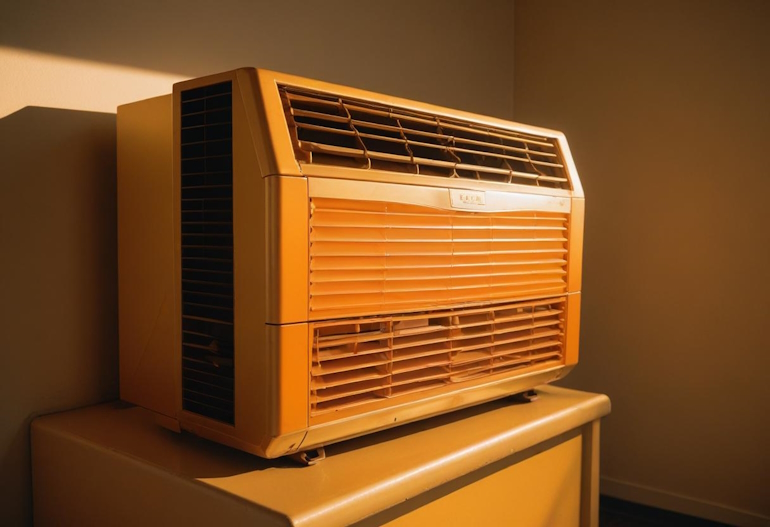
Air conditioners — is an integral part of modern comfortable living, providing cooling and humidity control in rooms.
Let's explore the basic principles and components of these devices to better understand how they function and how they provide comfortable conditions in homes and offices.
In simple words
Air conditioners operate on the principle of cyclical cooling and humidity control in the room.
The main components of an air conditioner include the compressor, condenser, evaporator, and expansion valve.
The compressor compresses and cools the refrigerant, which then passes through the condenser, where heat is released into the environment. The refrigerant then passes through the evaporator, where it absorbs heat from the room air, reducing its temperature. The expansion valve controls the flow of refrigerant, ensuring efficient system operation.
These were the basic principles of how an air conditioner works.
The main components of an air conditioner
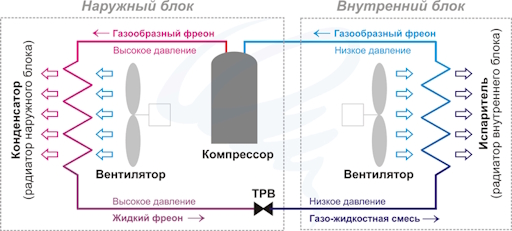
An air conditioner consists of several key components, each of which plays an important role in the cooling and humidity control process:
- Compressor: It is responsible for compressing and circulating the refrigerant (usually freon) throughout the air conditioning system.
- CapacitorThis component removes heat from the room. The hot refrigerant gas cools and condenses into a liquid, releasing heat into the surrounding environment.
- EvaporatorLiquid refrigerant is sprayed inside the evaporator where it absorbs heat from the room air, lowering its temperature.
- Expansion valve: This valve regulates the flow of refrigerant, ensuring optimal pressure and temperature in the system.
How an air conditioner works
As mentioned above, air conditioners operate through a cyclical cooling process called the refrigeration cycle. The main stages of the cycle include compression, condensation, expansion, and evaporation of the refrigerant.
As a result of this process, the air in the room is cooled and humidity is controlled, creating a comfortable living environment.
Air conditioners are used in residential and commercial buildings, as well as in cars and other vehicles.
Examples of air conditioners include window, wall, cassette, and central systems, each designed for a specific room type and cooling requirements.
Understanding how air conditioners work helps you use them more efficiently and maintain indoor comfort. The key components and processes of the refrigeration cycle are the foundation for the efficient operation of any air conditioning system.
Air conditioning in cars

The car air conditioner operates on the principle of a closed refrigeration cycle.
It consists of components such as compressor, condenser, evaporator and expansion valve.
The process begins with the compressor, which compresses and pumps the refrigerant into the condenser, where it cools and condenses. The cooled refrigerant then passes through the expansion valve, where the pressure is reduced, causing it to expand and cool. The evaporator, in turn, draws air from the car's interior through the refrigerant flowing through it, allowing the air to cool more quickly before being released into the cabin.
The role of freon
Freon, or refrigerant, plays key role in an air conditioner. It circulates through a closed refrigeration cycle, changing its state from liquid to gas and back.
In the condenser, the freon is compressed and cooled, releasing heat. It then expands in the evaporator, absorbing heat from the surrounding air and cooling it.
This process allows the air conditioner to cool and regulate the temperature in a room or car.
Why does it cool poorly?
There are several possible causes of poor air conditioning performance. These factors can contribute to poor air conditioning performance, and troubleshooting the problem often requires a professional air conditioning service technician:
- Lack of refrigerant (freon): If the air conditioning system is low on refrigerant or has a leak, the air conditioner will not be able to cool the air effectively.
- Compressor damage: A damaged or worn compressor will not be able to properly circulate the freon and create the necessary pressure for cooling.
- Clogged filters or evaporator: Clogged filters or evaporator coils can restrict normal airflow through the system, reducing cooling efficiency.
- Problems with the fan: A faulty fan in the condenser or evaporator can result in insufficient airflow, which reduces cooling performance.
- Electrical or electronic problems: Incorrect operation of electronic components such as temperature sensors or controllers may cause the air conditioner to operate erratically.
- Air damper leakage: Problems with air distribution in the vehicle's interior can result in uneven cooling of different areas.