

Air defense (AD) – is a set of measures and systems designed to protect airspace from air attacks.
In the modern world, air defense plays a key role in ensuring national security, protecting strategic facilities and populations from airstrikes and missile attacks. Let's explore how this complex system is structured and operates.
Basic principles of air defense operation

Air defense is based on a number of key principles that enable effective airspace protection. The primary objectives of air defense are:
- Threat Detection: At the first stage, it's crucial to promptly detect approaching aerial targets—whether aircraft, helicopters, missiles, or drones. Radar stations, which detect objects in the sky at long distances, are used for this purpose.
- Threat classification and assessment: Once a target is detected, it's necessary to determine its threat level. At this stage, air defense specialists analyze target data, such as speed, altitude, and trajectory, to determine its type and threat level.
- Targeting and destruction: If the target poses a threat, a decision is made to destroy it. The launchers of surface-to-air missile systems (SAMs) are guided to the target and fire missiles designed to destroy it before it reaches its target.
- Analysis of results: Following an attack, the effectiveness of air defense actions is analyzed. The system evaluates whether the threat has been neutralized, and if not, additional defensive measures are taken.
Air defense technologies and means

Modern air defense systems incorporate a variety of technologies, each of which performs its own function in protecting airspace.
Radar stations
Radar stations are the primary instrument for detecting aerial targets. They operate by reflecting radio waves off objects. When a radar wave strikes a flying object, it is reflected back to the radar, where the delay time and other characteristics of the wave are used to determine the object's position, speed, and direction.
There are different types of radars:
- Long range: These stations can detect targets at distances of up to several hundred kilometers. They provide early warning and allow air defense systems to prepare for an attack in advance.
- Medium range: Such radars operate at medium ranges and are often used to guide missiles to their targets.
- Short range: They provide protection against targets that have already overcome distant defensive lines and are located near the protected objects.
Anti-aircraft missile systems
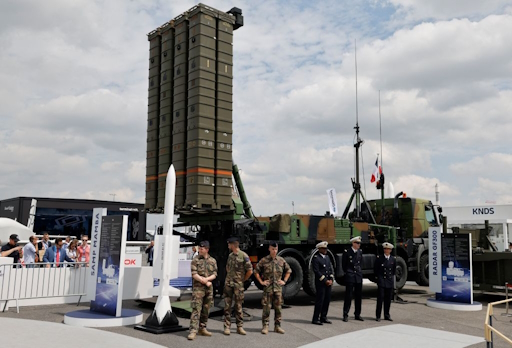
Surface-to-air missile systems (SAMs) are the primary means of destroying air targets in air defense systems. For example, the world's most famous SAM system, the Patriot, which we've already written about, is a surface-to-air missile system that is part of an air defense system.
Depending on the tasks and characteristics of the targets, different types of air defense systems are used:
- Mobile air defense systems: These systems are mounted on the chassis of cars or armored vehicles and can quickly change their position. They are effective against helicopters and drones.
- Stationary air defense systems: Deployed on special platforms, they protect strategically important facilities such as airfields or military bases. These systems can carry long-range missiles capable of striking targets up to several hundred kilometers away.
- Tactical air defense systems: They are used to protect troops on the battlefield. They operate at low and medium altitudes and are capable of engaging low-flying targets.
Control and communication systems
Reliable command and communication systems are essential for coordinating the operations of all air defense elements. They integrate data from all radars and air defense systems, ensuring the rapid transmission of information and commands in real time. These systems enable rapid response to changing situations and effective air defense operations.
Modern challenges and threats

As technology advances, air threats are becoming increasingly complex and diverse. New types of weapons, such as hypersonic missiles and stealth aircraft, are emerging, significantly complicating air defense operations.
Hypersonic missiles
One of the main threats to air defenses today is hypersonic missiles, which can reach speeds exceeding Mach 5. These missiles can travel long distances in minutes, leaving air defenses with minimal reaction time. To combat these threats, new generations of anti-aircraft missiles capable of intercepting targets at hypersonic speeds are being developed.
Stealth technologies
Stealth technologies used in modern aircraft are aimed at reducing their radar signature. Such aircraft can remain undetected until the last possible moment, creating serious problems for air defense systems. To combat this, new types of radars operating in different frequency bands are being developed, as well as electronic warfare systems (EW) capable of disrupting the onboard systems of stealth aircraft.
Historical examples of the use of air defense
One striking example of the successful use of air defense is the Battle of Britain in 1940. The British air defense system, consisting of radar, fighter units, and anti-aircraft artillery, was able to repel massive German air raids, inflicting serious damage on the Luftwaffe and thwarting Nazi plans to invade Great Britain.
The Soviet air defense system also played a key role in the country's defense during the Great Patriotic War. Anti-aircraft artillery units made a particularly significant contribution to the defense of Moscow and Leningrad from the massive bombing raids of the German air force.
The Future of Air Defense
As technology advances and new threats emerge, air defense systems continue to evolve. Work is currently underway to develop integrated air and missile defense systems capable of protecting against a wide range of threats, including ballistic missiles and unmanned aerial vehicles. The future of air defense will likely rely on the development of artificial intelligence and automated systems capable of responding to threats more quickly and accurately, as well as the integration of space-based surveillance and interception systems.