

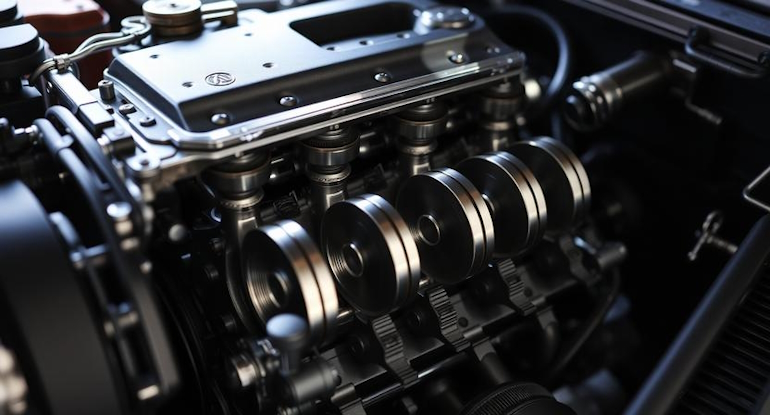
Otto cycle internal combustion engine — is a classic gasoline engine that is the basis of most passenger cars.
Description: A detailed explanation of the Otto cycle engine principles, including intake, compression, combustion and exhaust, as well as the impact of design and technology on efficiency.
Understanding how it works is important not only for engineers and mechanics, but also for car owners, as the efficiency of this process affects fuel consumption, engine power, and durability.
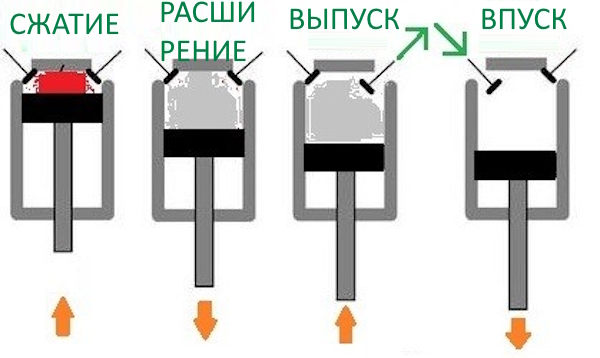
The Otto cycle describes the sequence of thermodynamic processes that occur inside the cylinder during operation of a piston engine, and includes intake, compression, power stroke, and exhaust:
Intake stroke
The first stage of engine operation begins with the intake of the fuel-air mixture into the cylinder. As the piston moves downward, the intake valve opens, filling the cylinder with a mixture of gasoline and air. The cylinder's volume increases, creating a vacuum that draws the mixture in. At this stage, the quality of the mixture and proper valve operation are critical, as subsequent combustion and engine efficiency depend on these factors.
Compression stroke
After the intake valve closes, the piston begins its upward movement, compressing the mixture. This process increases the pressure and temperature inside the cylinder, preparing the fuel for an effective explosion upon ignition. Compression ratio is a key engine parameter and directly affects its efficiency, power, and susceptibility to detonation. Too high a compression ratio can cause premature ignition, while too low a ratio reduces combustion efficiency.
Working stroke (combustion)
When the piston reaches top dead center, the spark plug creates a spark that ignites the compressed mixture. The explosion of combustible fuel dramatically increases the pressure in the cylinder, pushing the piston downward. This process converts the chemical energy of the fuel into mechanical work, which is transmitted to the vehicle's transmission via the connecting rod and crankshaft. The efficiency of the power stroke depends on precise ignition timing, mixture homogeneity, and the correct air and fuel pressure.
Exhaust stroke
After completing the power stroke, the piston begins its upward movement again, but the exhaust valve is now open. Hot combustion products are forced into the exhaust manifold and then into the exhaust system. Effective exhaust reduces residual pressure and cylinder heat, preparing the engine for the next cycle. Incomplete exhaust results in reduced power and increased fuel consumption.
The role of thermodynamic processes
The Otto cycle describes these four cycles as a thermodynamic process with isochoric and adiabatic stages.
- Compression and power stroke are adiabatic processes in which heat is not removed to the outside, and the pressure and temperature increase.
- Intake and exhaust are processes with changes in volume and heat exchange with the external environment.
This approach allows us to calculate engine efficiency and optimize its operation for specific operating conditions.
Influence of engine design
The efficiency of the Otto cycle depends on the cylinder design, combustion chamber shape, camshaft cam profile and fuel system parameters.
Modern technologies such as direct injection systems, turbocharging and valve timing control improve cylinder filling, combustion precision and reduce fuel consumption, while maintaining the benefits of the classic cycle.
Control and adjustment
Modern electronic control systems continuously monitor piston position, ignition timing, and mixture composition. Pressure, temperature, and oxygen sensors allow for real-time adjustments to engine operation, ensuring Otto cycle stability even under changing operating conditions, altitude, or fuel quality.
Disadvantages of the Otto cycle internal combustion engine
The main drawback of the Otto cycle is its relatively low thermal efficiency compared to more modern designs like the Atkinson cycle, which leads to higher fuel consumption and emissions. A classic gasoline engine is also more susceptible to detonation at high compression ratios and requires precise ignition and mixture control. Nevertheless, it continues to be produced due to its simple design, reliability, proven durability, and high specific power per volume, as well as a well-developed service infrastructure and component availability.
Differences from the Atkinson cycle internal combustion engine
The Atkinson cycle differs from the classic Otto cycle in that it provides a longer expansion stroke and a shorter compression stroke by staggering the intake valve timing. This allows the power stroke to utilize more energy from fuel combustion and increases the engine's thermal efficiency, reducing fuel consumption and emissions, but at the expense of reduced power output per unit volume. This approach is often used in hybrid and fuel-efficient gasoline engines, where fuel efficiency and environmental friendliness are prioritized over maximum power.
Examples and reasons
For example, the familiar LS engines in GM and HEMI engines in Dodge operate on the classic four-stroke Otto cycle, as it is the optimal choice for gasoline engines with high specific power and dynamic response. This cycle efficiently converts the chemical energy of the fuel into mechanical energy, ensuring a fast power stroke and stable combustion at high rpm, which is critical for sports and high-performance engines. Furthermore, proven reliability and ease of maintenance make the Otto cycle the preferred choice for these production V8 engines.
Conclusion
The Otto cycle remains the fundamental operating model for gasoline engines, offering a combination of simplicity, efficiency, and reliability. Understanding its principles allows us to evaluate the impact of various technologies, design solutions, and operating modes on engine performance and durability. Proper tuning of each stage—intake, compression, power stroke, and exhaust—determines the optimal balance of power, efficiency, and engine stability.