
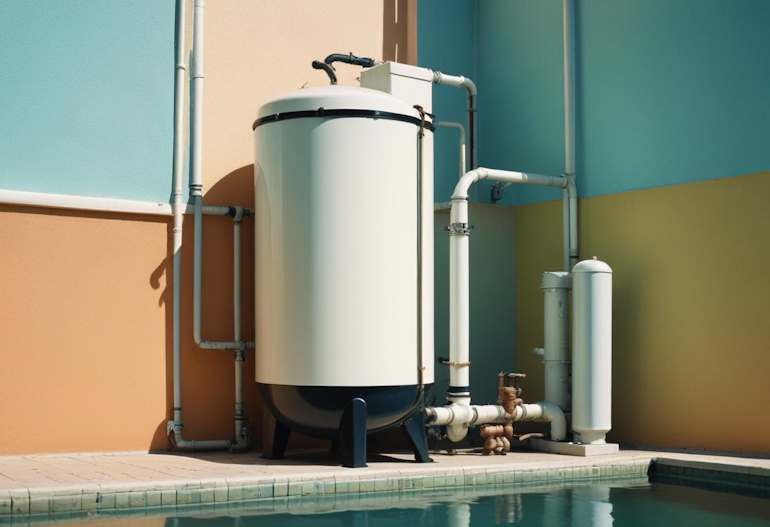
Combi In the context of a domestic hot water system, a boiler and water heater combination is designed to provide heating and hot water in a single unit.
This system provides a convenient solution for maintaining a comfortable indoor climate and meeting hot water needs. In this article, we'll take a detailed look at how a combi system works, its key components, operating principles, and advantages.
Combi system components
The combi-system includes several main components, each of which plays an important role in its functioning:
- Boiler: The core element of a combi system is the boiler, which is responsible for heat generation. Modern boilers can run on various fuels, such as gas, electricity, or liquid fuel. They are equipped with a system that burns the fuel and transfers the heat to a coolant (water), which is then used for heating and hot water. The boiler is the heart of the combi system. It generates heat, which is used for both heating and hot water. Modern boilers can run on various fuels:
- Gas boilers: The most common due to their efficiency and availability. They burn natural gas supplied from the pipeline network.
- Electric boilersThese boilers use electricity to heat water. They are easy to install and don't require a gas connection, but they can be more expensive to operate.
- Liquid fuel boilers: They run on diesel or other liquid fuels. They are often used in areas where gas is not available.
The boiler is equipped with a system that burns fuel and transfers heat to a coolant (water). This hot water is then distributed throughout the system to heat rooms and provide domestic hot water.
- Boiler: In a combi system, the water heater is integrated into the boiler and used to store hot water. It can be built directly into the boiler or provided as a separate unit. The water heater stores hot water, making it available as needed. In a combi system, the water heater stores hot water for use as needed. It can be built directly into the boiler or provided as a separate unit. There are two main types of water heaters:
- Integrated boilerBuilt into the boiler, it takes up less space. It simultaneously provides heating and hot water, making it convenient for smaller spaces.
- Split boilerThis is a separate unit that can be installed next to the boiler. This option can provide a larger amount of hot water and is more commonly used in larger systems.
The boiler provides a constant supply of hot water, allowing the user to have access to it at any time.
- Heat exchanger: This device transfers heat from the boiler to the water in the system. The heat exchanger can be integrated into the boiler or a separate component. Its purpose is to efficiently transfer heat, ensuring high system efficiency. A heat exchanger is a device that transfers heat from the boiler to the water in the system. It can be integrated into the boiler or installed as a separate component. There are several types of heat exchangers:
- Plate heat exchangers: They are used for compact systems and provide high heat transfer due to the many thin plates through which the coolant passes.
- Tubular heat exchangers: They consist of pipes through which hot water passes, giving off its heat to the water in the heating system.
The main function of the heat exchanger is to efficiently transfer heat, which ensures high efficiency of the entire system and stable temperature maintenance in the radiators and boiler.
- Circulation pump: A circulation pump circulates hot water throughout the heating and hot water supply system. It helps distribute heat evenly and maintain a stable water temperature in radiators and pipes. A circulation pump is essential for ensuring uniform distribution of hot water throughout the heating and hot water supply system. Its functions include:
- Water circulation: The pump ensures constant movement of hot water through the pipes and radiators, which helps maintain an even distribution of heat.
- Maintaining a stable temperature: Helps maintain a stable water temperature in the system, preventing overheating or overcooling.
Circulation pumps can be integrated into the boiler or installed separately. They can be equipped with various features, such as speed regulation and automatic control, to improve system efficiency.
- Control system: Modern combi-systems are equipped with intelligent control systems that allow you to adjust the temperature, operating time, and other system parameters. These control systems can be programmable or remotely controlled via mobile apps. Modern combi-systems are equipped with intelligent control systems that allow the user to customize the system's operating parameters:
- Programmable systems: Allows you to set a schedule for the boiler and water heater operation, specifying the on/off times, as well as the optimal temperatures for heating and hot water supply.
- Remote control: Using mobile apps or remote controls, you can set up and control the system from anywhere, providing additional convenience and energy savings.
These control systems can include automatic adaptation functions to changes in temperature and water consumption, which helps maintain comfortable conditions in the home and minimize energy costs.
Operating principles of the combi-system

The operation of the combi-system is based on several key principles:
- Heating and hot water supply: The combi boiler operates in two modes: heating and hot water supply. When heating mode is enabled, the boiler heats the water in the system and directs it through the radiators to warm the room. When hot water is needed, the system switches to hot water supply mode, and the boiler heats the water in the boiler.
- Water circulation: Water in a combi system circulates thanks to a circulation pump. When the boiler heats water, the pump pumps it through the radiators and pipes, ensuring even heat distribution. When hot water is consumed, the boiler also circulates, ensuring a constant supply.
- Temperature control: Modern combi systems are equipped with thermostats and control systems that monitor the water and air temperatures within the system. These devices help maintain a preset room temperature and ensure comfortable conditions.
- Energy efficiency: Modern combi systems are designed for high energy efficiency. They incorporate technologies such as condensation, which utilizes the heat released during fuel combustion to provide additional hot water. This reduces energy consumption and lowers heating costs.
Heating and hot water supply
The combi boiler operates in two main modes: heating and hot water supply.
- Heating modeWhen the boiler is turned on in heating mode, it heats the water in the system and directs it through radiators or convectors in the room. The radiators release heat into the air, creating a comfortable room temperature. The boiler can use various types of heat exchangers to efficiently transfer heat to the water.
- Hot water supply modeWhen switching to hot water mode, the boiler heats water in the boiler or direct storage tank. This process occurs on demand, ensuring hot water is available for household needs such as washing dishes or showering. In this mode, the system can use the integrated boiler or an external storage tank.
The boilers are equipped with switches that automatically switch between these modes depending on the user's needs.
Water circulation
Water circulation in a combi system plays a key role in maintaining uniform heating and providing hot water.
- Circulation in heating modeA circulation pump integrated into the system circulates hot water through the radiators and pipes. This pump ensures even heat distribution throughout the home, preventing cold spots and maintaining a comfortable temperature in every room.
- Circulation in hot water supply modeWhen hot water is needed, the pump also circulates water through the boiler. This maintains stable hot water pressure and temperature, even during high demand.
Water circulation promotes efficient heating and minimizes energy loss, preventing excessive cooling of the water in the system.
Temperature control
Modern combi systems use advanced technologies to control the temperature in the system.
- ThermostatsBuilt-in thermostats measure water and air temperatures, allowing the system to automatically maintain a preset temperature. The user can set comfortable temperatures for different zones or rooms.
- Control systemsThese systems can be programmable or remote. Programmable systems allow you to schedule the boiler and adjust the temperature based on the time of day and your needs. Remote control via mobile apps or remote controls allows you to monitor the system from anywhere, increasing convenience and flexibility.
Temperature control promotes comfortable conditions in the home and helps manage energy consumption efficiently.
Advantages of the combi system
Combi systems offer a number of advantages that make them popular in modern homes:
- Space saving: Combi boilers combine heating and hot water supply functions in a single unit, saving space in the home. This is especially useful in areas with limited space or when optimizing space utilization is essential.
- Convenience and simplicity: Combi systems provide a constant supply of hot water and comfortable heating without the need for a separate boiler or additional devices. This simplifies operation and maintenance.
- Reduced energy costs: Modern combi systems offer high efficiency and energy savings. The use of technologies such as condensation significantly reduces fuel costs and CO2 emissions.
- Smart technologies: Modern combi-systems are equipped with intelligent control systems that allow for optimization, schedule customization, and control of parameters via mobile apps. This makes the system more convenient and adaptable to user needs.
Conclusion
A combi system is an effective solution for providing heating and hot water in a single unit. Combining a boiler and a water heater in a single system optimizes space, reduces energy costs, and ensures a high level of comfort. Understanding how a combi system operates and its advantages will help you make an informed choice when installing and operating this type of equipment.