

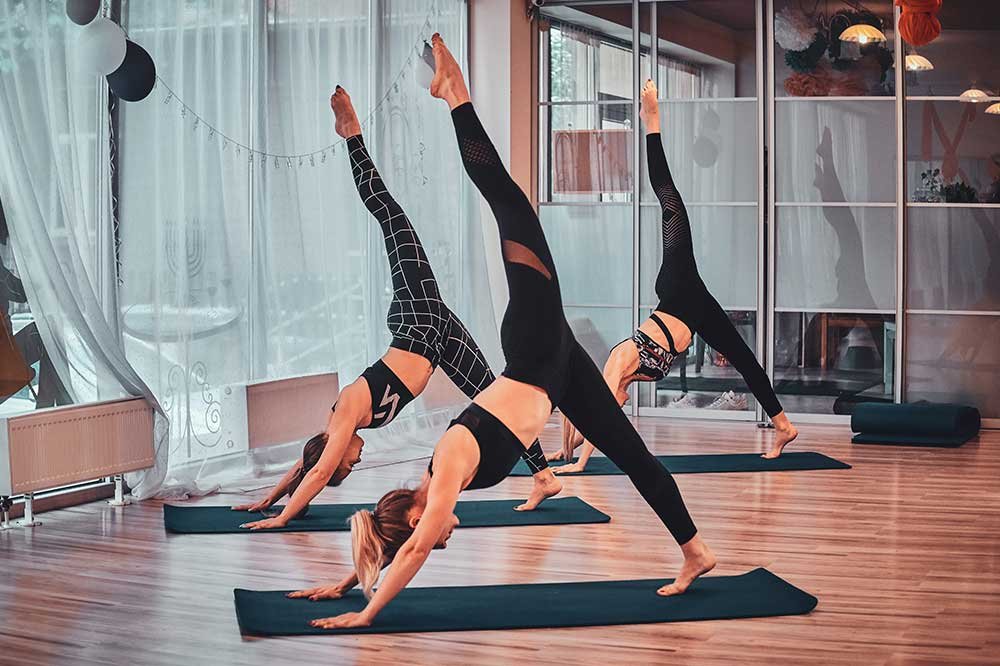
Yoga is a practice based on ancient Indian philosophy that combines postures (asanas), breathing techniques, and meditation, while Pilates is a 20th-century exercise method created by German Joseph Pilates that focuses on core strengthening, movement control, and proper posture. Simply put, yoga places more emphasis on stretching, breathing, and calmness, while Pilates focuses on strengthening and stabilizing the core muscles. Both types of exercise improve fitness and well-being, and the choice primarily depends on what you want from the workout.
To sum it up
- Origin: Yoga – ancient India; Pilates – early 20th century, Joseph Pilates.
- Target: Yoga – flexibility, balance, breathing and peace of mind; Pilates – core strengthening, stabilization, posture.
- Form: Yoga typically involves holding poses and moving smoothly between them; Pilates involves precise, controlled repetitions of exercises.
- Equipment: For yoga, you only need a mat; Pilates is practiced on a mat or special equipment, such as a reformer.
Yoga – where did it come from and what is its essence?
Yoga Originated in ancient Indian philosophy. Traditionally, it is a broad path of development, encompassing ethical principles and meditation, not just physical exercise. Modern yoga, practiced in clubs and schools, typically combines three elements: asanas (body postures), pranayama (breathing exercises) and meditation or relaxation.
There are many styles of yoga, from gentle, stretch- and relaxation-focused poses to dynamic and physically challenging ones. For example, Hatha Yoga features more relaxed poses, Ashtanga and Vinyasa are flowing sequences combined with breathing exercises, and Iyengar Yoga emphasizes precise body alignment, often with the help of blocks and straps. Classes may or may not include spiritual elements—many schools focus solely on physical and breathing aspects.
Pilates – where did it come from and what is it?
Pilates Method was created at the beginning of the 20th century Joseph Pilates , a native of Mönchengladbach, Germany. He called his method "Controlology"—the art of controlled movements. He developed it, in part, during World War I, while stationed in a British prison camp on the Isle of Man, training with other prisoners.
Pilates exercises are aimed at strengthening the core muscles (abdominal, back, pelvic floor, and hip muscles), proper body alignment, breathing, and coordination. The movements are slow, precise, and performed in several dozen repetitions. Pilates is practiced in two ways:
- on the rug (mat Pilates) – using your own body weight, sometimes with a ball, elastic band or ring;
- on exercise machines, developed by Joseph Pilates, the most famous of which is reformer (a mobile cart with springs), as well as the Cadillac and Wunda Chair.
Yoga and Pilates - the most important differences.
| Characteristic | Yoga | Pilates |
|---|---|---|
| Source | ancient India | Joseph Pilate (German artist), early 20th century. |
| main emphasis | flexibility, balance, breathing, relaxation | core strength, stabilization, posture |
| Character of movement | holding positions or smooth sequences | controlled number of exercise repetitions |
| Breath | individual techniques (pranayama), breathing directs movement | Breathing synchronized with movement promotes stabilization. |
| Element of meditation | often present | usually absent, the emphasis is on concentrating on movement. |
| Equipment | rug, blocks and stripes if desired. | mat or exercise equipment (reformer, Cadillac) |
| Diversity | a variety of styles, from delicate to dynamic. | Pilates on mats and Pilates on equipment. |
In practice, the lines blur: some yoga classes significantly strengthen muscles, while Pilates also improves mobility. In short, Pilates emphasizes core strengthening, while yoga emphasizes flexibility.
What are the benefits of yoga and Pilates? Benefits and safety.
The US National Center for Health and Human Development (NCCIH) reports that research shows yoga's beneficial effects on stress reduction and improved balance, and that it is slightly more effective than no exercise for low back pain, although the differences are often small. In the case of Pilates, reviews of studies on low back pain show it to be better than no exercise, but not significantly more effective than other forms of exercise—and the quality of this evidence is rated as low.
Both sports are considered safe for healthy individuals when practiced under the supervision of a qualified instructor. However, injuries do occur, most commonly strains and sprains. If you have back or joint problems, high blood pressure, glaucoma, are pregnant or recovering from an injury , consult with your doctor or physical therapist before starting classes and inform the instructor about your health condition.
Yoga or Pilates – which to choose?
- Choose yoga, If you want to improve your flexibility and balance, learn breathing techniques, and are looking for activities that will help you calm down.
- Choose Pilates, If you want to strengthen your abdominal and back muscles, improve your posture, and achieve precise, controlled muscle movements—for example, as a complement to running, gym workouts, or sedentary work.
- Looking for something easier to get started? Check out beginner classes in both disciplines—for example, Hatha Yoga or Basic Mat Pilates—and see which style suits you best.
- Both types of activities can be combined. Many people do Pilates to strengthen their muscles and yoga to stretch and relax.
Regardless of your choice, what's more important than the method itself is consistency, proper technique, and an instructor who adapts the exercises to your abilities.
Frequently Asked Questions (FAQ)
What is better for the spine: yoga or Pilates?
Both types of exercise can help people with back pain, but research hasn't found a clear winner. If you have back problems, consult your doctor or physical therapist first, who can advise you on which exercises are safe for you.
Is Pilates a type of yoga?
No. Pilates is a distinct exercise method developed by Joseph Pilates in the 20th century. It shares elements with yoga, such as breathing exercises and concentration, but differs in origin and purpose.
What is best for strengthening abdominal muscles?
Pilates focuses on core training, so it typically targets the abdominal muscles more directly and intensely. Dynamic yoga styles also strengthen them.
Do you need a reformer for Pilates?
No. Pilates can be practiced on a mat using your own body weight. A reformer and other equipment allow you to adjust the resistance and support your movements, but are not required.
Is it possible to do yoga and Pilates during pregnancy?
Many yoga schools offer classes for pregnant women, but some poses and variations (such as hot yoga) are not recommended. Always consult your doctor before starting any exercise during pregnancy.
See also
- What is the difference between the abdomen and the stomach?
- What is the difference between a magnetic and a mechanical bike?
- What is the difference between fast-twitch and slow-twitch muscles?
- What is the difference between a compound bow and a traditional bow?