

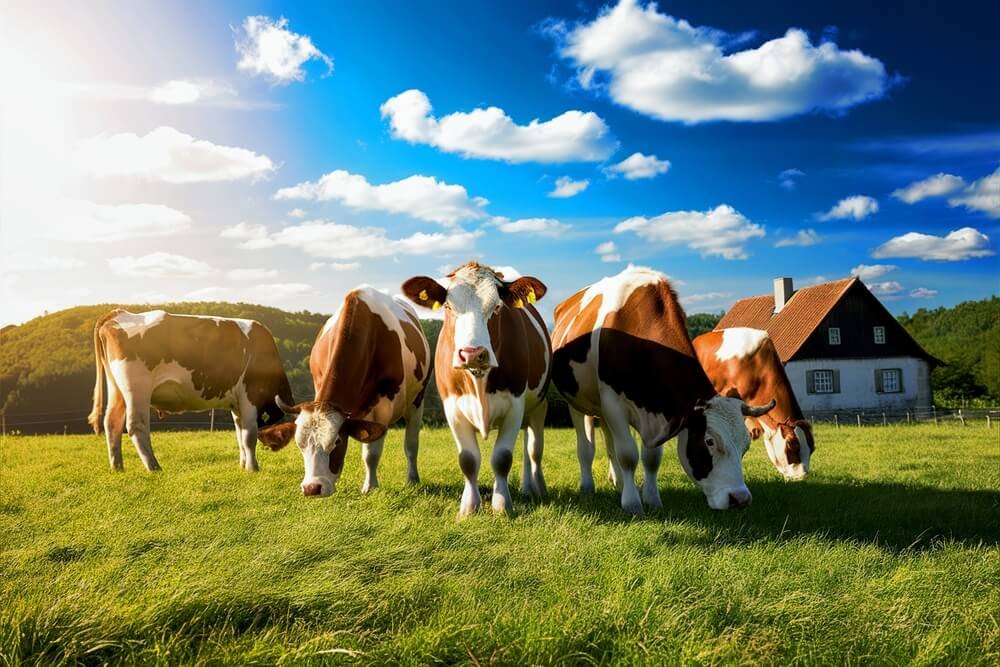
Animal husbandry is the keeping of animals: feeding, watering, housing, and caring for them to produce products such as milk, meat, eggs, or wool. Breeding includes activities aimed at improving the hereditary characteristics of animals, such as assessing their value, selecting, and pairing them for mating. Simply put, animal husbandry answers the question of "how to keep animals," while breeding answers the question of "what animals to breed to ensure better future generations.".
In everyday speech, these two words are used interchangeably ("I raise chickens," "I raise pigs"). However, in agriculture, livestock farming, economic geography, and regulation, these terms have distinct meanings.
To sum it up
- Target: Selection – production (milk, meat, eggs, wool); selection – improvement of the genotype of animals.
- Scope of work: Breeding includes feeding, housing, hygiene and care; breeding includes evaluation of usefulness, selection and selection for mating.
- Addiction: Reproduction is impossible without proper care, but reproduction can exist without it.
- Documentation: The breeder keeps breeding documentation (pedigrees, evaluation results); it is not required for breeding itself.
What is animal husbandry?
Animal husbandry includes Providing animals with the necessary conditions for life, growth, and reproduction, as well as their daily care. The integrated educational platform describes this as keeping animals indoors or outdoors, feeding them, and ensuring their cleanliness and safety in order to obtain various products from them, such as milk, eggs, or wool.
Among other things, the following animal species are involved in selection:
- feeding and watering animals,
- preparation of buildings (barns, piggeries, chicken coops) or pastures.
- maintaining hygiene, bed linen and an appropriate microclimate.
- veterinary care and assistance,
- breeding for production purposes, such as raising calves or piglets.
In agricultural geography, a distinction is made between extensive agriculture (e.g. grazing cattle on large pastures, low costs) and intensive farming (For example, raising dairy cattle in mechanized barns, high costs for feed, equipment, and veterinary care.) This is why geography textbooks use the terms "cattle" or "sheep farming" rather than "sheep breeding.".
What is animal husbandry?
Polish law explicitly defines this concept. According to the Act of June 29, 2007 on the organization of animal husbandry and reproduction of farm animals , animal husbandry — is «a set of procedures aimed at improving the hereditary characteristics (genotype) of farm animals, which includes an assessment of the usefulness and breeding value of farm animals, the selection and selection of individuals for mating, carried out in appropriate conditions of maintenance.».
This definition gives rise to three basic principles of selection:
- Evaluation of utility and breeding value – measuring traits (e.g. milk yield, weight gain, egg production) and assessing what the animal can pass on to its offspring.
- selection – selection of the best individuals for further reproduction.
- Selection for mating – the conscious formation of a pair, for example, purebred, crossbred or inbreeding.
In the same law breeder is defined as a person or organization engaged in the breeding and management of animals breeding documentation , which involves collecting information about the animal, its ancestors and offspring, as well as its usefulness and breeding value. The results are entered into stud books and registries maintained by authorized breeding associations.
Breeding and growing - comparative table
| Characteristic | Breeding | Breeding |
|---|---|---|
| The main goal | Obtaining products: milk, meat, eggs, wool, leather. | Improving the hereditary characteristics (genotype) of subsequent generations. |
| Typical activities | Nutrition, care, hygiene, veterinary care | Utility assessment, selection, mating selection |
| Time perspective | Current production | Many generations of animals |
| Documentation | Documentation required by veterinary regulations (e.g. marking and registration of animals). | In addition, breeding documentation is provided: pedigrees, evaluation results, and entries in the book. |
| Effect | Agricultural products | Animals with the best characteristics, breeding material (e.g. bulls, semen, embryos) |
| Addiction | It can exist without reproduction. | Proper breeding is required. |
| Example | Pig fattening farm, chicken coop with laying hens. | Breeding of cattle, a herd registered in a stud book. |
Examples: when do we say "breeding" and when do we say "breeding"?
The easiest way to understand this is by the purpose of the farm:
- The farm buys weaned calves and fattens them up before slaughter. – This is pig farming (fattening). The farmer does not choose the parents for subsequent generations; he simply produces livestock.
- Laying hens farm — is a poultry farm specializing in egg production. The laying hens themselves come from specialized breeding companies.
- A farm with a registered herd of cows, with an assessment of milk productivity and a planned selection of bulls — here, along with breeding, selection is also carried out.
- Horse breeding farm with pedigrees and selection of stallions - horse breeding, of course, in combination with horse breeding.
Conclusion: every breeder is also involved in livestock farming, but not everyone who keeps animals is a breeder in the strict sense of the word. It's worth remembering this distinction in school assignments in geography and biology, as well as in agriculture textbooks—teachers emphasize it.
Plant breeding and generally accepted values
The word "selection" has a broader application than "cultivation". It refers to plant breeding , or the creation and improvement of crop varieties, as well as forestry, cell cultures, and laboratory bacterial cultures. "Cultivation" refers almost exclusively to animals.
In everyday life, we also talk about "breeding" aquarium fish or hamsters, although, strictly speaking, this usually refers to their maintenance. However, in the world of purebred dogs and cats, "breeding" usually refers to the planned breeding of purebred animals within a canine or feline organization, which corresponds to its zootechnical meaning.
Frequently Asked Questions (FAQ)
What is the difference, in short, between breeding and growing?
Animal husbandry is the raising and care of animals for their products (milk, meat, eggs). Breeding is the improvement of the hereditary characteristics of animals through the evaluation, selection, and selection of breeding pairs. Breeding always requires breeding, while breeding does not require breeding.
Is it correct to say "chicken farming" or "chicken rearing"?
When talking about keeping chickens for eggs or meat, this is essentially chicken farming. "Chicken farming" refers to the development of breeds or strains of chickens (selection, mating selection). In everyday speech, both terms are used interchangeably.
What is inbreeding?
Inbreeding (crossing within relatives) is the crossing of related individuals. Despite the word "crossing," this concept comes from the field of genetics and breeding—a method of selecting a mate that preserves traits but increases the risk of hereditary defects.
Who is legally considered a breeder?
The Law on the Organization of Livestock Farming and Reproduction of Agricultural Animals defines a breeder as an individual, legal entity, or organizational unit that breeds animals and maintains records of their breeding activities. Therefore, the mere act of keeping animals does not make someone a breeder within the meaning of this Law.
What types of animal husbandry are there?
The most common distinctions are between extensive farming (low input costs, grazing livestock on large pastures) and intensive farming (high input costs for buildings, feed, and mechanization, high productivity). Other distinctions include, for example, pasture farming and indoor farming (keeping livestock indoors year-round).
See also
- What is the difference between castration and sterilization?
- What is the difference between a vegetarian and a vegan diet?
- What is the difference between genotype and phenotype?
- What is the difference between a hare and a rabbit?