

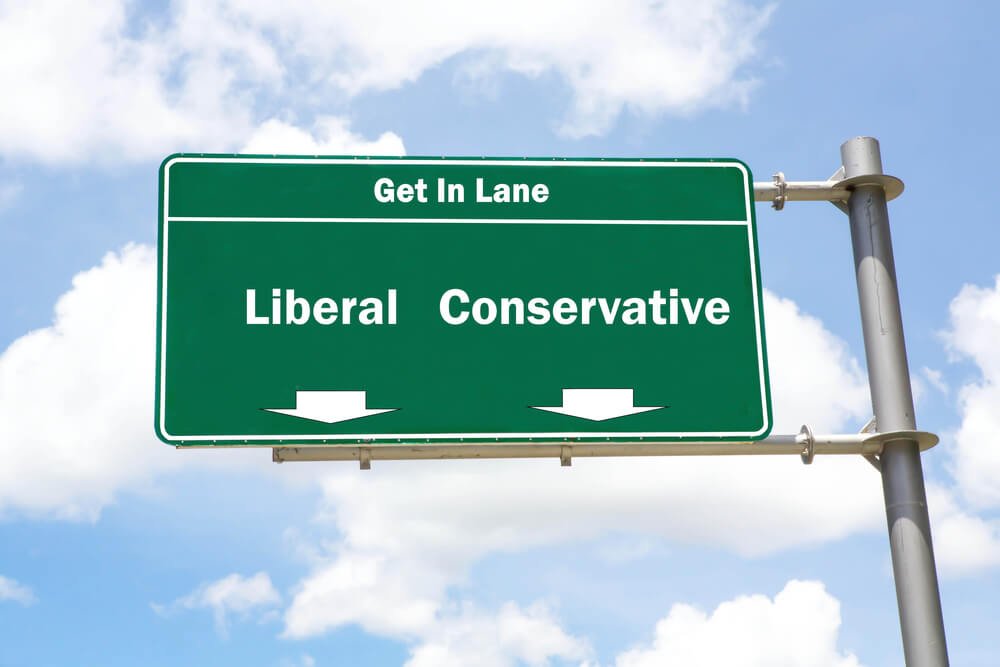
Liberalism differs from conservatism primarily in the priorities they prioritize: liberalism prioritizes freedom and individual rights, while conservatism prioritizes the preservation of traditions, community, and proven institutions. This fundamental difference leads to different approaches to social change, religion, family, and the role of the state. Both ideologies have many variations, so the following comparison describes their classic principles rather than the platforms of specific parties.
To sum it up
- Liberalism puts the individual, his freedom and equality before the law at the forefront.
- Conservatism emphasizes the value of traditions, family, religion, nation and public order.
- Liberals are open to reforms, while conservatives accept gradual, evolutionary changes .
- John Locke is considered the father of liberalism, and Edmund Burke - a classic of conservatism.
Liberalism – definition and basic principles.
Liberalism (from Latin liber (Free) is a political movement based on individual freedom and the right to choose one's own path in life. Its main founder is considered to be the English philosopher John Locke , who wrote about the natural rights of man—life, liberty, and property—and that government is based on the consent of the governed.
The most important ideas of liberalism include:
- Civil rights and liberties - freedom of speech, conscience, assembly.
- Equality before the law , without any privileges associated with social status.
- limited state power , separation of powers and the rule of law.
- Free market and private property - in classical liberalism, developed in economics, in particular, by Adam Smith.
- tolerance and the separation of state and church.
Conservatism – definition and basic principles.
Conservatism (from Latin conservare – to preserve) arose as a response to the French Revolution and the radical rationalism of the Enlightenment. The Irish-British thinker Edmund Burke , author of "Reflections on the Revolution in France." Burke did not reject change, but he compared society to a living organism and warned against abrupt breaks with tradition.
The most important ideas of conservatism:
- Tradition as a collection of the experience of many generations.
- Family, nation and religion as the basis of public order.
- authority and hierarchy institutions,
- Evolution instead of revolution - slow and careful changes.
- skepticism towards abstract projects restructuring of society.
Liberalism and conservatism are the most important differences.
An individual or a community
For a liberal, the starting point is individual – society is a collection of free people who make their own decisions about their lives, provided that these decisions do not violate the rights of others. A conservative views a person as a member of communities – family, nation, church – which shapes his personality and beliefs.
Reason or experience
Liberalism has its origins in the Enlightenment's reliance on intelligence and the belief that institutions can be rationally designed and improved. Conservatism relies more on historical experience : What has stood the test of time has its value, even if it's difficult to justify theoretically. Conservatives are also more likely to emphasize the imperfections of human nature.
Attitude to change and religion
Liberals are generally open to social and moral reform, viewing religion as a private matter. Conservatives accept change as long as it occurs gradually and does not disrupt existing relationships, and often view religion as an important social factor.
Economy and the state
The differences here are not so simple. Classical liberalism advocates a free market and a limited role for the state, but also developed in the 20th century social liberalism , which accepts government intervention in the name of equal opportunity. Among conservatives, there are both free-market advocates and those who support an active role for the state in protecting families or the national economy. This gives rise to mixed tendencies, for example, liberal conservatism — market-oriented in economics, traditional in morality.
Comparison Chart: Liberalism vs. Conservatism
| Characteristic | Liberalism | Conservatism |
|---|---|---|
| main meaning | Individual freedom | Tradition and public order |
| Classical thinker | John Locke | Edmund Burke |
| Being | Age of Enlightenment, 17th–18th centuries | Reaction to the French Revolution, turn of the 18th and 19th centuries. |
| Starting point | Unit | Community (family, nation) |
| Attitude to change | Openness to reforms | Slow, evolutionary change |
| Religion | Private matter, separation from the state. | It is often an important foundation of society. |
| Economy | Free market (classical) or interventionism (social liberalism) | Various approaches – from free market to interventionism. |
How can we determine whether a particular point of view is liberal or conservative?
It's useful to ask the question , which takes precedence in a conflict of values . If the argument is, "Everyone has the right to decide for themselves, as long as it doesn't harm others," it's closer to liberalism. If the argument is, "This institution has proven its worth over generations, so let's not hastily change it," it's closer to conservatism.
It's worth remembering two pitfalls. First, in practice, few people are "pure" liberals or conservatives—many combine the views of both. Second, the word "liberal" has different meanings in different countries: in United States It usually refers to supporters of center-left social solutions, while in Europe it more often refers to supporters of the free market and civil liberties.
Frequently Asked Questions (FAQ)
Who is the creator of liberalism and who is the creator of conservatism?
John Locke is considered the main founder of liberalism, and Edmund Burke, the author of Reflections on the Revolution in France, is considered a classic of conservatism.
Is it possible to combine liberalism and conservatism?
Yes. There is a movement called liberal conservatism, which combines support for the free market with a commitment to traditional moral values.
What is more important for a conservative: freedom or tradition?
Conservatives don't reject freedom, but they understand it as rooted in tradition, law, and society. When individual freedom conflicts with institutional integrity, they often favor the latter.
What is the difference between classical liberalism and social liberalism?
Classical liberalism advocates a minimal role for the state in the economy. Social liberalism believes that the state should promote equal opportunity, for example through public education and social benefits.
Why did conservatism arise later than liberalism?
Conservatism as a conscious doctrine was formed in response to the French Revolution and the ideas of the Enlightenment, and therefore to the changes that liberalism had previously postulated.
See also
- What is the difference between totalitarianism and authoritarianism?
- What is the difference between positive and normative economics?
- What is the difference between faith and religion?
- What is the difference between an individual and a legal entity?