

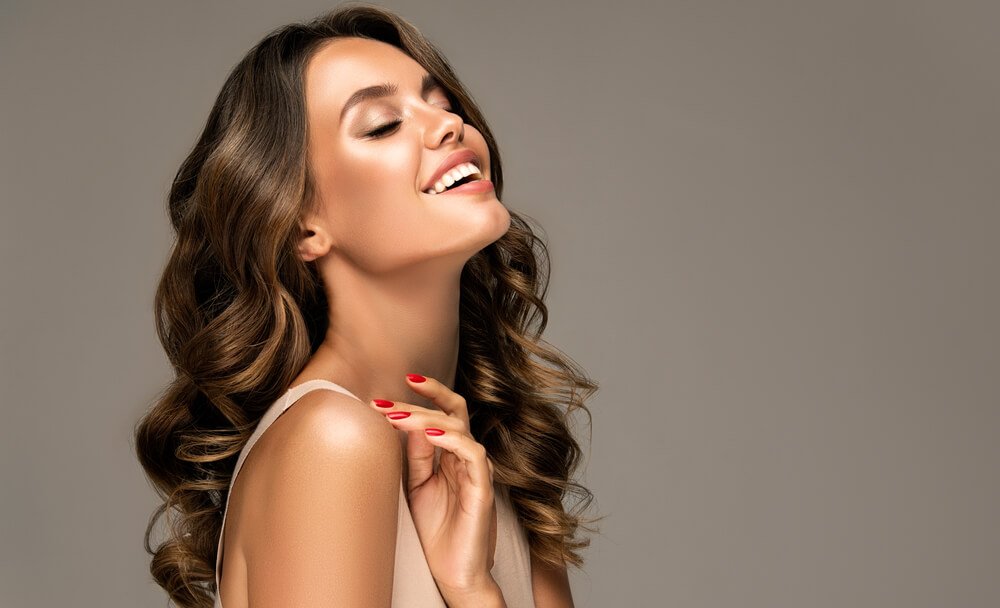
Hair toner corrects and neutralizes undertones (such as yellow or orange tones from bleaching) and fades away gradually, while permanent hair dye permanently changes your hair color—it can also lighten hair and cover gray hair. Toner is gentler and usually requires the use of a low concentration developer or no developer at all, while permanent hair dye uses a stronger developer and an alkaline substance such as ammonia.
To sum it up
- Purpose: Toner – tone correction and neutralization of unwanted highlights; dye – color change, lightening, covering gray hair.
- Durability: The toner washes out gradually (usually over several weeks); the permanent color remains until the hair grows out.
- Effect: Toner does not lighten natural pigment; permanent dye with an oxidizer can lighten it.
- Effect on hair: Toner is usually more gentle, but any chemical coloring requires caution and an allergy test.
Please note the ambiguity: in the context of printers, "toner" refers to the dry powder used in laser printers, while "dye" is a colloquial term for inkjet printer ink. This article is about hair coloring; we briefly cover printers in the FAQ section.
What is hair tonic?
Toner — is a color toning product. It's most often used after bleaching, when hair has unwanted yellow, brassy, or orange tones. It works on the principle of the color wheel: purple pigments neutralize yellow , A blue - orange . Toner can also give your hair a trendy shade, such as pearl, beige, or ash, or refresh your color between colorings.
Toning agents are available in several forms: semi-permanent products, Mixed with a low-concentration developer, ammonia-free toning products, as well as skin care products—purple shampoos, conditioners, and masks—gently and gradually tone the hair. Toning doesn't lighten the natural hair pigment; it only changes the shade of what's already there.
What is hair dye?
Permanent hair dye It consists of a coloring cream and an oxidizing agent (hydrogen peroxide). The alkaline substance—ammonia or its substitute—opens the hair cuticle, the oxidizing agent lightens the natural pigment, and the dyes penetrate the hair shaft (cortex) and create a long-lasting color. This allows the dye darken, lighten by several shades and cover gray hair .
The lightening power depends on the concentration of the developer—the higher the concentration, the more intense the lightening, but also the greater the strain on the hair. Permanent color is permanent—it fades only with root regrowth or after the next coloring (it may only fade slightly).
Toner vs. Paint Comparison Chart
| Characteristic | Toner | Permanent paint |
|---|---|---|
| The main task | Neutralization and tone correction | Changing color, lightening, painting over gray |
| Lightening | Does not lighten natural pigment | It may become several shades lighter. |
| Oxidant | Low or no concentration | Increased concentration, specially selected to achieve the desired effect. |
| Where does this work? | Mainly the outer layers of hair. | Penetrates into the hair cortex. |
| Durability | It washes away gradually, usually within a few weeks. | Permanent, until regrowth. |
| hair | Usually smaller in size | More, especially with lightning. |
| Typical use | Light hair after bleaching, highlighting, or color refreshing | New color, gray hair, darker shade |
Durability and impact on hair condition
The toner's effect diminishes with each wash—the rate depends on the product, hair porosity, and shampoo. High-porosity hair, such as heavily bleached hair, absorbs pigment faster but also loses it more quickly. Therefore, toning is often repeated, and purple-colored cosmetics are used between hair salon visits.
Permanent hair color penetrates deeper into the hair structure, so frequent coloring, especially when combined with bleaching, can lead to dry and brittle hair. Toner is gentler in this regard, but he is not neutral — it's still a chemical product. Manufacturers recommend perform a test on a small area of skin 48 hours before coloring Both products. If scalp irritation or an allergic reaction occurs, consult a dermatologist.
Toner or paint – what to choose?
Choose a toner if:
- After bleaching, light hair takes on yellow or orange highlights.
- You only need to change the hue (for example, from warm to cool), not the color level.
- Do you want to refresh your color and add shine to your hair between colorings?
- Are you looking for a softer, shorter lasting effect to try?.
Choose paint if:
- Do you want to change the color significantly or make it darker?
- You need to cover up your gray hair.
- Do you want to lighten your hair to shades that cannot be achieved with toner?
- You want a color that won't wash out after a few weeks.
In practice, these two products often complement each other: a hairdresser first lightens or colors the hair, then tones it to achieve the desired shade. For significant color changes, especially from dark to light blonde, it's safer to seek professional help.
Frequently Asked Questions (FAQ)
Will toner help cover gray hair?
Usually, not completely. Toners can partially darken or tone gray hair, but for permanent and complete gray coverage, use a permanent dye or a product specifically designed for this purpose.
Does toner lighten hair?
No. Toner changes the shade but does not lighten the natural pigment. On dark, unbleached hair, the effect will be weak or unnoticeable.
How long does the tonic last on the hair?
Typically, this takes several weeks, depending on the product used, hair porosity, and washing frequency. Shampoos designed for color-treated hair and less frequent washing can help prolong the results.
Can you apply toner to colored hair?
Yes, toning after coloring or bleaching is a common hairdressing practice. However, it's important to follow the manufacturer's instructions and maintain the recommended intervals between chemical treatments.
What is the difference between toner and printer ink?
Laser toner is a dry powder that, attracted by an electrostatic charge, settles on paper and then becomes fixed with heat. Ink (commonly referred to as "paint") is a liquid sprayed in droplets by an inkjet printer.
See also
- What is the difference between toner and shampoo?
- What is the difference between a trimmer and a razor?
- What is the difference between hybrid and gel polish?
- What is the difference between a laser printer and an inkjet printer?