

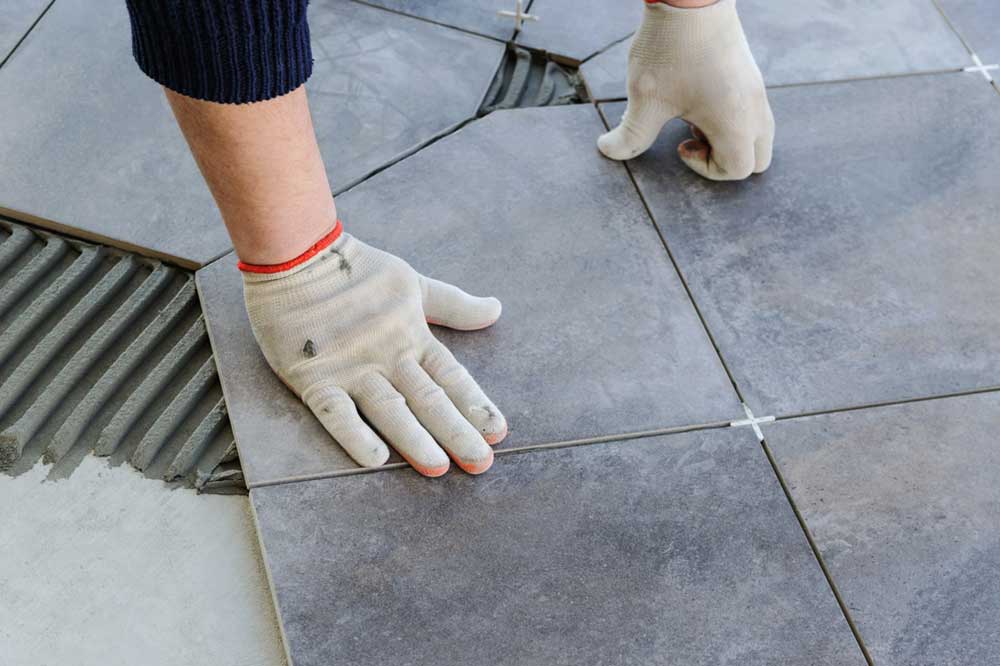
Glazed tiles differ from porcelain tiles primarily in their water absorption and durability: glazed tiles, with their porous, soft structure, absorb a lot of water and are not frost-resistant, while porcelain tiles are pressed and fired to a very dense, hard consistency and low water absorption, making them suitable for floors, even outdoors. In short, glazed tiles are intended for interior walls, while porcelain tiles are used for floors, walls, terraces, and stairs.
To sum it up
- Glaze has a water absorption of more than 10% (group BIII according to PN-EN 14411) - it is intended for interior wall cladding .
- Porcelain tiles has a water absorption of no more than 0.5% (group BIa) - it is hard and frost-resistant .
- Tiles are not suitable for floors or outdoor use, but porcelain tiles can be installed almost anywhere.
- Tiles are lighter and easier to cut, porcelain tiles are more durable but heavier and more difficult to process.
What is glaze?
In Polish construction, glazed ceramic tiles intended for wall cladding are called tiles . The main surface (the underside of the tile) is porous and relatively soft, and the decorative function is performed by glazed The top layer can be glossy, matte, smooth, or textured. This layer makes the tile easy to clean and moisture-resistant on the front side.
According to the standard PN-EN 14411 , wall tiles from this group have water absorption more than 10% (Group BIII). Manufacturers recommend it for interior wall cladding in regions where temperatures do not drop below zero. it is not frost-resistant . Typical applications include bathroom walls, kitchens (above countertops), and toilets.
What is ceramics?
Ceramic tile — is a tile with a very dense sintered body, formed under high pressure and fired at high temperatures. The most popular porcelain stoneware with water absorption no more than 0.5% (Group BIa according to PN-EN 14411). Low water absorption ensures frost resistance and high resistance to bending and abrasion.
Ceramics are available in several variants:
- Unglazed porcelain stoneware (technical) – uniform throughout the entire thickness, very wear-resistant, used, for example, in garages, workshops and public spaces.
- Glazed ceramics – with a glaze layer that allows you to obtain any pattern, for example, imitation of wood or stone.
- Polished and lappato ceramics – with a glossy or semi-glossy surface.
- Rectified porcelain stoneware – with precisely ground edges, which allows for laying tiles with narrow joints.
Tile and porcelain stoneware - the most important differences.
Moisture absorption and frost resistance
This is a key difference. Porous tiles absorb water—in freezing weather, the water in the pores freezes and causes cracking, so they are not suitable for outdoor use. Ceramic tiles are virtually impermeable to water and frost-resistant, making them suitable for terraces, balconies, and outdoor staircases (provided the manufacturer permits such use).
Hardness and wear resistance
Glazed tiles have a soft texture and a relatively thin glaze layer, making them easily scratched and chipped on the floor. Porcelain tiles are hard and resistant to impact and abrasion. For glazed tiles, wear resistance is measured in PEI classes (from I to V) – the higher the class, the greater the load the tile can withstand.
Weighing, cutting and assembly
Tiles are lighter and easier to cut with a hand saw. Ceramic tiles are heavier and harder, requiring more sophisticated cutting and drilling tools (such as diamond blades and hole saws). Due to their low water absorption, ceramic tiles also require appropriate adhesives—manufacturers typically recommend adhesives with increased adhesion.
Comparison Chart: Tile vs. Porcelain Tile
| Characteristic | Glaze | Porcelain tiles |
|---|---|---|
| Water absorption (PN-EN 14411) | More than 10% (group BIII) | Up to 0.5% (BIa group) |
| Frost resistance | NO | Yes |
| Fate | Walls inside the building | Floors and walls, indoors and outdoors. |
| Sustainability | Low, soft skull | The skull is high, firm and compact. |
| Surface | Always glazed | Glazed or unglazed, polished, matte |
| Care | Easy to cut, lightweight tile | More difficult cutting, heavier tiles |
| Glue | Standard tile adhesive | Adhesive with improved parameters in accordance with the manufacturer's recommendations. |
Tile or porcelain stoneware – what to choose for the bathroom and kitchen?
- For walls of bathrooms and kitchens You can choose between tile or porcelain tile. Tile is lighter and easier to install, while porcelain tile is more durable and allows for larger patterns.
- For floors in bathrooms, kitchens and hallways Choose porcelain tiles. Laying floor tiles is a design flaw.
- Terrace, balcony, external stairs – only frost-resistant porcelain stoneware with appropriate anti-slip properties and approved by the manufacturer for outdoor use.
- Garage, workshop – preferably made of technical or glazed ceramics with a high PEI class.
- One tile for walls and floor – If you want to achieve a unified style, use porcelain tiles in both places.
When purchasing tiles, always check the technical specifications: water absorption class, frost resistance, wear resistance class, and installation recommendations. The term "gres" in the trade name does not replace these parameters.
Frequently Asked Questions (FAQ)
Is it possible to lay tiles on the floor?
No. Tiles are intended for walls—they have a soft texture and a thin glaze, so they will easily scratch or crack on the floor. Porcelain tiles are used for floors.
Is it possible to lay porcelain tiles on a wall?
Yes. Ceramic tiles are suitable for both floors and walls. Since they are heavier than regular tiles, it's important to choose an adhesive appropriate for their weight and size, following the manufacturer's recommendations.
How to distinguish tiles from porcelain tiles?
Most likely, judging by the technical specifications or packaging: glazed tiles have a water absorption of over 10% and are labeled as wall tiles, while porcelain tiles have a water absorption of up to 0.5%. To the naked eye, porcelain tiles are heavier, and a dense, often uniform, grainy structure is visible along the edges; glazed tiles have a lighter, more porous underside.
What is the difference between ceramic and terracotta?
Terracotta is a traditional floor tile made from fired clay, which has a higher water absorption rate than porcelain stoneware. It is harder, denser, and frost-resistant.
What is PEI class?
This is a wear resistance classification for glazed tiles, ranging from I to V. Class I tiles are suitable for walls and areas without pedestrian traffic, while Class IV–V tiles are suitable for high-traffic areas.
See also
- What is the difference between glaze and terracotta?
- What is the difference between glaze and terracotta?
- What is the difference between geotextile and agrotextile?
- What is the difference between ceramic and porcelain?
- What is the difference between fiberglass mineral wool and rock wool?