

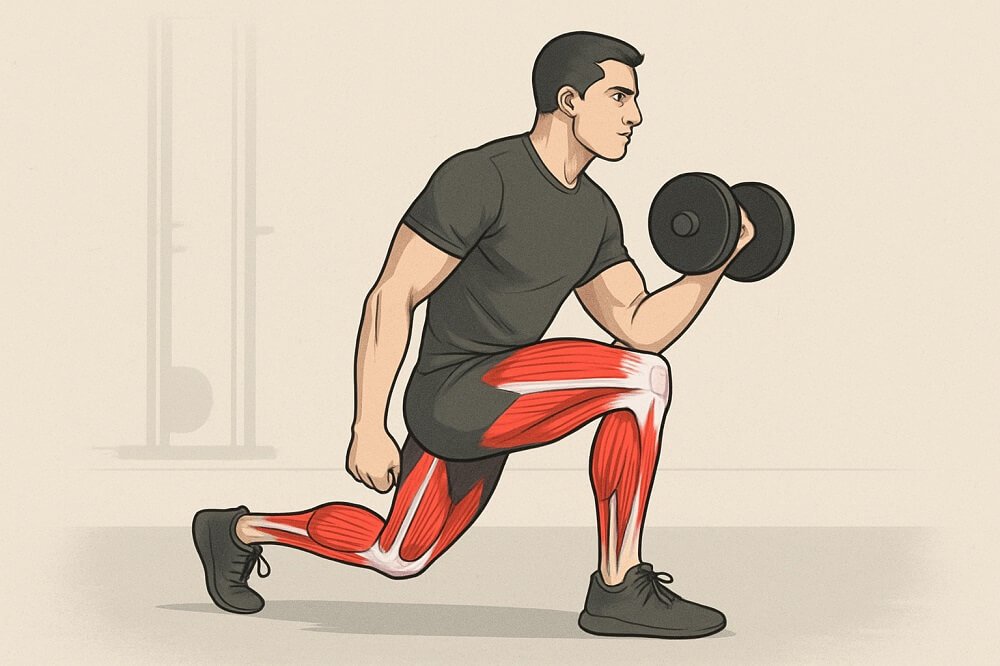
Slow-twitch fibers (type I) contract more slowly and with less force, but they work for long periods without fatigue because they obtain energy primarily from aerobic metabolism. Fast-twitch fibers (type II) contract quickly and powerfully, but they fatigue more quickly because they rely more heavily on anaerobic metabolism. Every human skeletal muscle contains both types of fibers, and the ratio between them determines whether we are better able to handle short-term, intense exercise or long-term, moderate exercise.
To sum it up
- Type I (slow-twitch muscles) – aerobic metabolism, a large number of mitochondria and myoglobin, high resistance to fatigue.
- Type II (fast-twitch muscles) – rapid and strong contraction, a large proportion of glycolysis, more rapid fatigue; in humans they are divided into IIa and IIx.
- Both types are present in every muscle, and their ratio depends on the muscle, genetics, and training.
- Training primarily changes the properties of type II fibers (shift from IIx to IIa) and does not convert type I fibers to type II fibers.
Fast-twitch and slow-twitch muscles – where does this division come from?
In colloquial speech we talk about «fast-twitch» and «slow-twitch» muscles, but strictly speaking we divide muscle fibers , which are individual cells of skeletal muscles. Within a single muscle, such as the calf or thigh, fibers of different types are located next to each other. A muscle is called "slow-twitch" or "fast-twitch" when one fiber type predominates.
The basis for classification is the type myosin heavy chain — a protein responsible for contraction and ATP breakdown. Fibers with "slow" myosin break down ATP more slowly and contract more slowly, while fibers with "fast" myosin break down ATP more quickly. This leads to further differences in energy production, blood flow, color, and fatigue resistance.
Types of fiber in the human body
- Type I - slow-twitch, aerobic (oxidative), called red.
- Type IIa – fast-twitch muscles, but with good aerobic capacity; this is the intermediate type (oxidative-glycolytic).
- Fibers type IIx – the fastest fibers in humans, most actively involved in glycolysis and the fastest to tire.
In earlier textbooks, the fastest human myosin fibers were described as IIb . Studies of myosin have shown that in humans, they correspond to isoform IIx—the pure isoform IIb is found, particularly in rodents. Hybrid fibers containing both types of myosin also exist (e.g., IIa/IIx).
Structure and Metabolism – What is the Difference Between Fiber and Internal Structures?
Slow-twitch fibers contain many mitochondria, where aerobic respiration occurs, and a large number myoglobin — a pigment that stores oxygen and gives them their red color. They are surrounded by a dense network of capillaries. They use primarily fats and glucose for fuel, which are burned in the presence of oxygen. This process is slower, but produces a lot of energy and can last for a very long time.
Fast-twitch fibers , Muscles, especially IIx, contain fewer mitochondria and myoglobin (they are lighter in color), but more glycolytic enzymes, as well as glycogen and phosphocreatine stores. This allows them to quickly provide energy for contractions, but these stores are quickly depleted. Furthermore, they tend to have a larger diameter, which allows them to generate greater force and power.
Contraction speed, force and fatigue
Type II fibers reach maximum tension faster than type I fibers and produce greater force. The opposite is true for endurance: type I fibers can work for very long periods, type IIa fibers for moderate periods, and type IIx fibers fatigue the fastest. The exact contraction time varies depending on the muscle and the measurement method, so it's better to use order of magnitude rather than specific numbers for comparisons.
The order of activation of the fibers is also important. Type I fibers are small motor units (motor neurons and the fibers they innervate) are the first to be activated by the nervous system—when standing, walking, or running at a leisurely pace. Large units with type II fibers are recruited when greater force is required: during sprinting, jumping, or lifting weights. This is known as the size principle (Henneman's rule).
Table: Fast-twitch and slow-twitch fibers
| Characteristic | Type I (slow-twitch muscles) | Type IIa (fast aerobic) | Type IIx (fast glycolytic) |
|---|---|---|---|
| Speed of contraction | For free | Fast | The fastest |
| Strength and power | Small | Big | The biggest |
| Fatigue resistance | High | Keep in mind | Short |
| Basic metabolism | Oxygen | Aerobic and anaerobic | Mainly an anaerobic process (glycolysis). |
| Mitochondria and myoglobin | Many | On average | Small |
| Blood supply (capillaries) | Thick | Middle | Weak |
| Color | Red | Indirect | Light (white) |
| Typical efforts | Posture, walking, long-distance running | Middle distance running, team games | Sprint, jump, throw, maximum weight |
Does training change muscle fiber type?
Fiber ratio is largely heritable, but not completely fixed. The most well-documented variations are observed in type II fibers Regular training—both endurance and strength training—reduces the proportion of type IIx fibers, which acquire IIa characteristics, thus becoming more resistant to fatigue. After a longer break from training, the proportion of type IIx fibers may increase again.
Complete conversion of type I fibers to type II fibers (or vice versa) in humans is limited. However, training alters the properties of the fibers: endurance exercise increases the number of mitochondria and capillaries, while strength training increases the cross-sectional area of the fibers. Type II fibers typically respond more strongly to strength training with hypertrophy, so muscles with a predominance of these fibers increase in size more easily.
How to apply this knowledge in practice?
- Do you want to improve your endurance? – long-term moderate-intensity exercise (running, cycling, swimming) primarily develops the aerobic properties of muscle fibers.
- Strength and power are important to you – Short bursts of heavy loads, jumps and sprints recruit large motor units with type II fibers.
- Do you do mixed sports? (football, basketball, martial arts) – both types of stimulation are needed, and IIa fibers are especially useful here.
- Don't guess your muscle fiber type based on your "predisposition"« — the only reliable method of assessment is muscle biopsy and laboratory tests, carried out mainly in scientific research and diagnostics of muscle diseases.
If you have muscle problems, injuries, or are planning to resume intense training after a break, consult with a doctor, physiotherapist, or trainer who will be able to tailor the workout to your specific health condition.
Frequently Asked Questions (FAQ)
Are slow twitch muscles the same as red muscle fibers?
Simply put, yes. Slow-twitch fibers (type I) contain a lot of myoglobin and are richly supplied with blood, which is why they are red. Fast-twitch fibers, especially type IIx, are lighter in color and are sometimes called white.
Which muscles have the most slow-twitch fibers?
Type I fibers are typically predominant in postural muscles that constantly work to maintain posture—a classic example is the soleus muscle in the calf. However, their ratio varies among individuals and even between parts of the same muscle.
What fibers do sprinters and marathon runners have?
Sprinters and jumpers typically have a predominance of fast-twitch muscle fibers in their leg muscles, while long-distance runners have a predominance of slow-twitch fibers. This is explained by both genetic predisposition and years of specialized training.
Is it possible to convert slow-twitch fibers to fast-twitch fibers?
To a limited extent. Training appears to shift fibers within type II (from IIx to IIa) and alter their metabolic properties and thickness. Complete conversion from type I to type II in humans is not well documented.
Which fibers grow faster during strength training?
Fast-twitch fibers (Type II) typically respond more strongly to strength training for hypertrophy than Type I fibers. Therefore, heavy-load training is most effective when the goal is to increase muscle mass and strength.
See also
- What is the difference between smooth and striated muscle?
- What is the difference between an animal cell and a plant cell?
- What is the difference between influenza A and B viruses?
- What is the difference between yoga and Pilates?
- What is the difference between mixed martial arts (MMA) and boxing?