

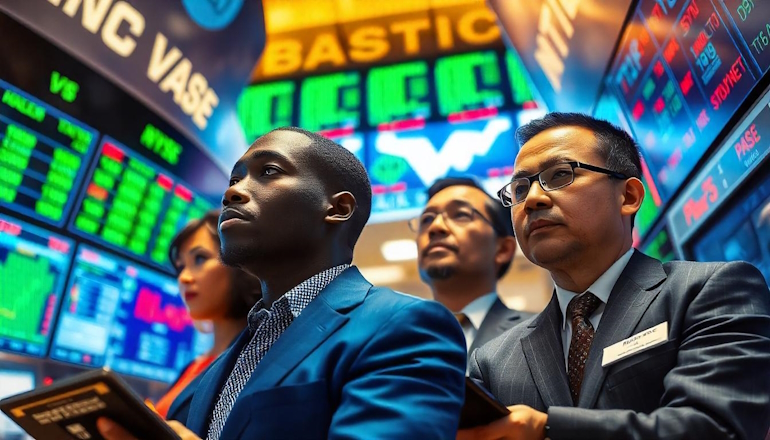
Exchange — is a financial platform where traders and investors buy and sell various assets: stocks, bonds, futures, currencies, and cryptocurrencies.
It facilitates interaction between buyers and sellers and guarantees the execution of transactions. The exchange operates according to a specific schedule, strict regulations, and trading sessions that define its activities throughout the day and year.
The main stages of an exchange's operation include the opening of trades, the execution of transactions, and the close of the day. Before the opening, a preparatory session takes place, during which participants' orders are generated. Then the main trading session begins, where trades are executed in real time. At the end of the day, the system records the trade results, and financial clearing organizations ensure settlements between participants.
Exchanges are divided into traditional (e.g., NYSE, Moscow Exchange) and digital (e.g., Binance, Coinbase), the latter operating 24/7. However, traditional exchanges typically have strict operating hours. They are typically open Monday through Friday and closed on weekends and holidays.
In simple words
Exchange A marketplace is a platform where buyers and sellers exchange securities, currencies, commodities, or cryptocurrencies. Its purpose is to organize trading and ensure the security of transactions. For example, a stock exchange sells company shares, a commodity exchange sells oil and gold, and a currency exchange sells the currencies of various countries.
The difference between a regular exchange and a cryptocurrency exchange: The main difference is that traditional exchanges deal with traditional assets (stocks, bonds, or commodities), while cryptocurrency exchanges only deal with digital assets like Bitcoin or Ethereum. Cryptocurrency exchanges also operate 24/7, while traditional exchanges have strict hours and close on holidays.
How exchanges operate during holidays
Exchange hours on New Year's and other public holidays depend on the country's geographic location and laws. For example, in the United States, exchanges are closed on Independence Day, Christmas, and Thanksgiving. In Russia, the Moscow Exchange is closed during the New Year holidays and public holidays such as Russia Day and March 8.
For international traders, it's important to consider time differences and the specifics of the holiday calendar. For example, if the NYSE is closed on December 25, European exchanges may operate on reduced hours. In Asian countries, exchanges may be closed for the Lunar New Year. This creates certain inconveniences for investors whose assets are distributed across the global market.
Cryptocurrency exchanges are the exception to the rule
Unlike traditional platforms, cryptocurrency exchanges operate 24/7, seven days a week. This is due to the decentralized nature of digital assets and the lack of need for standard financial clearing.
However, even here there may be technical interruptions for system updates or limited access to operations on holidays due to low market liquidity.
Examples of the impact of holidays on the market
During the New Year holidays, activity on the Moscow Exchange declines. This is due to the absence of major players and lower trading volumes.
The situation is reversed on American exchanges: traditionally, increased activity has been recorded since early January due to the reporting season. In 2022, for example, the Christmas closure of exchanges and low liquidity led to temporary volatility in the stock market.
Cryptocurrency assets exhibit volatility during holidays. For example, on New Year's Eve 2021, the Bitcoin price surged due to increased interest from retail investors, while professional players temporarily withdrew from the market.
Impact on investor strategies
Investors should take exchange hours into account when planning their trades.
For example, closing a trading platform during holidays may make it difficult to access capital or result in missing important market events.
To minimize risks, it is recommended to formulate a trading strategy in advance, taking into account possible changes in liquidity and volatility.
Conclusion
An exchange is a complex and dynamic mechanism that requires strict adherence to its operating schedule. During holidays, activity on traditional exchanges decreases, impacting market liquidity and volatility. Understanding the specifics of exchange operations and their schedules allows investors to avoid unexpected risks and effectively manage their assets.