

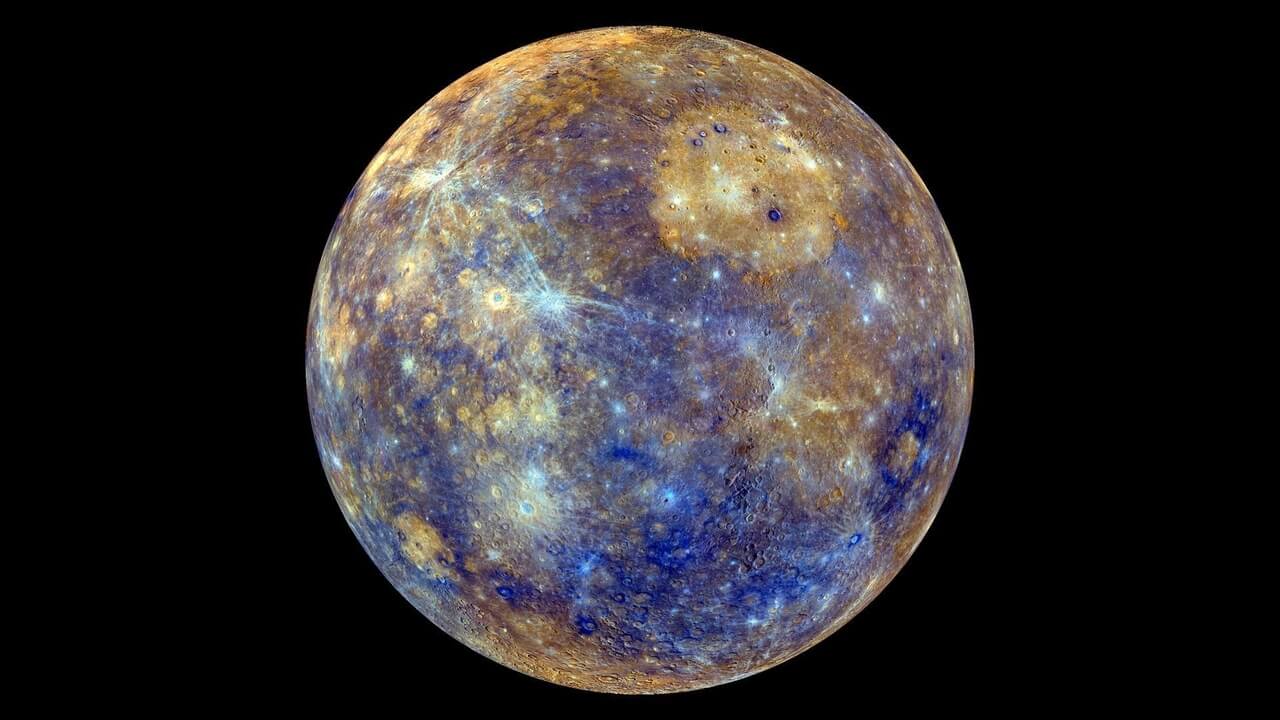
For a long time, Pluto was considered the smallest planet in the solar system. That changed in 2006, when it was classified as a dwarf. Although some scientists still disagree with this decision, Mercury is officially recognized as the smallest.
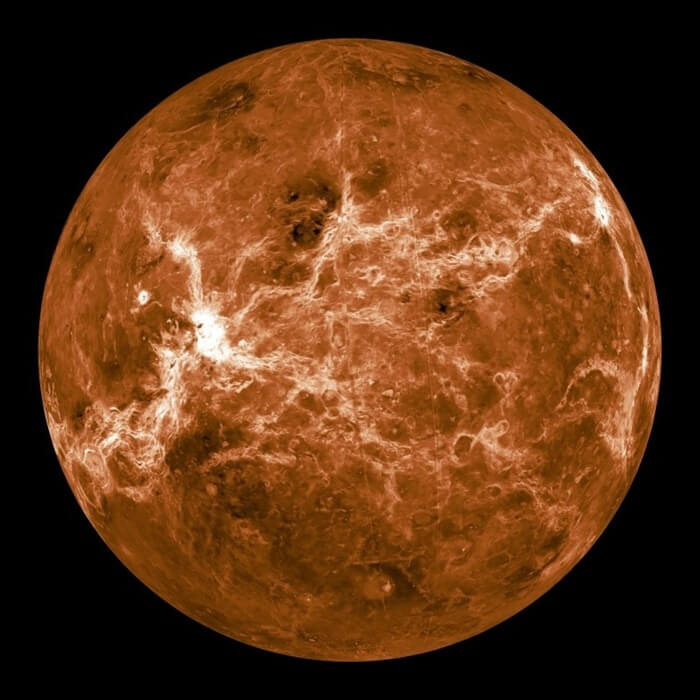 Scientists note that Mercury is only slightly larger than our Moon. The planet has a diameter of just 4,879 km, compared to our own planet's diameter of 12,742 km, and the largest planet, Jupiter, at 142,984 km. Thus, Earth is 381 TP3T larger than Mercury, and Jupiter is 29.3 times larger.

The smallest planet in the solar system weighs 3.3 x 10²³ kg. Relative to Earth, Mercury's mass is 0.055. Mercury's volume is 6.083 x 10¹⁰ km3 (0.056 of the Earth's volume). If the Earth were a hollow sphere, 20 Mercurys could fit inside it.
Mercury is a terrestrial planet composed of metals and silicate materials. Its structure looks like this:
- metal core;
- mantle;
- bark.
The core's radius is quite large (1,800 km), accounting for 421 TP3T of the planet's total volume. The mantle's thickness is estimated to be 500-700 km, and the crust's 100-300 km. The high metal content of Mercury's interior explains its high average density—5.43 g/cm³, not much less than Earth's.

Mercury's surface resembles the Moon's. It is completely uniform, yet covered with numerous craters. There is no erosion on the surface, indicating that there is no significant atmosphere, only a very tenuous one. According to scientists, the atmospheric pressure on Mercury is 5 x 10¹¹ times less than the pressure of the Earth's atmosphere.

Mercury – interesting facts
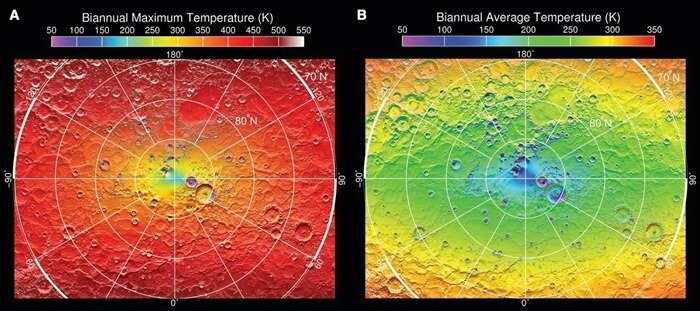
One of Mercury's unique features is its significant temperature fluctuations. This is due to its proximity to the Sun. During the day, the surface warms up to 450 degrees Celsius, while at night it drops to -170 degrees Celsius. Furthermore, deep within craters on Mercury's surface, there is ice, which could be deposited by comets and meteorites or formed from water vapor.
If we were able to stand on the surface of Mercury, we would only experience 38% of Earth's gravity. Moreover, gravity on the smallest planet is even stronger than on Mars, due to its higher density.
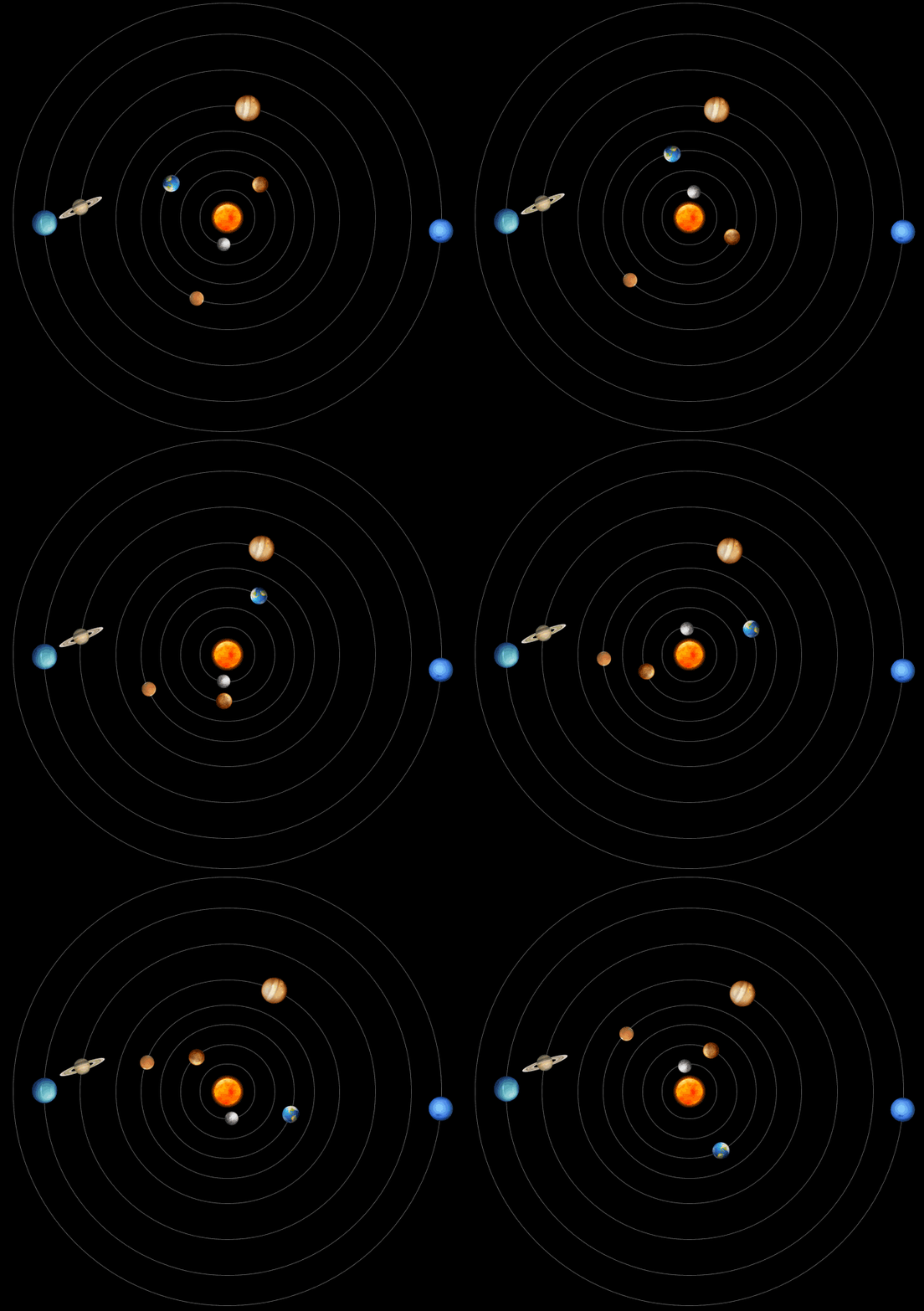
Mercury is called not only the smallest, but also the fastest planet in the solar system. 88 Earth days – that’s how long it takes Mercury to make a full revolution around the Sun.
The planet's magnetic field is a highly mysterious phenomenon, not fully understood. What is known for certain is that the magnetic field differs at the poles: it is stronger at the south pole and weaker at the north pole.
It was previously suggested that Mercury was one of the planets with a satellite. However, this theory was later refuted.
Studying the smallest planet is quite challenging, not only because it's located so close to the Sun. Scientists joke that Mercury likes to "play hide-and-seek," constantly hiding behind the Sun. Yet, Mercury is on the list of planets that can be seen with the naked eye. Other planets on this list include Venus, Mars, Jupiter and Saturn.