

Before the discovery of America, the West believed that Europe was the edge of the world. Besides the northern Scandinavian countries and southern Africa, there was one geographical accident that also marked the limit: the Rock of Gibraltar, also known as the Columns of Hercules.
Included in Greek mythology, the area surrounding the Rock played an important role in human civilization even before 500 BC. Considered one of the most heavily traveled waterways in the world, it directly influenced global trade. The area connects the Atlantic Ocean in the west with the Mediterranean Sea in the east. However, the entire ocean stretch is traversed by the American continent, and numerous peoples live along the sea's coast.
Morocco to the south and Spain to the north surround the main part of the Strait. Besides being an important maritime and trade route, this stretch of land has much to offer. Its long history is steeped in many fascinating stories. It boasts tourist attractions and famous landmarks, such as the imposing Rock of Gibraltar, which juts out several meters from the sea. In this article, we'll explore the most interesting facts about Gibraltar. From its unusual etymology to its geographic and economic significance, this is your guide to everything related to the Strait of Gibraltar.
The word "Gibraltar" comes from the Arabic phrase "Jabal al-Tariq".
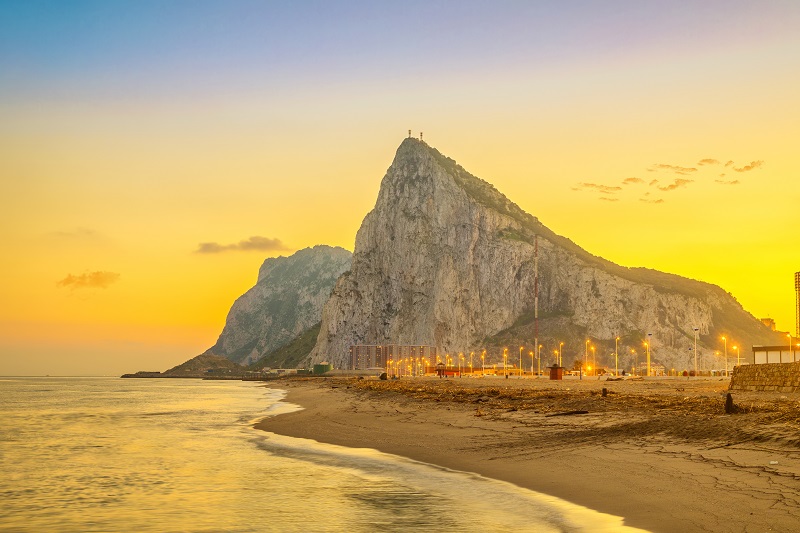
One of Gibraltar's most striking features is the large rock that juts out from the sky. Its height of over 460 meters is a characteristic of the land that derives its name from. In Arabic, the word "Jebel" or "Jebel" means "mountain." Tariq refers to a Berber commander from North Africa who once led a major military expedition to this area. The commander, Tariq ibn Ziyad, crossed the area to the cape in the early 8th century AD, and since then it has been known as "Jabal al-Tariq" or "Montagna de Tariq.".
Gibraltar is the Spanish origin of the Arabic phrase, given that the region is located near mainland Spain. The ruler of Ceuta, now an autonomous Spanish territory, arranged for a Berber army to cross from his North African kingdoms to Spain. A large fleet of ships was used to transport them, and this marks one of the first confirmed crossings of their territory. When they landed, they fortified themselves at the foot of Gran Rock, which was christened in honor of the commander who led them there. Tariq and another Berber leader, Musa ibn Nusayr, later conquered most of Spain with 20,000 soldiers. The port of Tarifa, west of Gibraltar, is named after Tariq ibn Ziyad, the name of another Muslim leader named Tarif, who landed on the coast several years earlier.
Despite its proximity to Spain, Gibraltar is a British territory.
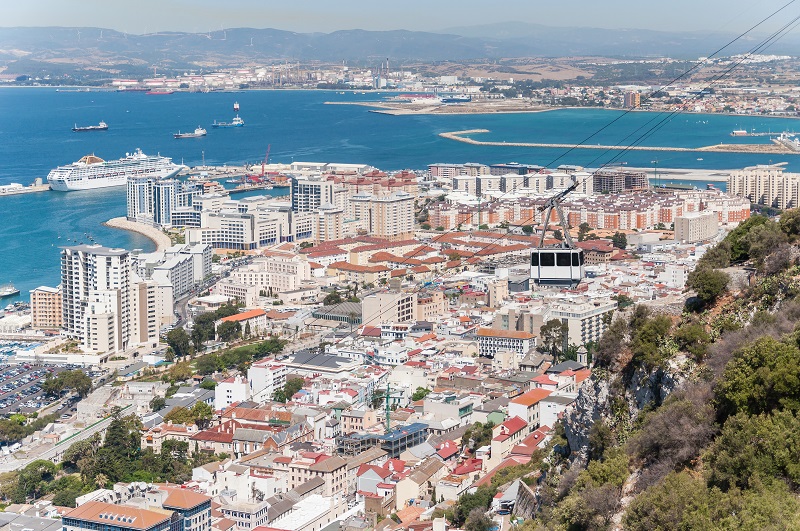
Looking at a map of Gibraltar, it's easy to confuse it with the Spanish city. However, Gibraltar is actually a special British Overseas Territory. After becoming part of Spain, it was ceded to Britain following the War of Succession. A peace treaty signed in the Dutch city of Utrecht (known as the Treaty of Utrecht) granted Britain permanent rights to govern Gibraltar. However, the Spanish made numerous attempts to reclaim the region, including armed conquests in the 18th and 19th centuries.
Spain has claimed to want to reunite Gibraltar with the rest of the peninsula, and has recently questioned the United Nations on numerous occasions. However, the United Kingdom has consistently refuted Spain's claims. Gibraltar has held numerous referendums and public votes to allow citizens to choose which country they wish to join. The majority voted to remain in the United Kingdom, and in the most recent referendum, 98% voted to remain.
Today, the issue has become increasingly pressing due to the growing importance of trade, the growing economic and military significance of the area. The UN recognizes Gibraltar as an autonomous territory. Stagnation has persisted for the past three centuries, although there have been no armed clashes in the last few. According to the UK's position on this issue and international maritime law, the UK cannot directly control the passage of ships through the section, except in cases of illegal smuggling. Although it is used legally, there are no restrictions on the use of the section by other countries, armed or merchant vessels.
The Rock of Gibraltar and the North African peak together form the Pillars of Hercules.
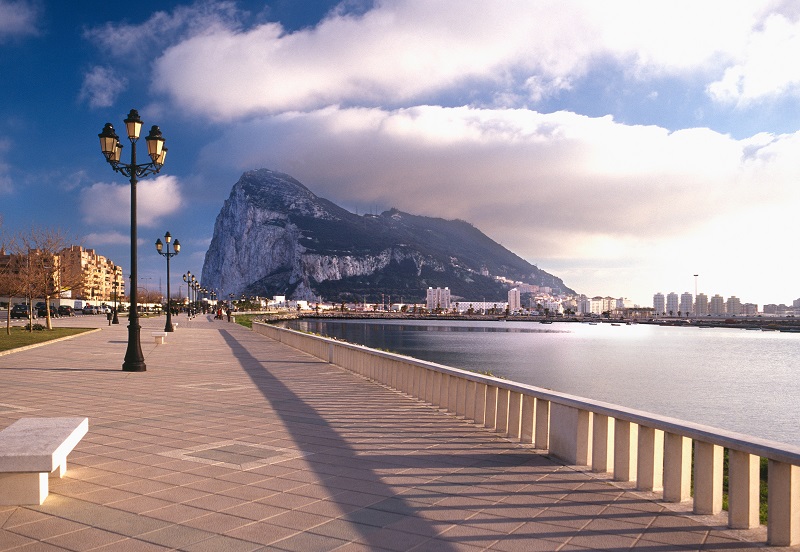
Gibraltar is crossed by the mythical Columns of Hercules, which refer to the Greek hero Hercules. Myth holds that Hercules, over the course of 12 labors, crossed Mount Atlas to create the bridge. The Rock of Gibraltar is the pillar of the European coastline, while the opposite pillar continues to be debated. The Rock of Gibraltar is known as Calpe Mons, and the opposite peak is known as Abila Mons. There are two main hills that have historically been considered the second pillar: Monte Acho (in Ceuta) and Jebel Musa (Morocco). The area was also special to the Greeks, who believed it to be the place where the titan Atlas bore the weight of the sky on his shoulders. It is said that when Hercules crossed, he inscribed "Non-Plus Ultra" on the pillars, meaning "nothing but alla." A Spanish shield bears this inscription, although it has since been changed to "Plus Ultra" after the discovery of America. It held significant significance in Greek mythology, as the Greeks offered prayers to Hercules here. The Rock is also a renowned tourist destination, and many people come to Gibraltar for all it has to offer.
Gibraltar is famous for its "Punta de Europa".
The waters of the Mediterranean Sea and the Atlantic Ocean couldn't be more different. The sea has a very high salt content, while the ocean offers a milder environment for a variety of creatures to survive. The precise point where these two bodies of water converge is known as Punta de Europa. Europa is the southernmost point of the Iberian Peninsula and is located in Gibraltar. The other point, Punta de Tarifa, is located further west and parallel to Punta de Europa.
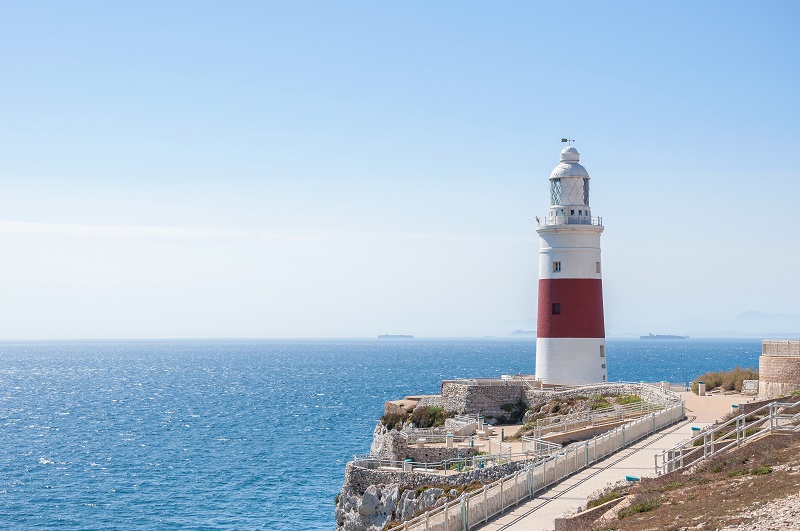
The area is a well-known tourist destination with notable buildings such as the Harding Battery, the Ibrahim al-Ibrahim Mesquita, the Faro de Europa, and the Sikorski Monument. Harding Battery was a British fortification built in the 19th century that could launch rockets across the site. The Ibrahim Mosque was built as a gift to the King of Saudi Arabia, King Fahd bin Abdulaziz Al Saud, in 1997 and serves the diverse Muslim communities of the region. The Faro de Europa is a famous spot from which, on a clear day, one can see Morocco. Finally, the Sikorski Memorial was built in memory of the victims of the B-24 crash that took the life of Commander Władysław Sikorski (Polish Prime Minister in exile) when it crashed in Gibraltar.
Gibraltar has an underground labyrinth that has been involved in great wars.
Gibraltar has been the scene of countless wars since the 2nd century AD. From the Berber invasions, which entered the area under its sole name, to the numerous Spanish attempts to reclaim Gibraltar, the area has played a significant role in battle. One of the main reasons is its location. It is a bridge between the Atlantic Ocean and the Mediterranean Sea, one of the most popular shipping routes in the world. For this reason, the country controlling Gibraltar can blockade and impede shipping in the event of war. Current British government laws allow any boat to navigate the area as long as it is registered, does not carry illegal cargo without passage, and adheres to the rules of navigation.
The land battles to conquer Gibraltar left many enduring features in the area. From Harding's Battery at Punta de Europa to the labyrinth of tunnels beneath the surface, there are several attractions for history buffs. These tunnels were built by the British during the American Revolutionary War. When French and Spanish forces attacked the area, the British fired their long-range guns south. This led to the creation of a series of tunnels that could be used to secretly and securely transport messages and troops throughout the island. Today, visitors to the island can tour most sections of the tunnel, which are open to the public.