

We've become accustomed to movie theaters and free access to many films, and we no longer want to watch them in anything less than HD. We're no longer simply offered the chance to watch a movie, but are tempted by various ways to bring films to life—from 3D to 7D.
But it wasn't always this way. And few people stop to think about how it all began. Let's explore the history of world cinema, from the first films to color film.
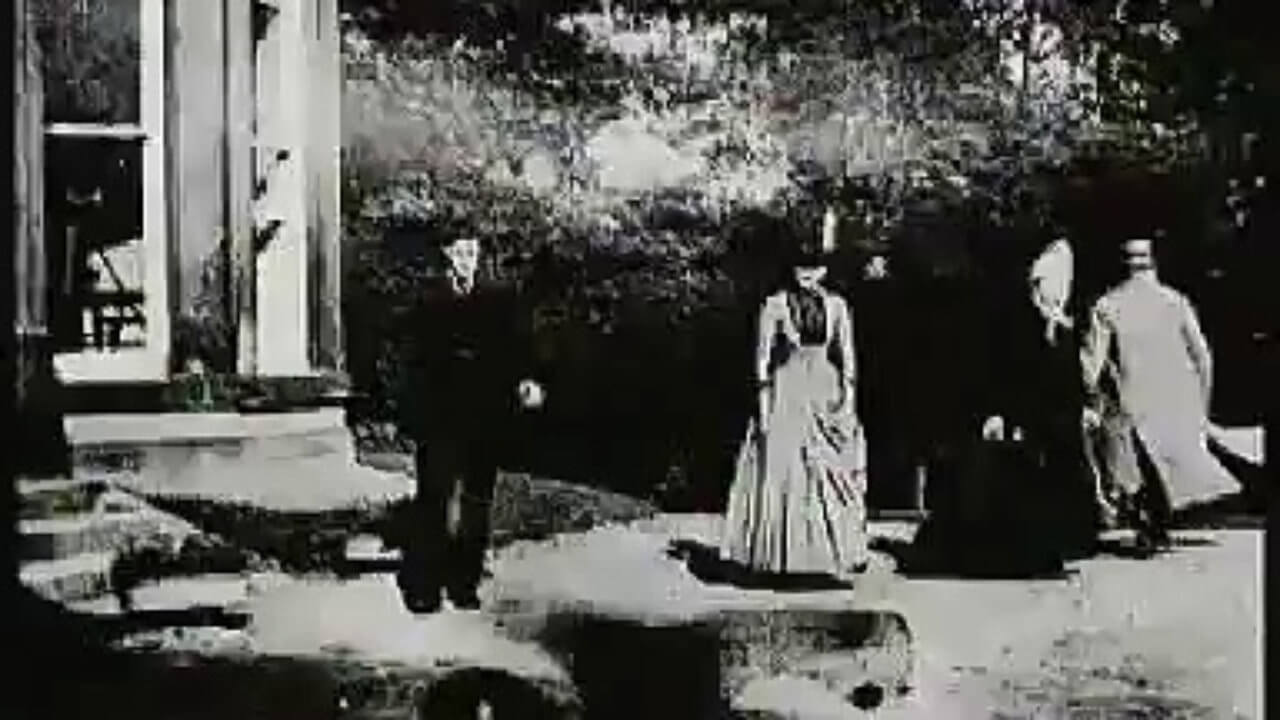
The world's first film was "Scenes from Roundhay Garden"«
It is generally accepted that cinematography emerged in 1895. But it is rare to find mention of the fact that the very first film in the world was shot in 1888 – «Scenes from Roundhay Garden» (Roundhay Garden Scene).
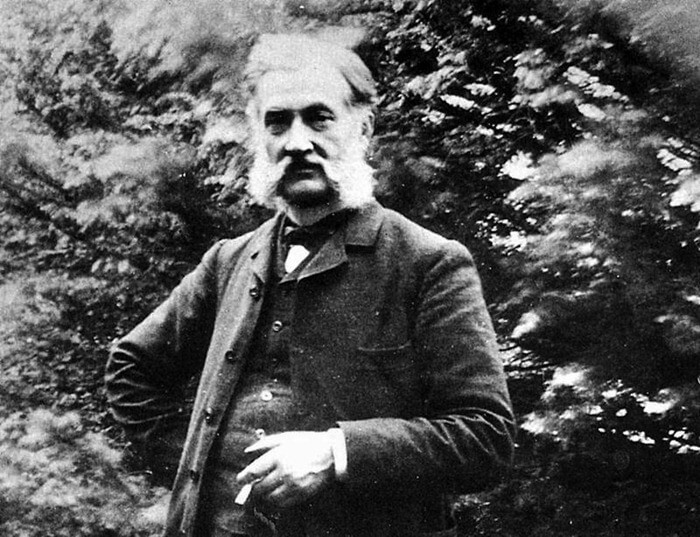
Frenchman Louis Le Prince, the director of this film, used a new technology for the time: he recorded on paper film coated with photographic emulsion. The scene, just 1.66 seconds long, captures a walk in the garden with his son, his mother-in-law and her husband, and his friend Harriet Hartley.
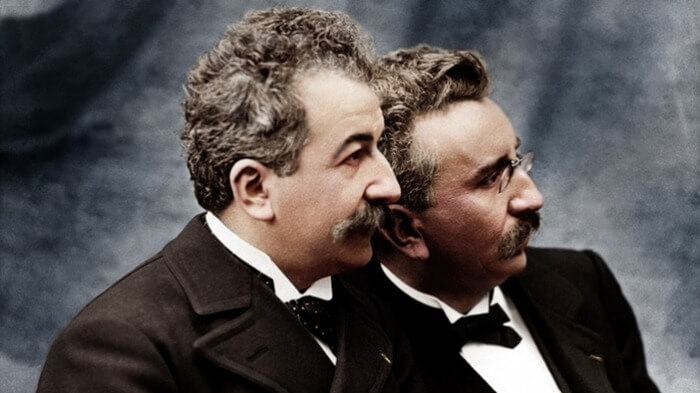
The official beginning of cinema was laid by the Lumiere brothers and their most famous film «Arrival of a train at La Ciotat station» ("The Arrival of a Train in La Ciotat," 1895). In Russia, it is also known under the titles "The Arrival of a Train" and "The Arrival of the Mail Train.".
The plot is quite simple: in 49 seconds, a train stops at La Ciotat station and passengers walk alongside the carriages.
Interesting fact! This film strip became the progenitor of the silent film plot known as the "vagabond." Directors around the world began to replicate it, filming their own versions at various train stations.
Why did this particular short documentary become so memorable and iconic? The film's creators were the first to convey spatial movement on a flat screen: a train appears from afar, passes across the entire screen, and people walk alongside it in various shots (wide, medium, and close-up).
The realism of "Arrival of a Train" so astonished viewers that they jumped away from the screen, afraid that the car might run them over.
The first film with sound was "The Jazz Singer"«
Sound recording technology (the phonograph) already existed before the advent of cinema. In 1894, Thomas Edison and his assistant William Dickson made the first attempts to integrate sound recording into a motion picture camera. However, the invention (the kinetophonograph) remained a technical bummer due to significant synchronization issues and very poor sound quality.
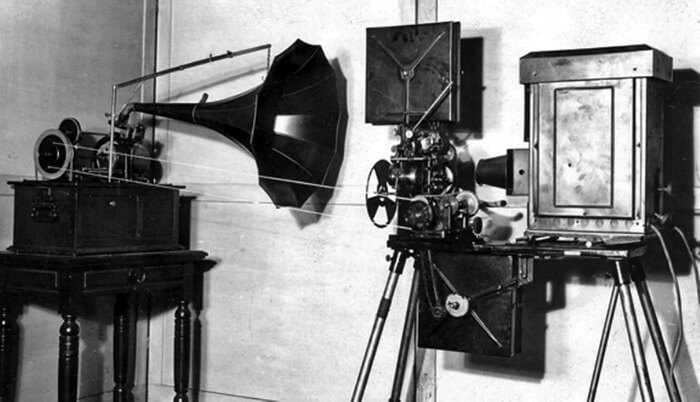
Léon Gaumont attempted something similar in 1900: he combined Lumière's apparatus with a phonograph. However, the invention remained unsuitable for the birth of sound cinema for many years to come.
Technological advances required filmmakers to move forward: the popularity of radio had a negative impact on movie theater attendance. Therefore, the introduction of audio accompaniment to films became a necessity.
Finally, on October 6, 1927, the world's first sound film was released. «The Jazz Singer» Released by the well-known company WARNER Bros., this sentimental comedy features sound that isn't the usual conversations and ambient noise. It uses only overdubbed jazz music and a few added lines (like, "Now, Mama, listen to me!").
Interesting fact! The choice of music as the theme for the launch of sound cinema was no accident. In January 1917, the world's first gramophone record featuring a jazz composition was released in the United States.
The film's sound was recorded using Vitafon technology: the sound was first recorded onto gramophone records, which were then synchronized with the screen.
A year later, the next film was released. «The Singing Fool» from the same creators, but it already contains full-fledged dialogues between the characters.
The first tape with sound recorded on it was released in 1928 and was called «"The Perfect Crime"».
The first color film was "A Trip to the Moon"«
The Lumière brothers attempted to hand-colorize films, but they themselves did not consider it serious work, so no mention of specific films has survived in history.
The Media Museum in the UK has been doing a lot of research and archival searching which has resulted in the discovery of the world's first colour film called «A Trip to the Moon», which dates back to 1901-1902.
It belonged to the French filmmaker Georges Méliès, who recorded the departure of the moon expedition. He achieved the color effect in "Voyage" by using three films of different tints—namely, blue, red, and green. By superimposing them, he managed to create an image with different shades. Unfortunately, he never completed the project.
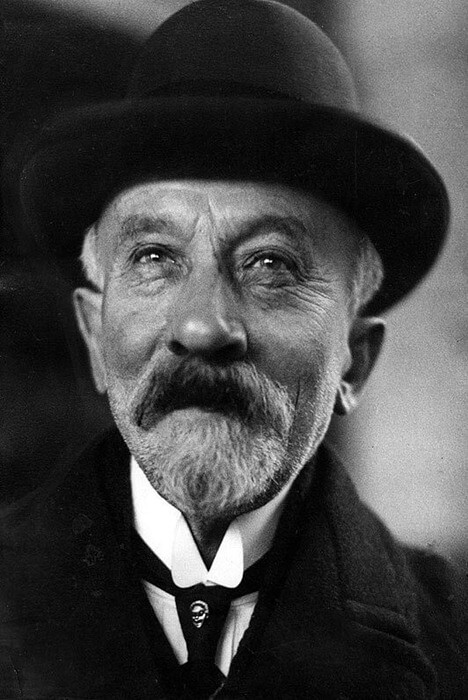
Before the discovery of Méliès's film, Herbert Calamus was considered the founder of color cinema. In 1912, he founded the Technicolor company with his own film colorization technology.
The film was tinted using a specially equipped camera with a system of glass prisms that divided the light beam from the lens in two. Filters then transferred the image in two colors to separate films. Because this color application process was quite labor-intensive and complex, the company only released its first film in 1917.
In 1922, Technicolor screened the film "Victims of the Sea," which was a huge success with audiences, even though it was only colored with four colors (green, red, black, white).
The first such film in the USSR – «Battleship Potemkin». It was released on December 5, 1925, and its only "color" was the painted-over bright red Soviet flag.
Despite many earlier discoveries, the official year of the appearance of color cinema is considered to be 1935. That was when director Rouben Mamoulian released his film «Becky Sharp», which is a film adaptation of the book Vanity Fair.
Today, film is a milestone in the history of cinema (just like the first animated films). Old films are an artistic legacy, carrying with them great value and the experience of generations. It must not be forgotten that progress in cinematography became possible only after these first complex discoveries.