

Wars in the Middle East and Eastern Europe. Terror on the streets of North America. Unrest, violence, skyrocketing murder rates… sometimes it can feel like the planet is going crazy. Faced with all this chaos, many of us want nothing more than to run away and hide our families somewhere safe. But where can you go to escape the constant horror that is the modern world? We're glad you asked.
Every year, the independent London-based Legatum Institute publishes its global prosperity rankings. Along with other indicators like GDP and democracy, they rank every country on Earth by its safety. The results provide a fascinating guide to where on the planet you're least likely to be injured, robbed, raped, or murdered. Want to escape the daily news cycle? You've come to the right place...
(NOTE: To keep things fair, we'll ignore unrecognized states and microstates, otherwise the Vatican would be number 1 every time.)
10. Sweden

Forget grim, rain-soaked Scandinavian crime dramas. A liberal bastion of Northern Europe, Sweden is one of the safest countries on the planet. In 2015 (the last year for which the U.S. State Department keeps records), there were only 90 murders in a population of nearly 10 million. If you think that's still a lot for a small number of citizens, remember that Sweden has the same number of people as Michigan. In any given year, only Detroit records much more than 90 murders.
To be fair, Sweden isn't entirely crime-free. Pickpocketing rates spike during the tourist months. Then there's the thorny issue of rape. Sweden has the highest rape rate in all of Europe, which, of course, doesn't sound very safe... until you realize the distinct difference between what's considered rape in Sweden and what's considered rape in the US. To take the example cited in the Globe and Mail, if your American boss brushed against you at work every day for a week, you could probably sue that jerk for harassment. If he did the same in Sweden, he'd be facing 52 separate rape charges. Since 2005, Sweden's rape law has been the most feminist in the world. Perhaps unsurprisingly, only 15% of Swedes feel unsafe walking alone at night.
9. Austria
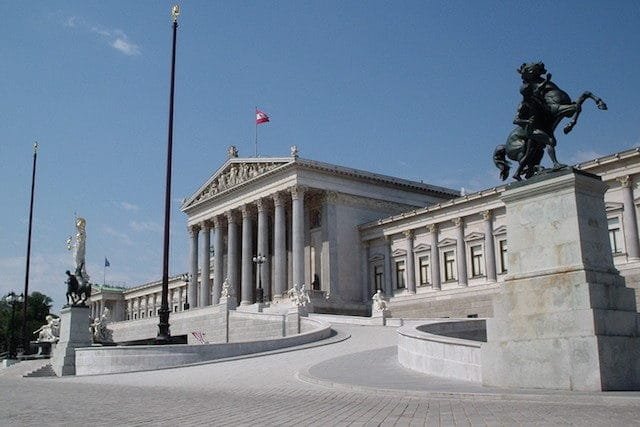
This tiny European land of beer and sausages was once home to one of the greatest empires in history. The Habsburgs ruled vast swathes of the world from their base here, and various members governed everything from modern-day Germany to Spain, Mexico, Peru, and Bosnia. Although the dynasty collapsed after World War I, their imperial capital, Vienna, remains one of the world's greatest cities. As a bonus, it's also shockingly safe to visit. With a population just a million or so smaller than Sweden, Austria averages about 40 murders per year. The murder rate here is 6. -m the lowest among all 38 OECD countries.
Of course, this doesn't mean Austria is free of problems. Following the 2015 migrant crisis, the country briefly became a popular human trafficking route, culminating in the tragic deaths of 70 migrants in a truck abandoned on the country's roads. The following year, in perhaps an unrelated event, the public came close to electing Europe's first openly far-right head of state since World War II. Despite this, however, Austria remains a generally friendly, beautiful place where you're unlikely to encounter a sticky end. Plus, there are a few really beautiful landscapes where you can get a drink.
8. Switzerland
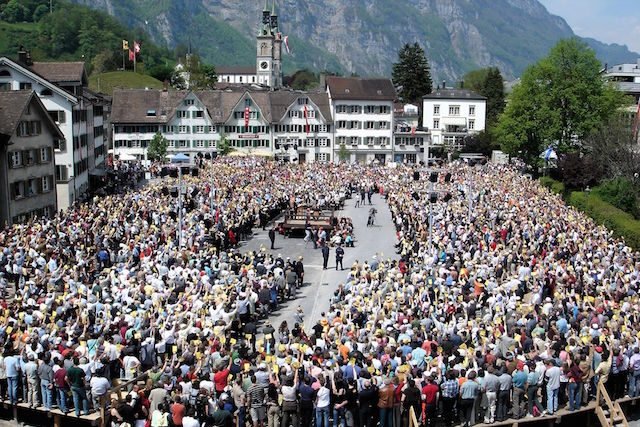
The first thing you notice about Switzerland, when you take in all that spectacular natural beauty, is that the country is literally awash with guns. The Swiss love guns the way Texans love, well, guns. The country has one of the highest rates of firearm ownership in the world, just a few places behind the United States. But while the United States is notorious for its gun violence, crime in Switzerland is incredibly low. In 2014 (the most recent year for which we have data), there were only 41 murders per 8 million people.
Part of this may be due to how insanely rich the country is. Switzerland ranks 12th -th place in GDP per capita and is one of only two countries in the top 14 with a population of over 5 million. Cities literally reek of prosperity. Forget streets paved with gold. In Switzerland, people's wallets are practically stuffed with platinum.
However, all this prosperity came at an ethical cost. During World War II, the country's national bank profited handsomely from trading in stolen Nazi gold. In subsequent years, the country's secretive banking industry was accused of hiding cash for everyone from money launderers to Pablo Escobar.
7. Germany
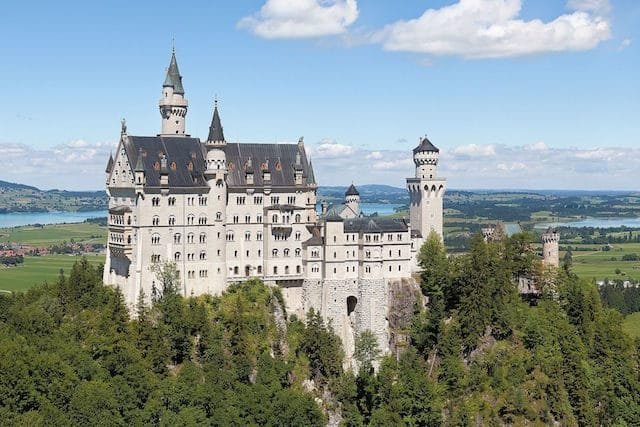
Germany has the largest population in the entire EU, at almost 15 million. more citizens than either of its closest competitors (France and the UK). On top of that, the country recently welcomed over a million refugees from Syria and other war zones. Yet, despite all this, nearly every single crime category has steadily declined since reunification in the 1990s. The only crime that has sharply increased in recent years? Shoplifting.
Overall, the country ranks 9th -th place OECD murder rates, meaning your chances of being murdered in big, bustling Germany are only slightly higher than in tiny Austria. Obviously, the raw numbers are higher, but come on, man. 2,100 murders for a population of 80 million is still pretty good, especially considering the US (population 318 million) has seen over fifteen in recent years. thousands .
Of course, life in Germany isn't all about lederhosen and safe nighttime strolls home. As the 2016 truck attack on a Berlin Christmas market demonstrated, Germany is unfortunately not free from the diseases currently plaguing other Western countries.
6. Norway

Norway's population is astonishingly small—5 million. Do you know how many of those five million modern-day Vikings were killed in 2015? Twenty-one. If Norway were a U.S. state, it would have the lowest murder rate and third The lowest murder rate in all of America. Only sparsely populated Vermont (population 626,000) and New Hampshire (population 1.3 million) would have fewer bodies cluttering police freezers. The only crime in Norway that statistically has any impact on newcomers is burglary.
It's not as if Norway has been entirely without problems. It's been less than six years since far-right terrorist Anders Breivik detonated a car bomb in Oslo and then went on a shooting spree, killing 77 people. While it's unlikely there's another Breivik out there, people, especially those in Oslo, are still traumatized by the incident.
But despite the tragedy of 2011, Norway remains one of the coolest, most attractive, and most trouble-free countries in the world. Ignore those who accuse the Scandinavian nation of being boring. Wealthy, prosperous Norway is the country other Northern European countries secretly wish they were (albeit with more daylight and beer that doesn't cost $10 a pint).
5. Denmark
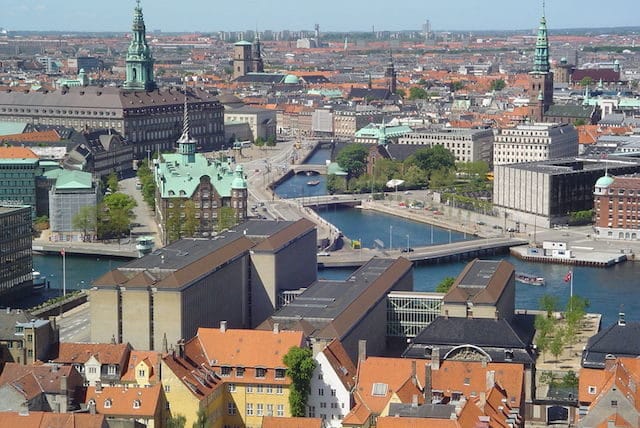
We don't know about you, but if only We If we lived in a place where a single beer cost more than seven bucks, we'd probably be more prone to angry outbursts. But what do we know? Denmark is so safe that even Norwegians probably feel like they can relax there. The murder rate here is fifth. most Lowest in the OECD. Street crime is almost unheard of. Even drug dealers who smuggle heroin through the country often avoid violence (at least on Danish soil).
Interestingly, despite all this, Denmark is considered a prime target for Al-Qaeda and ISIS, which have called on their followers to attack the country. However, there has not yet been a single Islamist terrorist attack with mass casualties, leading to worldwide praise for Danish intelligence services and counter-extremism units.
Even without regard for safety and crime rates, Denmark should be at the top of your list of countries to escape to if life ever gets too tough. Home to the world's happiest capital, Copenhagen, and possibly the world's only autonomous republic run by hippies, Denmark is absurdly cool.
4. Iceland

In January 2017, a young woman was tragically kidnapped and murdered in Reykjavik, the capital of Iceland, while walking home from a bar. While this grim story would likely have ended there in any other country, in Iceland it sparked a public outpouring of grief unmatched in modern times. Candlelight vigils were held. Tens of thousands of people took to the streets. The entire population came together to commemorate this senseless death. In doing so, they showed the world why Iceland remains one of the safest countries in the world. People there truly, truly, deeply care for each other.
With a population of just 323,000, Iceland is one of the most remote and sparsely populated countries. But while remoteness often breeds violence, in Iceland the opposite has happened. There are no armed police patrolling the streets, yet violence, even in the rural hinterlands, is virtually unheard of. The cliché about people still leaving their doors open at night is true. A year with more than one murder is a truly bad year.
This is largely due to how integrated the population is. Essentially, everyone knows everyone else, and perhaps that's why the recent death hit the room so hard. Iceland is safe not because it's relatively wealthy, but because its people have chosen to make it that way.
3. Japan

Well, look at this. A non-European country this time. An island nation of 127 million people, Japan is notorious for its meme-ready weirdness, its ultra-strict work culture, and the fact that it's so safe that even its yakuza gangsters refuse to carry guns. Its murder rate is the third-lowest in the OECD, with fewer than a thousand murders in 2015. Over the same period, the US—a country with a population less than three times larger than Japan—recorded fifteen times as many. It's fair to say that Japan is indeed a very safe country.
And it's getting safer. In 2015, the lowest level of all types of crime was recorded since 1945. Tokyo was recognized as the safest city in the world. Osaka ranked 3rd. -e place for safety. Considering that Greater Tokyo is the second-largest city on the planet (only the Pearl River Delta in China is larger), that's a pretty damn high rating.
But before you rush to pack your bags, it's worth noting that Tokyo is also one of the most dangerous cities in the world. Yes, we know, it's confusing. But hear us out: there's safety from other people, and then there's safety from Mother Nature. And in the latter category, Japan generally lags far behind. Frequently plagued by earthquakes and tsunamis that kill thousands, Japan can sometimes feel like Mother Nature's hapless, anime-obsessed whipping boy.
2. Luxembourg

Sandwiched between France, Germany, and Belgium, super-rich Luxembourg is one of Europe's smallest countries. How small is it? So small that it makes the Netherlands look big. Rhode Island is bigger. But Luxembourg has something the Netherlands and Rhode Island don't. No, it's not the European Court of Justice. No, it's not the «X» in the name (seriously, dude, it's terrible (assumption). No, Luxembourg has something far more astonishing. It has the lowest violent crime rate and the second-lowest homicide rate in the entire OECD.
Violent crime is essentially nonexistent here. There were a few armed robberies in 2015. Other than that, nothing. Even with a population of just 543,202, that's still impressive. Kansas City, with a population about 100,000 smaller, saw over 125 murders in 2016. Luxembourg saw almost no murders.
The reason for all this may be the high standards of living and extremely low poverty levels in the country. Luxembourg ranks 6th -th place in GDP per capita and consistently ranks high in quality of life rankings. Interestingly, however, the country is not entirely free of problems. Currently, as many as six Luxembourgers are fighting for ISIS in Syria.
1. Singapore

There it is. The safest country on Earth. Tiny Singapore is home to 5.3 million people, crammed into a land mass nearly four times smaller than Rhode Island (population 1 million). With such insane levels of overcrowding, you'd expect things to quickly devolve into violence and resentment. But that's not the case. In 2011, only 16 people were murdered. In 2015 and 2016, all forms of violent crime and theft reached 10- or 20-year lows. The only crimes currently on the rise are cybercrimes, which can be unpleasant, but at least won't end with you lying in a pool of your own blood and vomit.
As an added bonus, Singapore is completely free of the natural disasters common in Japan. It's clean and livable, and even spitting gum carries hefty fines. However, all this safety comes at a price. In Singapore, the government runs everything, and you'd better believe they value safety over freedom. The country occupies 75 square kilometers (75 square miles). -th place in the Economist Intelligence Unit's index of respected democracies, behind Colombia, Serbia, Hungary, and Brazil, to name a few, and just 10 places ahead of Honduras (the US is ranked 20 -th place , (Before you ask). In this small Asian country, safety definitely comes at a price. Whether it's worth it or not is up to you to decide.