What comes to mind when you hear "the most dangerous bird in the world"? Perhaps an angry seagull or an aggressive rooster? But these are mere toys compared to the cassowary! The cassowary has been called the most dangerous bird in the world, and it certainly deserves the title. This flightless bird, with its helmet-like head, is a rock star of the rainforest. Cassowaries are a perfect example of both the aesthetic and deadly sides of nature. Their interesting furry plumage allows them to easily survive in tropical climates, and their strong legs and sharp claws make them kings of the jungle. If you encounter a cassowary, admire it from afar, but don't try to approach it. Because nature has endowed this bird with both unique beauty and terrifying power! Let's take a closer look at this bird descended from dinosaurs!
Cassowaries are a type of bird belonging to the class Ratites that, like their relatives the emu, have a flat chest.
The habitat of these gentle giants extends from the lush rainforests of northeastern Australia to the mysterious islands of New Guinea. Their size varies from species to species. The most common species, the southern cassowary, can reach heights of 1.5 to 1.8 meters and weigh up to 77 kilograms. On the other hand, the smaller dwarf cassowary stands just 1 meter tall and weighs 27 kilograms. But don't let their size fool you; both species have a very impressive appearance! Did you know? Southern cassowaries hold the title of Australia's heaviest bird and are second in the world in this category. Ostriches take first place.
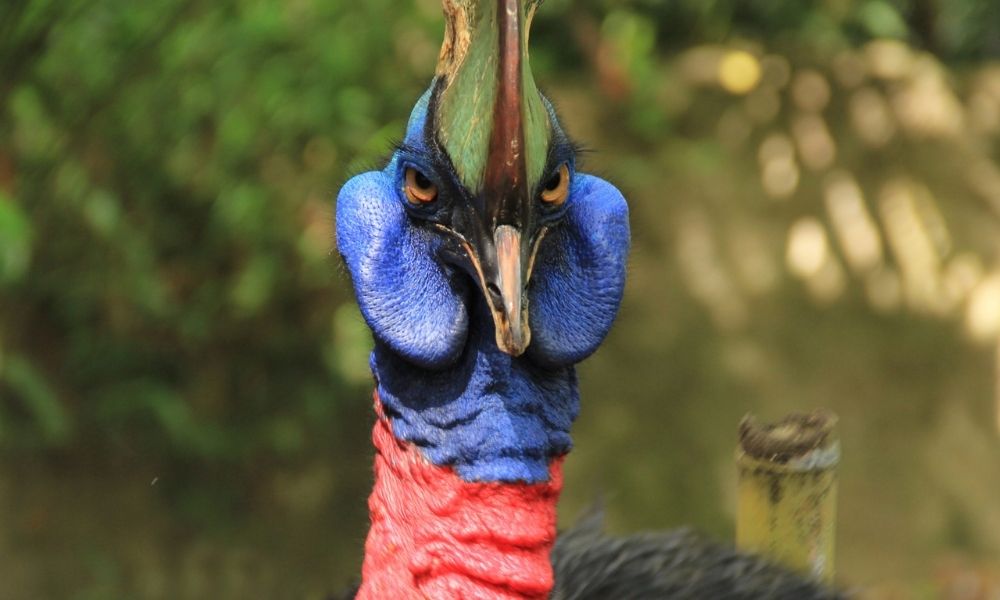
It's as if nature itself treated them like works of art! They amaze the imagination with their bright blue faces, red necks, and helmet-like formations on their heads.
The southern cassowary especially resembles the prince of the rainforest thanks to its spiky feathers. This helmet on their heads is made of keratin, as are their feathers, beaks, and nails. So, what do you think the name means?
Show the age and health of the birds.
To protect the head when moving through dense tropical forest vegetation.
And perhaps help spread their voices further.
No one knows exactly what they do, but that makes them even more mysterious.
The cassowary's red neck isn't just an aesthetic detail. Scientists believe it may be a means of communication!
These colorful structures are believed to be a means of communication between birds. For example, a cassowary's mood can be expressed by the color of these hanging structures. Perhaps this is a way of telling other cassowaries, "I'm here!".
10 Largest Bird Species in the World That Amaze with Their Gigantic Size
Cassowaries are quite shy!
In other words, these aren't birds you'll find just anywhere. They're virtually impossible to spot, especially in their natural habitat—tropical rainforests. But don't let these innocent images fool you! If provoked or angered, their powers can unleash utter disaster. In fact, some cassowary attacks have resulted in death. Tragically, in 2019, a bird collector died in an attack in Florida.
Descendants of dinosaurs!
Yes, you read that correctly! Cassowaries are apparently descendants of dinosaurs. Actually, that shouldn't surprise us. The largest specimens can reach lengths of up to 1.8 meters and weigh 76 kilograms. They can't fly, but thanks to their super-strong legs, they can run at speeds of up to 50 km/h! They're also excellent swimmers; they're like speed monsters on land and in water.
These powerful legs are used not only for running but also for deadly strikes. They can slash and stab enemies with their 4-inch, dagger-like claws. Be careful if a cassowary appears in your playground; don't get too close!
Cassowaries are true fruit-eating monsters! After eating the fruit, they digest the seeds and leave natural fertilizer throughout the forest.
This plays a vital role in preserving and distributing tropical forest plant diversity. In fact, this is why cassowaries are called a "foundation species." For example, they skillfully disperse the seeds of rare tropical forest trees like the riparosa. But their diet doesn't stop there: they also feed on insects, snails, mushrooms, and sometimes even dead animals. They've even been seen perched in streams, spreading their feathers like a net to catch fish. Who says birds can't be creative?
From Penguin to Ostrich: 10 Interesting Facts About Flightless Birds
Females typically lay three eggs during the breeding season, and the male cassowary incubates them for about 50 days. What's more, these eggs aren't exactly light; a single cassowary egg weighs about as much as 10 chicken eggs!
Cassowaries also have cultural significance for some Aboriginal groups.
They often feature in traditional ceremonies, dances, and stories. In the modern world, these indigenous communities are making significant efforts to protect cassowaries, using both their traditional knowledge and scientific methods.
They can't fly, but...👇
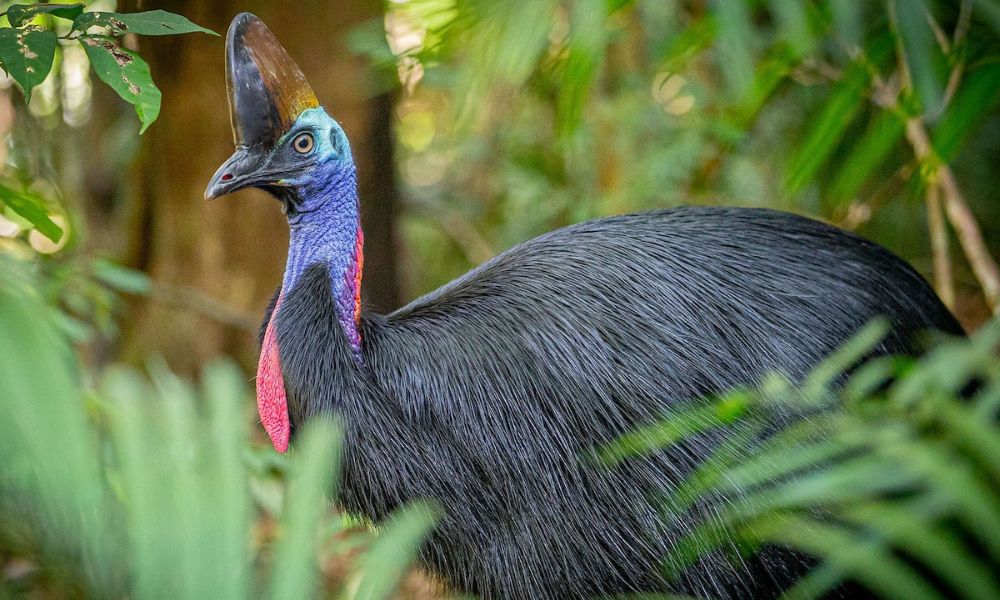
Cassowaries are rebellious creatures of nature, rebelling against the "flying bird club"! They can't fly because their feathers aren't designed for that purpose. However, don't let that fool you into thinking they're ordinary birds. Even their feathers are a marvel of design! Cassowary feathers are very different from the broad, contoured wing feathers of flying birds. They have long, thin, thick black hairs; so much so that, viewed from a distance, these feathers resemble a punk hairstyle more than a bird.
But these feathers are perfectly adapted to life in tropical forests. Yes, they can't fly, but these beautiful feathers wick water away from the body, acting as a waterproof cloak in rainforests. Cassowary feathers also protect them from low branches, thorns, and the harsh forest environment. They might not make it to fashion week, but they look incredibly stylish and functional on the runway!
So why are cassowaries so dangerous?
Imagine a bird that can run at 50 km/h, its powerful legs making it undisturbed in the forest! Yes, that's exactly what cassowaries are. One of nature's true warriors, its powerful legs and clawed feet make it deadly. Cassowaries have claws on the inside toes of each foot. These claws range in size from 7 to 12 centimeters; that's quite long and scary!
So what do these claws do? Defense and attack, of course! When a cassowary feels threatened, it uses these claws to deliver incredibly powerful kicks. So powerful, in fact, that, according to legend, they can tear a person to pieces with a single kick. Fortunately, such cases have never been recorded. But that's no reason to get too close to a cassowary!
High-pressure hose (HPH): everything you need to know Knowledge of how specialized equipment works can often help avoid a host of unpleasant situations related to breakdowns and loss of performance. With some components and parts, however, some machine operators are practically...
5 Facts About Dogs and Food You Need to Know How many of you dog owners have to regularly deal with the agony of a pair of teary eyes begging you for a piece of food so beautifully displayed on your plate?...
What you need to know about aquarium fish types and care Aquarium fish, vibrant and dynamic inhabitants of the underwater world, are one of the best ways to add a touch of tranquility to our homes and offices. Aquarium keeping isn't just...
What You Need to Know About the Butterfly Life Cycle The butterfly life cycle is truly amazing. Butterflies have four life stages: egg, larva (caterpillar), pupa, and adult. Most people think a butterfly's lifespan is...
10 facts wine lovers need to know When a 90-year-old woman says wine is the secret to a long life, you believe her. This magical liquid can do everything from flavor your baked goods to...