


To the uninitiated, all computer games that involve swords, magic, and character development may seem like one big genre.
However, for the seasoned player, the differences between a classic RPG, a dynamic Action RPG, a frenetic Hack 'n' Slash, and a large-scale MMORPG are as fundamental as the differences between chess, poker, and preference. Each offers its own unique rhythm, depth, and range of emotions, satisfying different audiences. Understanding these differences is the key to making an informed choice of your next gaming universe, where dozens, if not hundreds, of hours will be spent with maximum enjoyment.
Let's clear things up and figure out what's hidden behind these abbreviations and definitions.
Classic RPG (Role-Playing Game): Strategy and Depth of Roleplaying
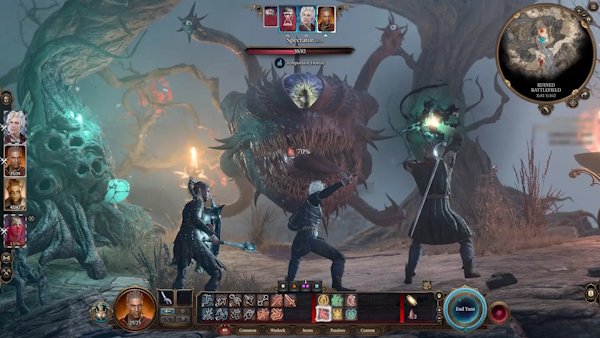
Originating as a digital successor to tabletop games like Dungeons & Dragons, classic RPG emphasizes strategic decision-making and role-playing rather than reaction time and speed. The genre's hallmark is a tactical, turn-based, or slow-motion combat system, where success is determined not by finger dexterity but by carefully crafted equipment, skills, and character stats. Players are free to create unique builds by experimenting with combinations of attributes, and their choices, whether in dialogue or at key plot points, have significant consequences, often radically altering the ending. Immersion is achieved through a complex setting, rich lore, and freedom of action.
Canonical examples:
- Larian Studios' Divinity: Original Sin series sets the standard for the genre, offering a tournament-style combat system and incredible freedom of interaction with the world.
- The Baldur's Gate 3 trilogy is the new gold standard, brilliantly bringing the complexity of D&D to the computer.
- Older but no less significant projects include Planescape: Torment, prized for its philosophical plot, and Fallout 1-2, whose mechanics and atmosphere have become iconic.
Action RPG (ARPG): Dynamic and constant flow of loot

Action RPG — is an evolution of the classic formula, adapted for a faster pace. While RPG combat often resembles a game of chess, ARPGs take place in real time and require the player to react quickly, dodge, and aim precisely. However, statistics and progression remain: attack damage is still calculated based on weapon level and hero stats. The genre's hallmark is the “loot loop”—an endless cycle of clearing locations of monsters in search of increasingly rare and powerful equipment. The plot often takes a backseat to gameplay built on constantly increasing power and changing gear.
The success of the genre is built on three pillars:
- A captivating game loop (loot loop): The constant cycle of “clearing enemies -> getting loot -> powering up your character” should be as addictive as possible.
- Leveling depth and build assemblies: the ability to experiment with skills and equipment to create a unique character.
- Satisfying gameplay: The fight should be responsive, dynamic and enjoyable.
Many iconic representatives of the genre (for example, Path of Exile or Diablo II in their time) achieved classic status thanks to the impeccable development of the above-mentioned mechanics.
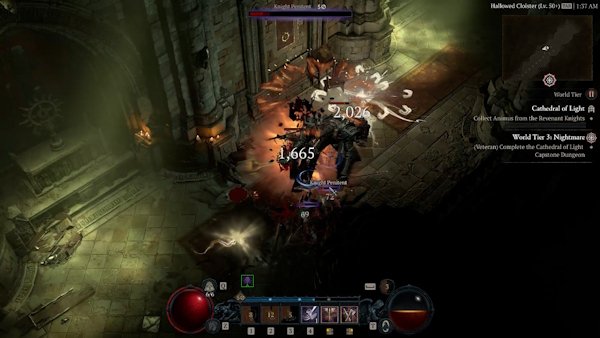
Excellent graphics are a huge plus and help with immersion. If an ARPG has bad graphics (at the time of release!), it's a bad game.
Canonical examples:
- Blizzard Entertainment's Diablo series is synonymous with the genre, setting all the core standards. For example, the now-popular Diablo 4.
- Path of Exile is a spiritual successor to Diablo II that takes the difficulty of leveling and the depth of mechanics to an incredible level.
- The Witcher 3: Wild Hunt is an example of a hybrid model, combining dynamic combat with the strong narrative typical of an RPG.
- Among more recent projects, FromSoftware's Elden Ring is considered the benchmark, with its complex combat system and non-linear world setting the modern standard of quality.
Hack'n'Slash (Slasher): Catharsis through pure combo

Hack'n'Slash Often confused with action RPGs, it's a distinct genre, focused solely on combat. While in ARPGs you level up your character to farm loot more efficiently, in slashers you level up to unlock new, more spectacular attack combos. Depth here lies not in stats, but in masterful control of the character, the ability to string together long, effective combos without taking damage. The story, role-playing elements, and leveling up are stripped down to the bare minimum, serving as a backdrop to endless battles with hordes of enemies. The action aesthetic, speed, and style are the key.
Canonical examples:
- The legendary Devil May Cry series, with its style system and style ratings, is the undisputed king of the genre.
- Bayonetta, from DMC creator Hideki Kamiya, is a benchmark for spectacular action and impeccable game design.
- God of War (the original trilogy) is an example of a more cinematic approach to the genre, with an emphasis on epic QTEs.
- Dynasty Warriors represents another branch of the genre – “musou”, where the player single-handedly cuts down entire armies.
MMORPG (Massively Multiplayer Online RPG): Social Experience and Endless Endgame
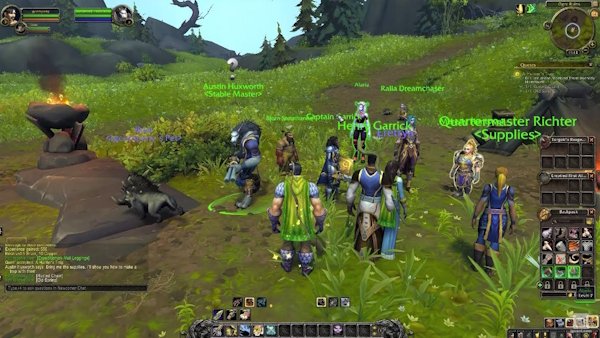
MMORPG — is not just a genre, but an entire ecosystem. The key difference is a persistent online world populated by thousands of other players. All mechanics are designed for social interaction: co-op dungeon crawls, raids against massive bosses, guilds, PvP battles, and auction houses. The storyline is typically linear and serves only as an introduction to the main content—the “endgame.” It is at maximum level that the character's true life begins: endless reputation building, collecting the best gear, and participating in large-scale in-game events. Progression is often tied to regular (daily or weekly) content, fostering long-term engagement.
Canonical examples:
- Blizzard's World of Warcraft is a cultural phenomenon that defined the genre for a decade and a half.
- Final Fantasy XIV is a shining example of a renaissance that demonstrated the power of narrative within an MMO.
- The Elder Scrolls Online successfully adapted the open world of the TES series for massive online play.
- Older but revered projects are Lineage II and Guild Wars 1, which laid the foundations for PvP and clan mechanics.
Action RPGs and Hack 'n' Slash gravitate toward isometric or third-person perspectives, focusing on focusing on the hero's surroundings to control crowds of enemies. Moreover, ARPGs are typically isometric. MMORPGs have practically monopolized the third-person perspective, with the ability to zoom in and out, which is critical for navigating large-scale battles and assessing surrounding players.
To sum it up, choosing between these genres is a choice of what kind of experience you are looking for:
- Looking for a deep dive into history and tactics? Classic RPGs are for you.
- Dynamic action and the thrill of hunting for loot? Action RPG is your way.
- Craving pure, spectacular action? Then welcome to the world of Hack'n'Slash.
- But if you're looking for more than just a game, but a second life in a vast world with a vibrant community, then an MMORPG is your home.
Understanding these nuances will help you never make a mistake in your choice.