


The smartphone market has become significantly more confusing since the emergence of three parallel lines of Xiaomi.
Description: An analysis of the differences between Xiaomi, Redmi, and POCO, their goals and positioning, with examples of current models and practical selection criteria.
Users often wonder what differentiates Xiaomi, Redmi, and Poco, and why models with similar specifications have different prices. Analyzing the brands' histories, their purpose, and direct comparisons helps understand the logic behind their segmentation and choose the device that best suits specific needs.
Xiaomi brand

The company began as a shell developer and gradually transitioned to creating its own smartphones, building on the idea of combining affordability with a premium experience. As its line evolved, the company entered the mid-to-high-end segment, building its own ecosystem and integrating its devices into a common quality standard.
The creation of a core smartphone line was a logical step to establish itself in a higher class and compete with flagships from other major brands. The company aimed to produce devices that offered premium materials, advanced cameras, and higher performance without cutting corners.
Today, the core lineup serves as a showcase for the company's technologies. New solutions—displays, cameras, chipsets, and charging systems—emerge here, and can then be rolled out to more affordable products.
Redmi brand

Redmi's history began as an attempt to create a line of highly affordable smartphones aimed at the mass market and developing regions. Unlike its core brand, Redmi initially focused on sales volume and building brand awareness through a favorable price-to-performance ratio.
The creation of Redmi was driven by the need to differentiate devices by price point and reduce pressure on the core brand. To avoid devaluing flagship models, a separate division was created with clear positioning in the budget and mid-range segments, while still maintaining high-tech features.
Today, Redmi focuses on affordability, capacious batteries, adequate performance, and practicality. Its devices remain the choice for those looking for maximum performance at a minimal price.
Poco brand

Poco began as an experimental project designed to demonstrate how to create a smartphone with flagship performance at a mid-range price. The initial devices were a huge success, cementing the brand's reputation as the manufacturer of the highest-performing devices for the price.
Poco's creation stemmed from a desire to address the niche of enthusiasts and power-conscious users. The line was created for those who wanted the performance of top-end chipsets, a minimalist design, and an aggressively low price without overpaying for extra features.
Poco has now evolved into a standalone sub-brand that focuses on processors, speed, and a gaming focus. It's aimed at those who prioritize performance over cameras or premium materials.
Comparison of Xiaomi, Redmi and Poco
Let's look at a few recent models that can be compared with each other. They represent the mid/mid-upper segment of 2025 and are relevant for most users.
- Xiaomi 15T is a premium smartphone from Xiaomi.
- POCO X7 Pro is a powerful and balanced device from POCO.
- Redmi Note 14 SE 5G is a balanced option from Redmi.

Xiaomi 15T — one of the most recent devices from the flagship brand, aimed at users who value an advanced camera, stable performance, and extensive functionality. It typically features a high-quality display and materials, as well as long-term OS support, making it a wise choice for the next 2-3 years.
Compared to its competitors, the 15T excels in overall balance: the camera, screen, build quality, and software are all top-notch. If you value comfort, stability, and versatility without compromise, this is one of the best options.
- CPU: Mediatek Dimensity 9400+
- RAM: 8 GB / 12 GB
- Storage: 256 GB / 512 GB
- Wi-Fi: Wi-Fi 6
- Screen: 6.67″ AMOLED, 1220p, 144 Hz
- Battery: 5000 mAh

POCO X7 Pro — a shining example of the «performance for a reasonable price» strategy. It offers a powerful processor, fast response times, a good display, and decent battery life, making it an excellent choice for gaming, multitasking, and resource-intensive tasks.
Compared to the Xiaomi 15T and Redmi Note 14 SE, the X7 Pro is superior in power and speed, but it could use a bit more attention to the cameras or the body materials. For those who value speed and efficiency, POCO is often the better choice.
- CPU: MediaTek Dimensity 8400-Ultra
- RAM: 8 GB / 12 GB
- Storage: 256 GB / 512 GB
- Wi-Fi: Wi-Fi 6
- Screen: 6.67″ AMOLED, 1.5K, 120 Hz
- Battery: 6000 mAh
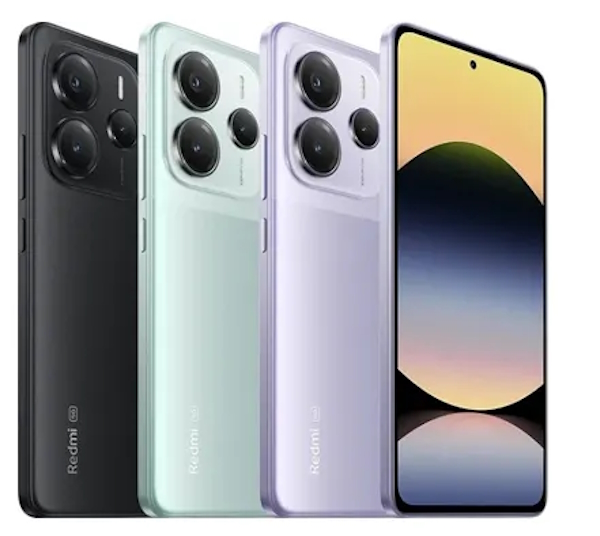
Redmi Note 14 SE 5G — an option for those who want a well-balanced smartphone at a reasonable price. It's focused on basic and everyday tasks: stable connectivity, a decent screen, adequate battery life, and acceptable performance.
Compared to the 15T and X7 Pro, the Redmi Note 14 SE is less ambitious, but simpler and more affordable. It's a good compromise if you're on a budget and need a reliable everyday smartphone without chasing after top-end features.
- CPU: MediaTek Dimensity 8300-Ultra
- RAM: 8 GB / 12 GB / 16 GB
- Storage: 256 GB / 512 GB
- Wi-Fi: Wi-Fi 6
- Screen: 6.67″ AMOLED, 1.5K, 120 Hz
- Battery: 5110 mAh