

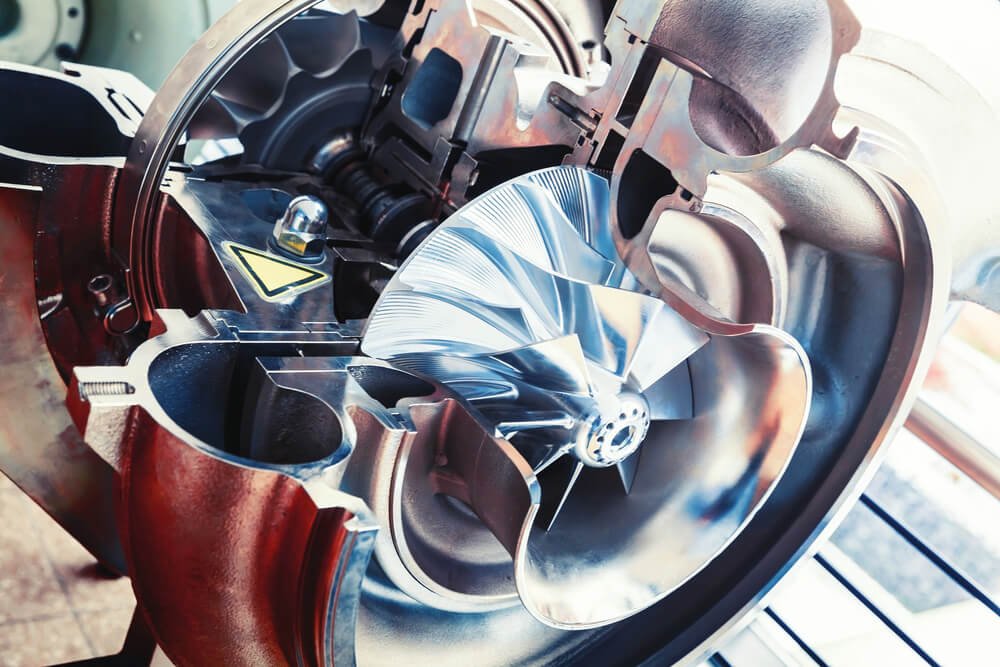
The terms twin turbo and biturbo mean the same thing: an engine equipped with two turbochargers . The difference is linguistic and marketing: "biturbo" is a term popularized by Maserati and German manufacturers, among others, while "twin turbo" is an English term. Engine performance is determined not by the name, but by the turbocharging system: parallel or sequential.
To sum it up
- Twin turbo = biturbo = two turbochargers in one engine; technically they are synonyms.
- The real difference is in the configuration: parallel (two identical turbines operating simultaneously) or series (turbines operating one after the other).
- The name does not indicate which specific system is used - this must be checked in the technical documentation of the specific engine.
- BMW's TwinPower Turbo and twin-scroll systems differ from each other: they typically feature a single turbocharger with a dual-channel housing.
Twin turbo and biturbo – why these two names?
Both names describe an engine with two turbochargers. The prefix "bi-" (Latin for "two") and the English "twin" mean the same thing in this context. The choice of name depends on the manufacturer and its traditions.
The term "biturbo" became famous thanks to Maserati Biturbo , introduced in December 1981. The manufacturer claims that the use of two small turbochargers in a production car was a global innovation at the time. Today, "biturbo" is the standard designation, particularly for Mercedes-AMG, while American and Japanese manufacturers more often use the term "twin turbocharging.".
Sometimes the term "biturbo" is associated with a parallel system, while "twin turbo" refers to the use of two different turbochargers. However, this is neither a rule nor a definition—both terms are used to describe different configurations.
Why does an engine need two turbochargers?
A turbocharger harnesses the energy of exhaust gases: the exhaust flow spins a turbine wheel, which in turn drives a compressor wheel mounted on a shared shaft, forcing more air into the cylinders. More air allows more fuel to be burned, producing more power from the same displacement.
The problem is in turbo lag — a delay between pressing the accelerator pedal and the start of boost, as the impeller must first spin up. A large turbine produces a lot of power but spools up slowly; a small one responds quickly but struggles to cope with high revs. Twin turbochargers are one way to solve these problems.
Parallel system – two identical turbochargers.
В parallel system with two turbochargers Two identical turbochargers operate, each handling approximately half of the exhaust gases. This solution is particularly well suited for V6 and V8 engines: each turbine serves one cylinder bank, shortening the exhaust gas path and simplifying the exhaust system.
Instead of one large turbocharger, two smaller ones are used because smaller rotors have less inertia and accelerate faster. As a result, boost occurs earlier, and turbo lag is less noticeable than with a single large turbine of similar efficiency.
Sequential system – turbines are connected in series.
В consistent In this system, one turbocharger operates at low rpm, while the second one engages (or takes over) at higher rpm. Often, the first turbocharger is smaller and quickly builds pressure at the low end, while the larger one provides efficiency at high rpm. Additional valves and electronics are required to control exhaust gas flow.
Well-known examples include the Porsche 959, third-generation Mazda RX-7, and fourth-generation Toyota Supra with the 2JZ-GTE engine. While the sequential system provides a wide spread of usable torque, it is more complex, so tuners often modify it by installing a single large turbocharger or two turbos operating in parallel.
Another option, found mainly in diesel engines, is two-stage supercharger : a small and a large turbocharger connected in series so that one compresses air already pre-compressed by the other.
Comparison table: biturbo, twin-turbo and twin-scroll
| Characteristic | Parallel system | Sequential circuit | Double Scroll |
|---|---|---|---|
| Number of turbochargers | 2 | 2 | 1 |
| How do they work? | At the same time, each of them receives a portion of the exhaust gases. | In turn, depending on the turnover | One turbine with two exhaust ducts |
| Turbine size | Same | Often different | Unsuitable |
| Typical engines | V6, V8 | Various engines: boxer (Porsche 959), inline six (2JZ-GTE), Wankel engine (RX-7) | In-line 4- and 6-cylinder engines |
| Complexity | Keep in mind | High level (valves, regulators) | Short |
| As it is sometimes called | Biturbo, twin turbocharging | Twin turbocharging, biturbo, sequential turbocharging | TwinPower Turbo, dual-scroll |
How to check your car's battery charge level?
- Don't let the writing on the trunk lid fool you. «Biturbo» and «twin turbo» simply indicate the presence of two turbochargers.
- Check the engine code and the manufacturer's technical specifications - there you will find the number of turbochargers and their operating principle.
- Beware of "TwinPower Turbo". In many BMW engines this means a single twin-scroll turbocharger, and the name covers the entire technology package.
- Calculate operating costs. Two turbochargers mean more components for potential repair, and a sequential system adds valves and controls. Before buying a used car, it's worth having the turbocharger diagnosed at a service center.
Frequently Asked Questions (FAQ)
What is the difference between twin turbo and biturbo?
Technically, there's nothing special—both names refer to an engine with two turbochargers. The differences are due to the manufacturers' marketing strategies. Engine performance depends on whether the turbochargers operate in parallel or sequentially.
Are twin-turbos always two identical turbines?
This is most often referred to as a parallel system with two identical turbochargers, but this is not a strict definition. Details should be clarified in the technical specifications of a specific engine.
Which is better - two turbochargers or one big one?
Two smaller turbochargers typically respond more quickly to throttle input, reducing turbo lag. A single turbocharger allows for a simpler design and fewer parts. Manufacturers choose the solution based on engine performance—modern twin-scroll turbochargers achieve good throttle response with a single turbocharger.
Does the BMW TwinPower Turbo engine have two turbochargers?
Not always. In many BMW engines, the TwinPower Turbo designation refers to a single twin-scroll turbocharger (with a dual-channel housing). Some units, especially larger ones, actually have two turbochargers.
What is a twin scroll turbocharger?
This is a single turbocharger, the housing of which has two separate exhaust gas ducts leading to the impeller. Exhaust gases from different cylinder groups do not interfere with each other, allowing the turbine to respond more quickly.
See also
- What is the difference between a two-stroke and a four-stroke engine?
- What is the difference between 95 and 98 octane gasoline?
- What is the difference between 5w30 and 5w40 oils?
- What is the difference between gasoline and diesel fuel?