

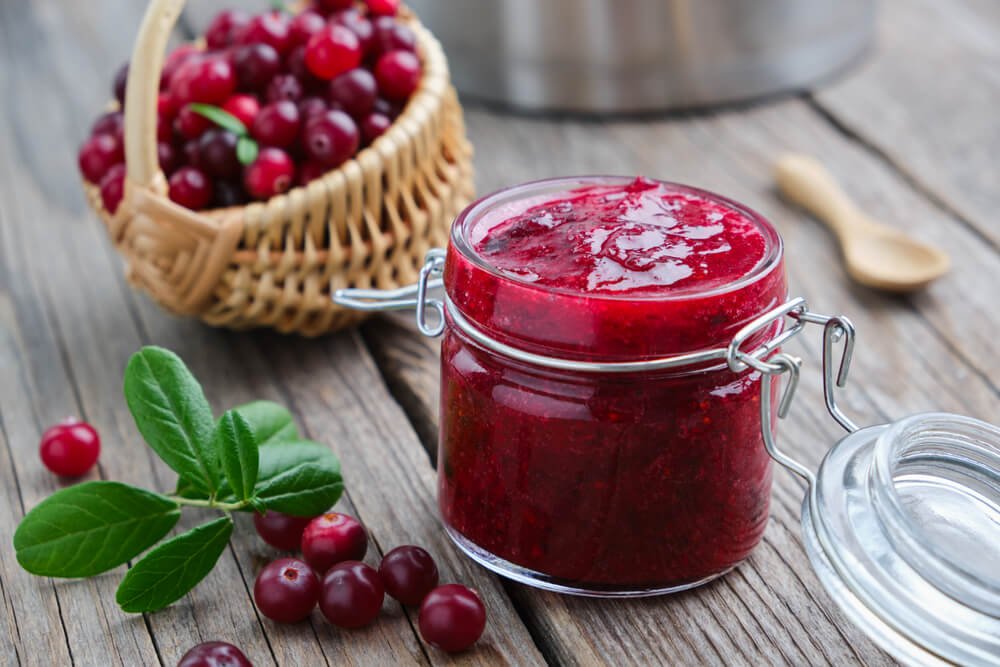
Jam differs from plum preserves in consistency and preparation method: in jam, whole or chunky fruit retains its shape and floats in a thick sugar syrup, whereas plum preserves are a smooth, dense mass of fruit (usually plums) simmered for a very long time, traditionally without added sugar. Therefore, jam is sweeter and has a thicker consistency, while plum preserves are dark, smooth, and thick, like a paste.
To sum it up
- Jam – from whole fruits or pieces in thick sugar syrup, while the fruits retain their shape.
- Jam – a smooth, thick mass made from overcooked fruit, most often plums.
- Jams are prepared with a lot of sugar, while plum jam is traditionally prepared sugar-free - it is thickened by prolonged evaporation.
- Plum jam takes much longer to fry and requires frequent stirring. stirring ; the jam should be mixed until almost homogeneous, so as not to crush the berries.
What is jam?
Jam — This is a jam made from whole or large pieces of fruit immersed in a thick sugar syrup. The fruit is slightly glassy but retains its shape—you might see whole strawberries, cherries, or apricot petals in the jar.
Jam is usually made in several stages: the fruit is coated in sugar or syrup, set aside, and then heated briefly, sometimes several times with breaks. This allows the sugar to gradually penetrate the fruit, preventing it from falling apart. Instead of stir the mixture with a spoon , Shake the container gently. Firm fruits work best: strawberries, cherries, gooseberries, apricots, and rose petals.
What is jam?
Plum jam — is a thick, homogeneous fruit mass obtained by roasting fruits for many hours and then evaporating the moisture. The classic version plum jam Made from Hungarian plums—late, sweet varieties that are easy to prepare and rich in natural sugar. Plum jam is also made from apples, pears, and other fruits.
In the Polish tradition, jam was prepared no added sugar Pitted fruits were simmered in large pots, often for several days, stirring constantly. Its thickness and shelf life were achieved by evaporating the water, rather than adding sugar. The jam darkened, became smooth, and was so thick that it didn't run when scooped with a spoon.
It is worth knowing that in stores plum jams May contain sugar. The Regulation of the Minister of Agriculture and Rural Development on the commercial quality of jams, preserves, and plum jams describes them as a highly concentrated mixture obtained by cooking plum pulp or puree. with sugar . If you're looking for a sugar-free option, check the label carefully.
Jam and plum jam are the most important differences.
Consistency and appearance
The jam contains individual pieces of fruit and syrup. Jam smooth and uniform , without lumps, and usually very dark—in the case of plums, almost brownish-black. Jam is more runny and can be cut almost like thick dough.
Sugar and flavoring
This jam is distinguished by its distinct sweetness, as its main ingredient and stabilizer is sugar. Traditional jams have concentrated fruit The taste is sweet, slightly tart and caramel-like, because the sweetness comes from the fruit itself, which is concentrated during frying.
Preparation time
Jams are fried briefly, although often in several stages. To prepare plum jam, you need multi-hour roasting , usually spread out over several days, with regular stirring to prevent the mixture from burning.
Comparison Chart: Plum Jam vs. Plum Jam
| Characteristic | Jam | Jam |
|---|---|---|
| Fruit shape | Whole fruits or large pieces | Homogeneous mass, without lumps. |
| Sugar | Lots of sugar syrup | Traditionally, such products do not contain sugar; sugar is often found in store-bought ones. |
| Subsequence | Fruits in thick syrup | Very thick, homogeneous paste |
| Color | Light, close in color to the color of the fruit. | Dark, often brown |
| Frying time | Short, step-by-step | For a very long time, even several days |
| Mixing | Almost none at all – so as not to damage the fruit. | Often - so that the mixture does not burn |
| Typical fruits | Strawberries, cherries, gooseberries, apricots, roses | Plums, apples, pears |
Jam, preserves, marmalade and marmalade – how to recognize them?
When it comes to shelves with canned goods, a simple rule helps: pay attention to degree of fragility of fruits :
- Jam - from whole fruits or large pieces in syrup.
- Jam - partially digested fruit with visible pieces in a jelly-like mass.
- Marmalade – fruits grated to a homogeneous mass, usually sweetened.
- Jam – a smooth, very thick mass, fried for a long time, traditionally without sugar.
When should you choose plum jam and when should you choose plum jam?
- Jam is better for pancakes, desserts, yogurt and ice cream – the fruit pieces look impressive and the syrup is easy to spread.
- Jams are better for donuts, buns, croissants and pastries – they are thick, do not leak in the oven and do not make baked goods soggy.
- Plum jam is perfect for meat and sauces , eg as an addition to roasts or game sauces.
- If you are trying to limit your sugar intake , Choose homemade or store-bought jam with a short list of ingredients and no added sugar. Jam naturally contains plenty of it.
Frequently Asked Questions (FAQ)
Does jam contain sugar?
Traditional jam is made without sugar—the sweetness comes from the thickening of the fruit during the long roasting process. However, many store-bought jams contain sugar, so it's worth checking the label for the ingredients.
What is the difference between jam and preserves?
In jam, fruit is used whole or in large pieces and immersed in syrup. In marmalade, the fruit is partially cooked, resulting in a more uniform, jelly-like consistency.
What is the difference between jam and marmalade?
Both types of jam have a smooth consistency, but marmalade is made from fruit puree cooked with sugar, whereas traditional jam is made from fruit roasted for a very long time without added sugar, making it thicker and darker.
Which plums are best for making jam?
Most often, these are Hungarian plums. These are late-ripening, sweet plums with firm flesh that separates easily from the pit and cooks well.
What's better for donuts: jam or plum jam?
Rose jam is traditionally used for doughnuts, but for baked goods such as yeast buns or croissants, thick jams that don't run out of dough are better.
See also
- What is the difference between quince and Japanese quince?
- What is the difference between broth and decoction?
- What is the difference between pudding and jelly?
- What is the difference between a pancake and a crepe?