

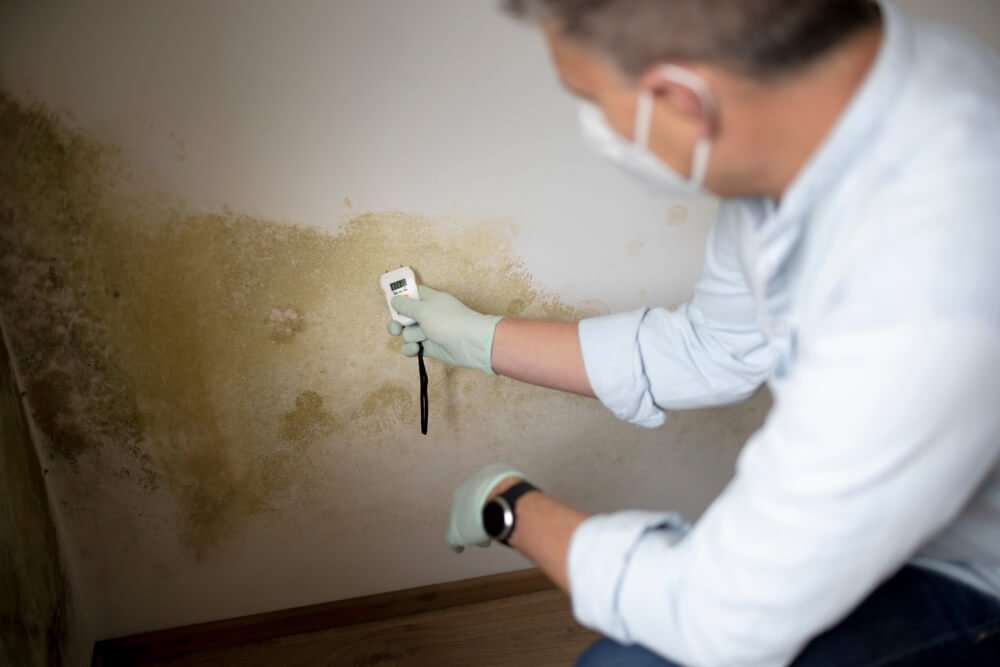
Mold is no different from mildew, a general term for thread-like fungi that form a visible, fluffy, or spotty coating on the surfaces of food, walls, or fabrics. The term "mold" is much broader: it also includes yeasts and fungi with fruiting bodies, such as porcini mushrooms (boletus). In construction, these terms have additional meanings: mold typically refers to a surface coating, while "mold" refers to an organism that grows into wood or masonry, destroying them from the inside.
To sum it up
- From a biological point of view: Any mold is a fungus, but not every fungus is a mold.
- On the wall: Mold is mostly a surface problem, household fungi (such as mildew) penetrate the material and decompose it.
- Regarding food products: The membrane is visible on the surface, but hyphae and possible mycotoxins can penetrate deeper.
- Common denominator: moisture - if it is not removed, the bloom and fungus will return.
Fungi and molds in biology
Mushrooms (or mycelia) are a separate kingdom of organisms; they are neither plants nor animals. They do not photosynthesize, feed on readily available organic matter, and their cell walls contain chitin. Fungi include a wide variety of organisms: single-celled yeasts, mushrooms known from forest finds, and microscopic filamentous fungi.
Mold — This is not a systematic designation, but a common name. It refers to filamentous fungi consisting of thin threads (hyphae) that together form a mycelium. Spores form on the mycelium, giving the mold its color: white, gray, green, bluish, or black. Common genera of mold found in homes include Aspergillus , Penicillium , Cladosporium и Alternaria .
Molds are not just pests. Molds come from the genus Penicillium Penicillin was isolated, and certain strains of mold are used in the production of blue cheeses such as Roquepol and Camembert.
Fungus or mold on the wall – how to tell the difference?
In everyday speech, "mold on the wall" most often simply refers to mold—black or greenish stains in corners, near windows, behind furniture, or on bathroom grout. However, in construction terminology, two different phenomena are distinguished:
- Mold Forms on plaster, paint, wallpaper, or silicone surfaces. It forms patchy deposits of various colors and emits a characteristic musty odor. It typically doesn't damage the structure itself, but it does damage the finish and degrade air quality.
- Wood-destroying fungi penetrate deep into wood. They form cotton-like growths, bundles, and "webs" of mycelium, and eventually, fruiting bodies. Under their influence, the wood rots, cracks, and loses strength. Wood-destroying fungi are the most dangerous. ( or teardrop-shaped fungus), the mycelium of which can grow through plaster and stonework, reaching other wooden elements.
Signs that the problem is more serious than just mold include soft, crumbling, or cracked wood (floors, beams, door frames), sagging boards, white or gray cotton-like growths, brown dust from spores, and a musty odor in the basement or attic. In such cases, consult a professional—controlling mold indoors usually requires removing the affected elements and using specialized products.
Fungi and mold - comparison.
| Characteristic | Form | Domestic mushroom (for example, scabiosa) |
|---|---|---|
| Biological status | Common name for thread-like fungi | Wood-destroying fungi |
| Where does it grow? | On the surface of walls, joints, fabrics, food products. | In wood and deep in partitions, often hidden |
| Appearance | Spots and fur: black, green, gray, white | Cotton-like growths, mycelial threads, fruiting bodies, rusty spore dust |
| Impact on the building | Mainly aesthetic defects, odor, damaged coating. | Weakening and rotting of wood pose a threat to the structure. |
| Removal | Minor outbreaks occur on their own, after eliminating the cause of the increased humidity. | Typically this involves an examination and replacement of faulty components. |
| Common cause | Moisture, poor ventilation, leaks, thermal bridges | |
Mold on food – what to do about it?
On food products, we only see part of the mold—the spore coat. Hyphae can grow deeper, and some types of mold produce mycotoxins — toxic compounds that are invisible and not always removed with the coating. The U.S. Food and Drug Administration (USDA FSIS) recommends discarding all soft and moist foods affected by mold, including jams, bread, yogurt, cottage cheese, and soft cheeses.
An exception is for hard, low-moisture products, such as hard yellow cheeses: according to the USDA, mold can be trimmed away with sufficient margin (at least 2.5 cm around and below the blemish), taking care not to transfer the spores to the rest of the product with the knife. This does not apply to cheeses where mold is part of the production process—in such cases, its presence is desirable.
Are mold and mildew in the home harmful to health?
Mold spores are airborne and can cause allergy symptoms such as sneezing, runny nose, coughing, watery eyes, or shortness of breath. For people with asthma, they can trigger an attack, so it's always a good idea to remove mold from your home. People with allergies, lung conditions, or weakened immune systems should exercise particular caution. If symptoms worsen indoors but improve outdoors, consult a doctor.
How to prevent mold and mildew in your home?
- Reduce humidity: Ventilate the room after cooking, showering, and drying clothes; maintain relative humidity as low as possible, preferably below 50%.
- Take care of ventilation: Do not block ventilation grilles; in case of narrow windows, consider installing vents.
- Eliminate the causes: Repair roof and utility leaks, insulate damp walls, and eliminate thermal bridges.
- Move furniture away from cold exterior walls, to ensure air circulation.
- Inspect the wood in your basement and attic – Early detection of mold reduces repair costs.
When removing mold, wear gloves and a mask, and use chemicals according to the manufacturer's instructions. Simply painting over the stains won't help—without removing the source of moisture, the mold will return.
Frequently Asked Questions (FAQ)
Is mold a fungus?
Yes. Mold is a general term for filamentous fungi, such as those of the genera Aspergillus and Penicillium. It's not a specific group of organisms, but rather a description of their appearance and growth pattern.
How to distinguish fungus from mold on a wall?
Mold forms flat spots or a fluffy coating on surfaces. Household fungi primarily attack wood and can be recognized by soft, cracked wood, cotton-like growths, mycelial threads, and rusty spore dust.
What is more dangerous: fungus or mold?
Household molds pose a significant threat to building structures, as they cause wood rot. Any mold in the home is important for the health of family members, especially those with allergies and asthma.
Is it possible to eat bread after removing the mold from it?
This is not recommended. Bread is porous and moist, so mold can grow deeper than you can see. The USDA recommends discarding the entire product.
What is a DIY garland?
This is one of the most dangerous fungi found indoors. It causes wood rot in buildings, and its mycelium can grow through plaster and masonry. Controlling it usually requires specialized knowledge.
See also
- What is the difference between a kite and a death cap?
- What is the difference between tiles and porcelain tiles?
- What is the difference between vitamin D and vitamin D3?
- What is the difference between deodorant and antiperspirant?