

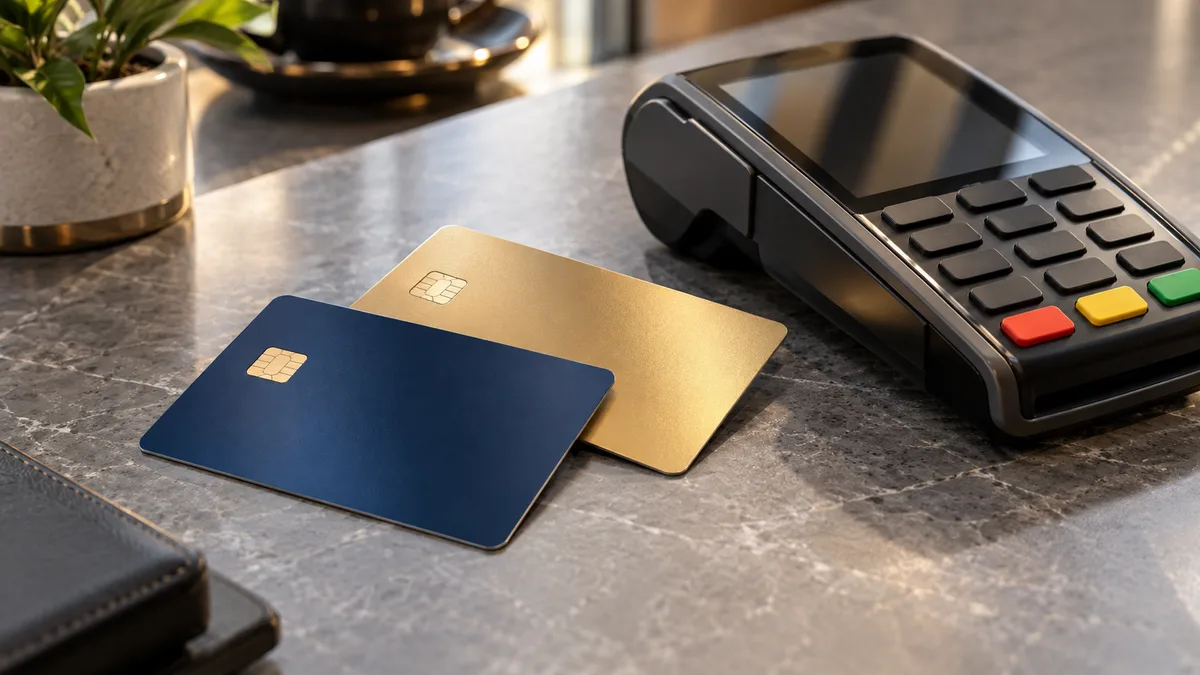
A debit card allows you to pay exclusively with the funds in your account, while a credit card allows you to pay with the bank's funds up to a pre-agreed limit, which must then be repaid. With a debit card, you spend your own money, while with a credit card, you take out a short-term loan. If you repay it within the interest-free period, you won't pay interest; if not, the bank will charge you interest.
To sum it up
- Debit card linked to your personal account - the transaction immediately reduces the balance (or blocks funds until the transaction is completed).
- Credit card has a renewable credit limit; after each billing period, you receive a statement with a demand to repay the debt.
- The credit card provides interest-free period , but cash withdrawals usually incur fees and interest from the first day.
- To get a credit card, the bank must evaluate your creditworthiness , and information about the card's use is recorded in the BIK history.
How does a debit card work?
Debit cards — are the most popular payment cards in Poland; banks typically issue them along with personal accounts. Every payment or ATM withdrawal deducts funds from the account. Once the funds are exhausted, the transaction is rejected (unless the account has an overdraft limit, which is a separate credit product).
A debit card can be used for payments in stores, online, using your phone or watch, and for ATM withdrawals. No credit check is required, making it available to people with no income, and at many banks, even to teenagers with a youth account, with parental consent.
How does a credit card work?
Credit card has a revolving credit limit. The bank provides it after assessing your creditworthiness (income, expenses, and credit history). When you pay with the card, you use the bank's funds; after the limit is repaid, it becomes fully available again.
The card operates on billing cycles. After each cycle, the bank sends a statement of transactions and sets a repayment date. Interest-free period covers the billing cycle and repayment period—depending on the bank, it usually lasts about 50–60 days. If you pay off the entire balance by cashless payments on time, no interest will accrue. You can also make only minimum payment, indicated in the statement, but in this case the bank will charge interest on the remaining amount at the card's interest rate.
Debit and credit cards are the most important differences.
| Characteristic | Debit card | Credit card |
|---|---|---|
| Source of money | Own funds in the account | The credit limit is provided by the bank |
| A personal account is required | Yes, he was given a card. | Not always - the card has its own account. |
| Creditworthiness assessment | NO | Yes |
| Interest | Nothing (no credit required) | After the expiration of the interest-free period on the outstanding amount |
| Withdrawing cash from an ATM | Usually no commission within the network specified by the bank. | Typically, fees and interest are charged from the payment date. |
| Impact on BIC | Flaw | Yes, timely payment creates history, delays destroy it. |
| Typical fees | To withdraw cash from a card, withdraw funds outside the bank network, and convert currency. | Annual or monthly card fee, interest, fees |
It's worth remembering that both cards are virtually identical in appearance—they often feature the same payment company logo (Visa, Mastercard). You can check the card type in your bank's app, in the contract, or by the "debit" or "credit" mark that many banks place on the card.
The Costs and Pitfalls of Using Credit Cards
A credit card only provides free credit if you make your payments on time. debt Every month. Common mistakes include:
- By depositing only the minimum amount , you gradually reduce the debt, and the interest accumulates.
- Withdrawing cash from an ATM is usually not covered by the interest-free period and incurs a fee.
- Transfers and card transactions classified as "quasi-cash"« , - banks often treat them as cash withdrawals.
- Card usage fee – Many banks allow you to avoid this by fulfilling certain conditions, such as spending a certain amount per month; these conditions can be found in the fees and charges table.
Before signing the agreement, review the information about the consumer loan—the bank is required to provide details, including the interest rate and annual percentage rate (APR). A credit card is a consumer loan, so you can terminate the agreement within 14 days of signing it without giving a reason.
Credit or debit card – which one to choose?
If you want to spend only what is in your account and don't want to worry about repayment terms, choose a debit card For everyday purchases. This is the simplest and safest solution for family budgets, for young people, and for anyone who doesn't want to get into debt.
A credit card makes sense, If you can control your spending and pay off your debt on time, it provides a reserve fund for unexpected expenses, allows you to defer payments, and can be mandatory or more convenient when booking a hotel or renting a car, since the deposit doesn't lock the money in your account. Regular and timely payments also help build a positive credit history.
Many people have both cards: a debit card for everyday payments and a credit card for travel or emergencies. If you're having trouble paying off your debt, contact your bank as soon as possible. You can also seek advice from the Financial Ombudsman or your local consumer protection ombudsman.
Frequently Asked Questions (FAQ)
How do I check if I have a debit or credit card?
The easiest way is through an app or online banking—a credit card has a separate limit and repayment schedule. The card type is also specified in the contract, and many cards are labeled "debit" or "credit.".
Is a debit card the same as an overdraft?
No. A debit card uses the funds in your account. An overdraft, or personal account limit, is a separate revolving line of credit that allows you to go below zero. You can use it with a debit card only if your bank has granted you such a limit.
Does a credit card affect creditworthiness?
Yes. The provided limit is considered a liability even if you don't use it, so it may reduce your creditworthiness, for example, when applying for a mortgage. Timely loan repayment, in turn, builds a positive credit history with the Credit Information Bureau (CIB).
Is it possible to withdraw cash using a credit card?
This is possible, but usually unprofitable. Banks charge a cash withdrawal fee and interest from the transaction date, but there is no interest-free period. Detailed information on fees is provided in the bank's price list.
What is safer when paying online?
Both cards offer similar protection, including 3D Secure technology and chargeback protection. With a credit card, any unauthorized charges are applied to the bank's limit, not your account balance, which can be more convenient during investigations.
See also
- What is the difference between Visa and Mastercard?
- What is the difference between a credit and a loan?
- What is the difference between a credit consultant and a credit expert?
- What is the difference between WIBOR 3M and WIBOR 6M?
- What is the difference between an SD card and a microSD (TF) card?