

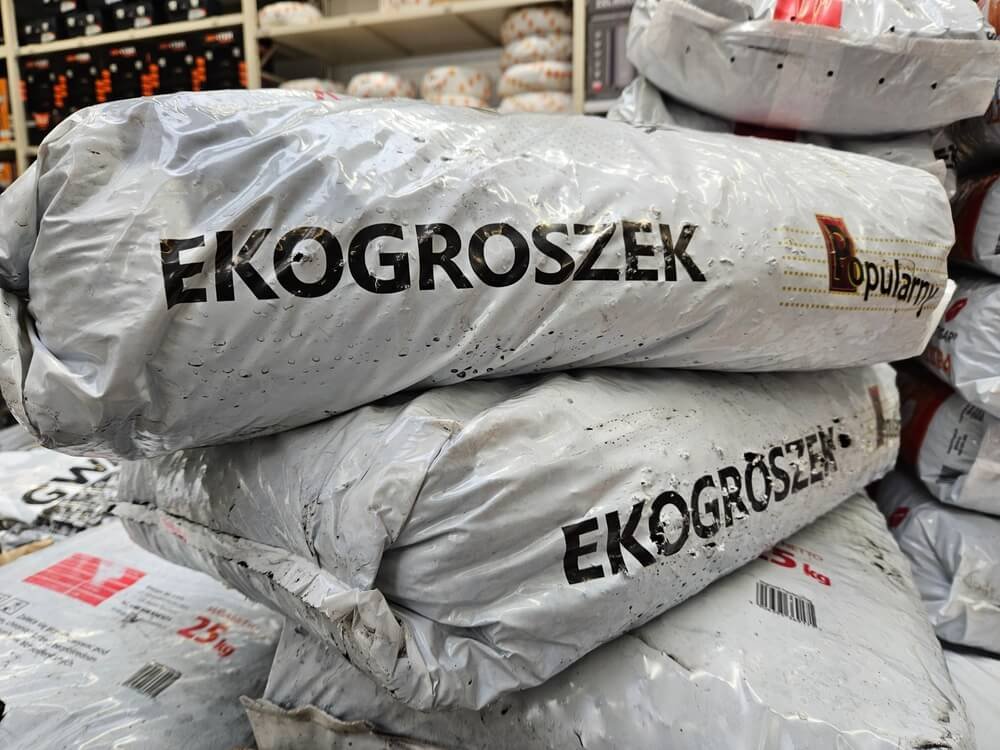
Pea coal is a grade of hard coal that differs in grain size, and eco-pea coal is a commercial name for pea coal with certain parameters - typically higher calorific value, lower ash and sulfur content, and low caking tendency - intended primarily for boilers with automatic feeders. Both fuels are the same type of coal; they differ in quality and intended use. The prefix "eco" does not indicate an environmentally friendly fuel.
To sum it up
- Pea – a term denoting the size of coal grains; quality parameters can vary greatly.
- Eco-pea coal – pea coal with improved, stable parameters, suitable for use in feed boilers.
- For boiler with feeder fuel with the parameters recommended by the manufacturer is required – usually this is environmentally friendly pea coal.
- «"Eco" is a trademark ; Eco-coal is still a fossil fuel that emits pollutants when burned.
What is pea coal?
After mining, coal is sorted by grain size into so-called assortments : from large (cube, nut) to small (pea, small). Pea coal — This is a medium-small variety whose grains are the size of a pea, hence the name. The name itself refers to size, not quality.
Regular pea coal can be mined in various mines and has various parameters, including calorific value, ash, sulfur, and moisture content, as well as its tendency to caking (sticking together in the firebox). It is particularly suitable for boilers with bunker-fed fuel, where fuel is added manually, if the boiler manufacturer permits the use of this grade.
What is eco-pea coal?
Eco-pea coal - this is also pea coal, but it is specially selected and prepared for use in automatic boilers with feeder (usually auger-type). These boilers require fuel with a fine, uniform grain size—usually from a few millimeters to approximately 25 millimeters—that is dry, low-caking, and low-ash. Otherwise, the fuel may clog the feeder, stick in the furnace, or burn inefficiently.
Environmentally friendly coal is often additionally screened and cleaned, and manufacturers specify its parameters on the packaging and documentation. It is sometimes sold in bags, which facilitates storage and bunker filling.
Is pea coal really environmentally friendly?
Not literally. Clean coal is hard coal, fossil fuel , which emits carbon dioxide, dust, and other pollutants when burned. Improved combustion parameters and processes in a modern automatic boiler can reduce emissions compared to burning lower-quality coal in an older furnace, but this does not make coal an environmentally friendly fuel.
In 2021, the Ministry of Climate and Environment proposed replacing the name «eco-pea» with «"Peas III", arguing that the "eco" prefix could mislead consumers. In 2022, due to the situation following Russia's aggression against Ukraine, work on the new requirements was suspended, and the name continues to be used in trade.
Comparison chart of peas and eco-peas
| Characteristic | Peas | Eco-pea coal |
|---|---|---|
| What's happened | Sorting coal by grain size. | Peas with selected parameters (trade mark) |
| Parameters | Variables, depending on the field and supplier. | As a rule, it has a higher calorific value and lower ash and sulfur content. |
| Sinterability | Different | Low level - important for the feeder to work. |
| Grain size | Medium-fine, less uniform | Good and smooth |
| Fate | Mainly bunker boilers (if the manufacturer allows it). | Automatic boilers with feeder |
| Price | Usually lower | Usually higher |
| Environmental impact | When using fossil fuels, emissions depend on the quality of the fuel and the type of boiler. | Fossil fuel - "eco" is a trade name. |
Peas or organic peas – which one to choose for your stove?
The main determining factor is boiler type and manufacturer's recommendations . For information on acceptable fuel, grain size, and minimum parameters, please refer to the boiler's operating manual. Using fuel that does not meet the recommended parameters may impair the unit's performance, increase pollutant emissions, and, in extreme cases, void the warranty.
- For boilers with feeder Use environmentally friendly pea coal with the parameters recommended by the boiler manufacturer. Cheaper pea coal with random grain sizes and high caking properties can clog the feeder and cause sticking.
- A filled cauldron – Check the instructions to make sure it's suitable for peas; many of these kettles are designed for larger volumes.
- Measures to combat smog Before purchasing, check the regulations in your province and municipality. They may restrict the use of certain fuels or boilers, and in some areas, burning coal is prohibited entirely.
How to check the quality of peas and eco-pea charcoal when purchasing?
Sellers of solid fuel for household use are required to provide the buyer with solid fuel quality certificate with a unique number. The document specifies the product group and parameters, including calorific value, ash content, sulfur content, moisture content, and grain size.
- Compare offers based on the parameters specified in the certificate, not on the name «eco» or «premium».
- Please note calorific value – the higher the indicator, the less fuel per season – and ash content , which affects the frequency of boiler cleaning.
- For a boiler with a feeder, check sinterability and grain size according to the instructions.
- Store fuel in a dry place – wet coal burns worse.
Frequently Asked Questions (FAQ)
Is it possible to roast peas on the stove using a feeder?
Only if its parameters meet the boiler manufacturer's requirements—primarily grain size, sintering properties, and ash content. It's safer to choose environmentally friendly pea coal with the parameters specified in the boiler's operating manual.
Is pea coal more environmentally friendly than charcoal made from peas?
Improved fuel quality and the combustion process in modern boilers can reduce emissions, but eco-friendly coal is still hard coal. The "eco" prefix is a trade name, not an eco-certification.
Why is eco-friendly coal more expensive than regular coal?
This requires more careful selection and preparation: uniform grain size, low tendency to stick together, low ash content, and higher calorific value. Furthermore, it is often packaged in bags.
What documents do I need to obtain when purchasing coal?
The seller of solid fuel for household use must issue a solid fuel quality certificate with an individual number indicating the type of fuel and its parameters.
What is the difference between eco-friendly pea coal and pellets?
Clean coal is hard coal, a fossil fuel. Pellets are compressed biomass, most often wood sawdust. Pellets have a lower calorific value per kilogram but are considered a renewable fuel. Both types of fuel require boilers adapted to the specific fuel type.
See also
- What is the difference between calorific value and heat of combustion?
- What is the difference between E5 and E10 gasoline?
- What is the difference between 95 and 98 octane gasoline?
- What is the difference between gasoline and diesel fuel?