

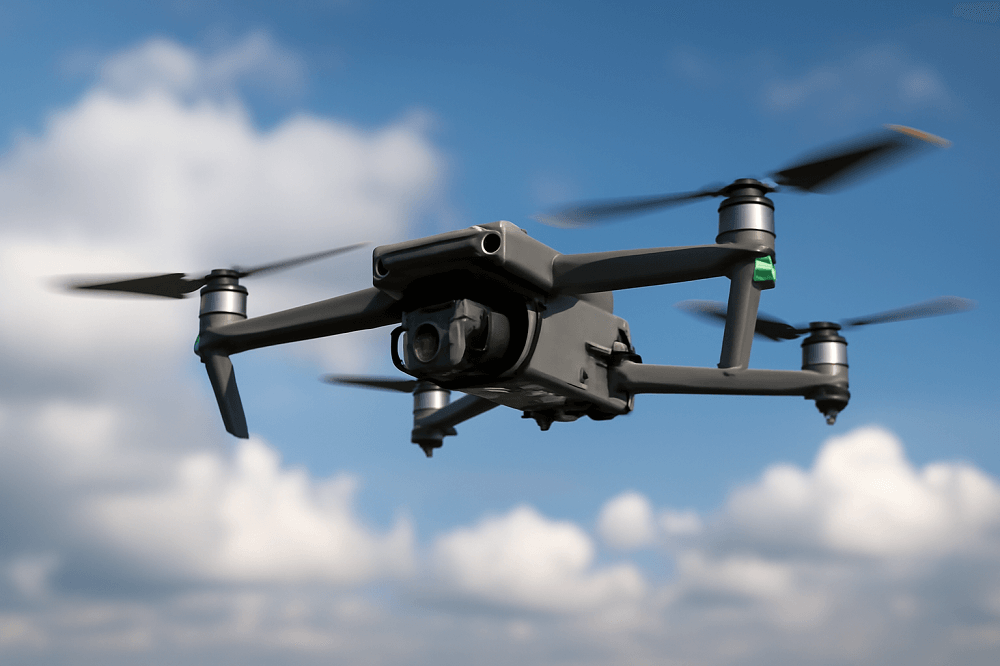
Military drones differ from recreational drones primarily in their purpose and scale: they are used for reconnaissance, communication, or target engagement within the military system, while recreational drones are small machines used for filming, flight training, or racing. This leads to further differences: size (from pocket drones to unmanned aerial vehicles weighing several tons), range, flight time, resistance to interference, and the regulations they comply with. However, the line between them is blurring as armies increasingly turn to low-cost civilian developments.
To sum it up
- Purpose: Military – reconnaissance, target detection and destruction, communications; entertainment – photography, cinema, entertainment, sports.
- Scale: Military drones weigh from a few kilograms to over 600 kg (NATO Class III); recreational drones typically weigh no more than a few kilograms, with many popular models weighing less than 250 g.
- Technologies: Military systems, among other things, are equipped with encrypted, jam-resistant communication channels, thermal imaging sensors, radars, and satellite communications; entertainment systems have a camera, GPS, and short-range radio channels.
- Rules: Recreational flights in the EU are governed by civil regulations (open category, operator registration); military drones are governed by the rules of the armed forces.
What is a military drone?
In the military sphere they usually talk about unmanned aerial vehicles (UAVs) or entire systems (UAVs), since a "drone" also includes a control station, data links, a crew of operators and analysts, and technical support. NATO divides such systems into three weight classes: Class I – less than 150 kg (micro, mini and small drones), Class II – from 150 to 600 kg (brigade level support) and Class III – more than 600 kg (long-range operational and strategic aircraft).
Due to their tasks, they are distinguished as follows:
- Reconnaissance drones – they observe the area and transmit images, for example, the American RQ-4 Global Hawk or the Polish mini-UAV FlyEye.
- Attack drones - They carry weapons, such as the MQ-9 Reaper.
- Loitering munitions – unmanned aerial vehicles that circle over an area and, upon detecting a target, transform into a missile (for example, the Polish Warmate).
- Support drones – for relaying messages, conducting electronic warfare or transporting small loads.
What is a recreational drone?
Drone for leisure — is a civilian unmanned aerial vehicle, typically multirotor (most often quadrotor), designed for private use. The most popular are drones with a camera and a stabilized gimbal for photo and video shooting, small drones for pilot training, and FPV drones , controlled with first-person glasses - also for racing.
These devices are equipped with GPS, an automatic return to the launch pad system, and often obstacle avoidance sensors. They connect to a device or smartphone via radio over a range measured in kilometers, and flight duration is limited by battery capacity. Exact parameters—flight range, flight time, and weight—depend on the specific model, so check the manufacturer's specifications.
Military and Recreational Drones - A Table of Differences
| Characteristic | Military drone | Drone for leisure |
|---|---|---|
| Fate | Reconnaissance, target engagement, communications, support | Photos, videos, piloting lessons, FPV racing. |
| Weight and size | From small hand-held drones to machines weighing over 600 kg. | Usually up to several kilograms, often less than 250 g. |
| Design | Multi-rotor and winged unmanned aerial vehicles. | Most often multi-rotor |
| Communication | Encrypted, jam-resistant, and also a companion in large systems. | Radio communication within the operator's line of sight. |
| Equipment | Optoelectronic heads, thermal imagers, radars, weapons | Camera with gimbal, GPS, obstacle sensors. |
| Service | Trained operators, control room, equipment. | One person with equipment or smartphone |
| Recipes | Military regulations | EU civil law and national civil law (including the ULC) |
When the line gets blurred
Today, the distinction between "military" and "civilian" is not so clear. In the war in Ukraine, both sides are making extensive use of commercial drones with cameras for observation of the battlefield, as well as modified FPV drones, explosive-carrying devices. The design is often the same as those sold in stores; only the operating methods, software, and additional equipment differ.
However, significant differences remain. Professional military systems are designed to operate under fire and in electronic warfare environments: they feature communications that are difficult to jam, navigation that works even in the face of GPS interference, and are part of a larger command network. Civilian drones lack such protection.
What are the regulations in Poland regarding the use of drones for recreational purposes?
In Poland, recreational drone flying is governed by EU regulations on unmanned aerial vehicles, which are enforced by Civil Aviation Authority . Most amateur flights are conducted in open category (subcategories A1, A2 and A3), which in short means:
- flight within the operator's line of sight and at an altitude of up to 120 m above the ground, with a drone weighing up to 25 kg.
- Operator registration on the website drony.ulc.gov.pl is mandatory if the drone weighs 250 g or more or is equipped with a camera (except for toys).
- Online training and testing for the A1/A3 program for drones weighing 250g and over; those wishing to fly closer to people can also earn an A2 certificate.
- compliance with flight rules in areas where flights are prohibited or restricted (e.g. at airports, military facilities).
Details depend on the drone class and the location of the flight, and regulations are subject to change, so before your first flight, check the latest requirements on the Civil Aviation Authority website. Drones used in military operations are not subject to EU civil regulations; armed forces regulations apply.
Frequently Asked Questions (FAQ)
Is a military drone always a combat drone?
No. Many military drones are reconnaissance aircraft that don't carry weapons, but merely observe the terrain and transmit images. There are also drones for communications, electronic warfare, and transportation.
How much does a military drone weigh?
It depends on the class. According to NATO classification, Class I includes drones weighing less than 150 kg (including small drones carried by soldiers), Class II includes those weighing between 150 and 600 kg, and Class III includes those weighing over 600 kg, i.e., large, long-range drones.
Do I need to register a drone for recreational purposes?
In the open category, operator registration with the Civil Aviation Authority is required if the drone weighs 250g or more or is equipped with a camera or other sensor that collects personal data (toy drones are an exception). Drones weighing 250g or more also require training and online testing at level A1/A3.
How high can a hobby drone fly?
In the open category, the maximum altitude is 120 meters above ground and is always within the operator's line of sight. Additional restrictions or no-fly zones apply in some areas.
What are loitering munitions?
This unmanned aerial vehicle (UAV) circles over a designated area, then, after identifying a target, strikes it like a missile and is destroyed. An example of such a Polish design is the Warmate.
See also
- What is the difference between a webcam and a digital camera?
- What is the difference between a helicopter and a helicopter?
- What is the difference between a mobile phone and a smartphone?
- What is the difference between an SD card and a microSD (TF) card?