

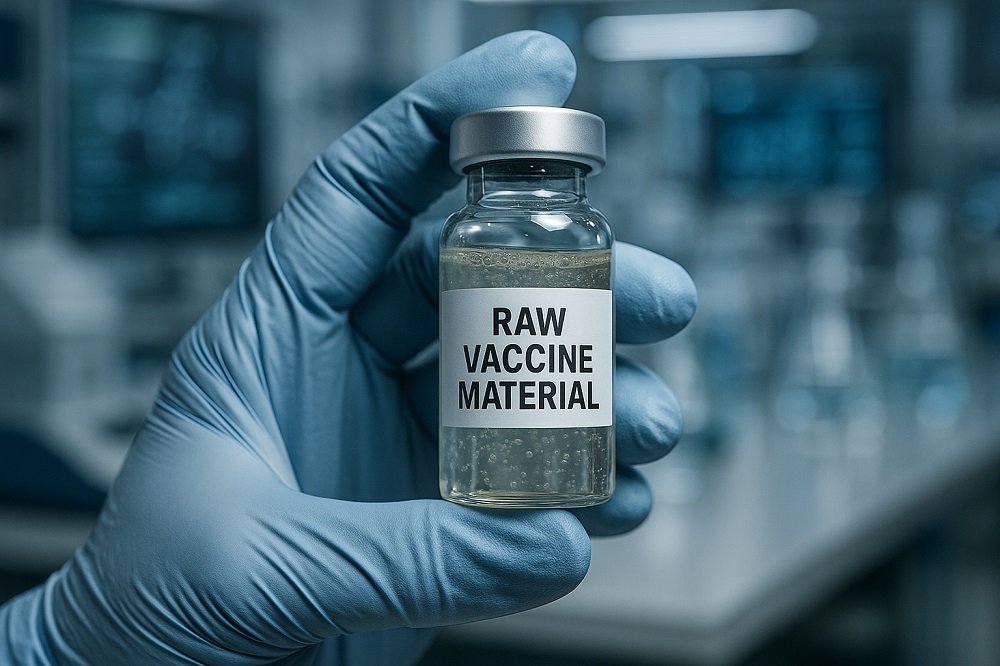
A vaccine contains antigens (weakened, killed microorganisms or their fragments) that teach the body to produce antibodies on its own, while serum contains ready-made antibodies obtained from another organism. The vaccine provides active immunity—it develops over time but lasts for a long time. The serum provides passive immunity—it acts immediately but wears off after a few weeks.
To sum it up
- Compound: vaccine – antigens; serum – ready-made antibodies.
- Immunity: The vaccine induces artificial active immunity, the serum – artificial passive immunity.
- Duration of action: The vaccine provides protection within a few days to weeks, but for a long time (memory cells are formed); the serum provides protection immediately, but for a short time.
- Application: A vaccine primarily prevents a disease, while serum (today most often immunoglobulin) is used for rapid protection after contact with the pathogen or for treatment.
What is a vaccine?
Vaccine — is a biological preparation containing a microbial antigen—a substance that the immune system recognizes as foreign, but which will not cause full-blown disease. Such antigens may include:
- microorganisms are alive, but weakened (attenuated),
- killed (inactivated) microorganisms,
- purified fragments of microorganisms, such as surface proteins,
- Toxoids (anatoxins) are bacterial toxins that do not have toxic properties, such as those used in vaccines against tetanus and diphtheria.
- In more modern technologies, this is genetic material (for example, mRNA), on the basis of which the cells themselves produce an antigen.
After the vaccine is administered, the body reacts as if it had encountered a real microbe: lymphocytes produce specific antibodies and form immunological memory cells . Upon subsequent contact with the pathogen, the reaction is rapid and strong, so the disease does not develop or is less severe.
What is antiserum?
Immune serum — is the fibrinogen-free portion of blood plasma that contains a large number of specific antibodies. It is obtained from a person or animal that has previously been immunized—either by recovering from a disease, being vaccinated, or (in the case of animals such as horses) by being intentionally immunized with an antigen.
Serums are divided into heterologous (of animal origin, historically predominantly equine) and homologous (human). Nowadays, instead of "serum" in medicine, the term "serum" is more often used «"immunoglobulins"» — purified antibody preparations, such as human tetanus immunoglobulin. The principle of action is the same: the body receives antibodies ready for use.
Serum therapy was first developed by Emil von Behring, who developed an antitoxin for diphtheria (and, together with Kitasato, also for tetanus) in the late 19th century. For this work, he received the first Nobel Prize in Physiology or Medicine in 1901.
Active and passive immunity is the key difference.
The difference between a vaccine and a serum is best explained by the division of acquired immunity, known from biology lessons:
- natural active - after an illness,
- artificial active - after vaccination,
- Natural passive immunity – transfer of antibodies from mother to child through the placenta and milk.
- Artificially passive – after administration of serum or immunoglobulin.
At active In immunity, the body works independently: it produces antibodies and memory cells. This process lasts from several days to several weeks, but protection can last for years (some vaccines require booster doses). passive In immunity, the immune system receives antibodies from "outside." These act immediately, but are gradually eliminated from the body, and memory cells are not produced—thus, protection typically lasts only a few weeks.
Comparison table of vaccine and serum
| Characteristic | Vaccine | Serum/immunoglobulin |
|---|---|---|
| Content | Antigens: weakened or killed microorganisms, their fragments, toxoids, mRNA. | Ready-made antibodies |
| Type of immunity | Artificial active | Artificial passive |
| Who produces antibodies? | The body of a vaccinated person | Another person or animal |
| Beginning of the defense | In a few days or weeks | Immediately |
| Duration | Long period (months, years), sometimes repeated doses. | Short term (usually a few weeks) |
| Immunological memory | It is being created | This does not occur |
| The main goal | Disease prevention | Rapid protection, treatment and neutralization of toxins after contact with the pathogen. |
When is a vaccine used and when is a serum used?
Vaccination It is administered primarily for preventative purposes—to healthy individuals before exposure to a pathogen. This includes childhood vaccination, influenza vaccination, and pre-travel vaccination.
Serums and immunoglobulins They are used in cases where there is no time to wait for the body's reaction or when it is necessary to neutralize a toxin already circulating in the blood. Examples include tetanus prophylaxis after injury in individuals who are not fully vaccinated, rabies prophylaxis after a bite, as well as antitoxins and antivenoms.
Both drugs are often combined in the so-called active-passive immunization . After an injury in a person who is not vaccinated against tetanus or who does not know their vaccination history, the vaccine and tetanus immunoglobulin are administered simultaneously, in separate injections. The immunoglobulin provides immediate protection, while the vaccine provides long-lasting immunity. A similar combination is used to prevent rabies. A doctor always decides which treatment regimen to use.
Safety and side effects
After vaccination, mild, transient reactions are most common: pain and redness at the injection site, fever, and malaise. Serious reactions are rare.
Sera of animal origin contain proteins that are foreign to the given species and therefore may cause hypersensitivity reactions, including serum sickness . This systemic reaction typically begins 7–14 days after administration and can include symptoms such as fever, rash, and joint pain. Human immunoglobulins are safer in this regard, which is one of the reasons they have replaced the previous equine serums in many applications.
After an injury or bite, always consult a doctor about vaccinations, contraindications, and treatment.
Frequently Asked Questions (FAQ)
What is the difference between a vaccine and a serum?
A vaccine contains antigens and stimulates the body to produce its own antibodies and memory cells (active, long-term immunity). A serum contains ready-made antibodies from another organism (passive, immediate, but short-term immunity).
What type of immunity does a vaccine provide and what type does a serum provide?
The vaccine induces artificial active immunity. The serum provides artificial passive immunity.
Why does the serum work faster than the vaccine?
Because it already contains ready-made antibodies that immediately bind to microorganisms or toxins. After vaccination, the body first needs to recognize the antigen and produce antibodies, a process that takes several days to several weeks.
Is it possible to administer the vaccine and serum at the same time?
Yes, this is called active-passive immunization. It is used, in particular, to prevent tetanus after injury in individuals who are not fully vaccinated, as well as to prevent rabies. Vaccines are administered to various sites on the body at the doctor's discretion.
What is serum sickness?
This is a hypersensitivity reaction to a foreign protein, such as a protein from animal serum. It typically appears 7–14 days after administration and can cause fever, rash, and joint pain.
See also
- What is the difference between HIV and AIDS?
- What is the difference between influenza A and B viruses?
- What is the difference between quarantine and isolation?
- What is the difference between the circulatory and lymphatic systems?