

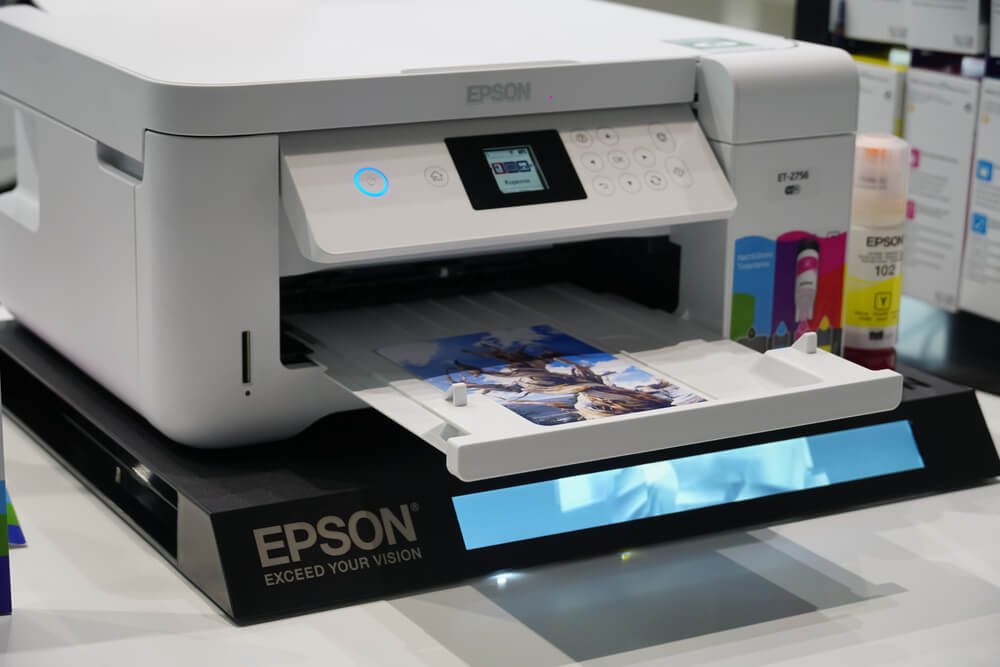
A laser printer prints with dry powder (toner) that is transferred to the paper by an electrified drum and fused at high temperature, while an inkjet printer deposits liquid ink onto the paper through microscopic nozzles in the print head. In practice, a laser printer is usually faster and cheaper for printing text, while an inkjet printer is better suited for printing photos and color graphics. The choice depends primarily on what and how often you print.
To sum it up
- Technology: Laser – toner powder and drum; inkjet – liquid ink and print head with nozzles.
- For what: Laser printer – for large quantities of text documents; inkjet printer – for photographs, graphics, and color printing.
- Downtime: Toner doesn't dry out, so a laser printer can withstand long periods of non-use; in an inkjet printer, unused ink can dry in the nozzles.
- Cost: A classic inkjet printer may be inexpensive to purchase but expensive to operate; printers with ink tanks significantly reduce the cost per page.
How does a laser printer work?
The heart of a laser printer is photosensitive drum . A laser beam (or, in some designs, LEDs) "draws" an image of the page onto it by changing the electrical charge in selected locations. Particles toner — dry, very fine powder — sticks to these areas. The drum transfers the toner to the page, and then heat setting unit uses high heat and pressure to bond it to the paper.
This way, the page comes out of the laser printer warm, the print dries instantly, and doesn't smudge. Laser printers are manufactured in monochrome (black toner only) and four-toner color (CMYK) options.
How does an inkjet printer work?
The inkjet printer has print head with multiple microscopic nozzles that spray droplets of liquid ink onto paper. Two main technologies are used: thermal printing , in which the ink heats up quickly and the resulting bubble pushes out the drop, and piezoelectric printing , in which the drop is pushed out by a vibrating piezoelectric element.
Ink is supplied to the printer from replacement cartridges or, in newer models, from refilled tanks (ink tank printers). Some cartridges have a built-in print head, so it is replaced along with the ink; in other cases, the print head is an integral part of the printer.
Comparison table of laser and inkjet printers.
| Characteristic | Laser printer | Inkjet printer |
|---|---|---|
| Consumables | Toner (dry powder), drum | Liquid ink in cartridges or tanks |
| Best suited for | Text, documents, large print runs | Photographs, graphics, color prints |
| Speed | Usually higher, especially if there are multiple pages. | Usually lower, especially with high color rendering quality. |
| Rare edition | No problem - the toner doesn't dry out. | Risk of ink drying in the nozzles |
| Cartridge efficiency | This usually takes a long time (many pages requiring toner). | Cartridges - usually with low ink consumption; ink tanks - with high ink consumption. |
| Print immediately after leaving. | Dry, does not smudge | It may take some time to dry. |
| Photo printing | Weaker, without the usual photo paper for inkjet printers. | Very good, smooth tonal transitions. |
Print Quality: Text vs. Photos
Laser printers create very clear, even text With clear letter edges that won't smudge, even with a marker or a wet hand. That's why they're widely used in offices, law firms, and schools.
Inkjet printers reproduce better colors and smooth tonal transitions , making them the preferred choice for printing photos. The best results are achieved with a combination of high-quality inks and photo paper designed for inkjet printing. Color laser printers are suitable for diagrams, flyers, and presentations, but photos tend to look worse on them.
Acquisition and operating costs
When comparing prices, don't rely solely on the cost of the printer. The key factor is cost of one page Divide the cost of the cartridge by the manufacturer's stated yield (the number of pages it can print). Traditional inkjet printers with cartridges are often inexpensive to purchase, but their cartridges have a relatively short lifespan, so costs can quickly add up with regular printing.
Laser printers, especially monochrome ones, typically have a low cost per page because the toner lasts for a large number of prints. However, it's important to remember that, in addition to the toner, the drum also needs to be replaced over time. An interesting alternative is inkjet printers with ink cartridges : They are more expensive than regular inkjet printers, but bottled ink significantly reduces the cost of printing, even color.
Laser or inkjet printer – which one to choose for home and office?
Choose a laser printer if:
- Mostly you print text: documents, invoices, training materials.
- You print irregularly—say, once every few weeks—and don't want to worry about the ink drying out.
- You need to quickly print many pages at once (office, small business).
- If you don't need color, a monochrome laser printer is less expensive to operate.
Choose an inkjet printer if:
- If you want to print photos or color images in good quality,
- If you print regularly, including in color (for example, school supplies, coloring books), then consider a model with ink cartridges.
- If you print very little and want to keep the device inexpensive, remember to turn the printer on from time to time.
Regardless of the technology, before purchasing, check the price and yield of original cartridges, the availability of automatic duplex printing, connectivity options (Wi-Fi, printing from a phone), and the need for a scanner. The manufacturer's manual contains recommendations for maintenance and storage.
Frequently Asked Questions (FAQ)
Which printer is cheaper to operate: laser or inkjet?
For text printing, a laser printer is usually cheaper, especially monochrome ones. Traditional inkjet printers with cartridges typically have a higher cost per page. The exception is inkjet printers with ink tanks, which have a lower cost per page. Always compare the cartridge price with the manufacturer's stated yield.
Does toner dry the same way as ink?
No. Toner is a dry powder, so it doesn't dry out. Therefore, a laser printer can withstand long periods of inactivity. In an inkjet printer, the ink can dry out in the printhead nozzles if the device is idle for a long time.
Which printer should a student choose for home use?
If a student primarily types text and notes, choose a monochrome laser printer. If color presentations, posters, or photographs are needed, choose an inkjet printer, preferably with ink cartridges if printing is done regularly.
Can a laser printer print in color?
Yes, there are color laser printers with four toner cartridges. They're great for documents, charts, and business materials, but for printing photos, an inkjet printer is better.
How often should I use my inkjet printer to keep the ink from drying out?
It's recommended to print regularly, at least one page per week, as specified in the printer manuals. Detailed instructions on printhead maintenance and cleaning can be found in the user manual for your model.
See also
- What is the difference between digital printing and offset printing?
- What is the difference between a dynamic and a condenser microphone?
- What is the difference between a sonic and electric toothbrush?
- What is the difference between gasoline and diesel fuel?