

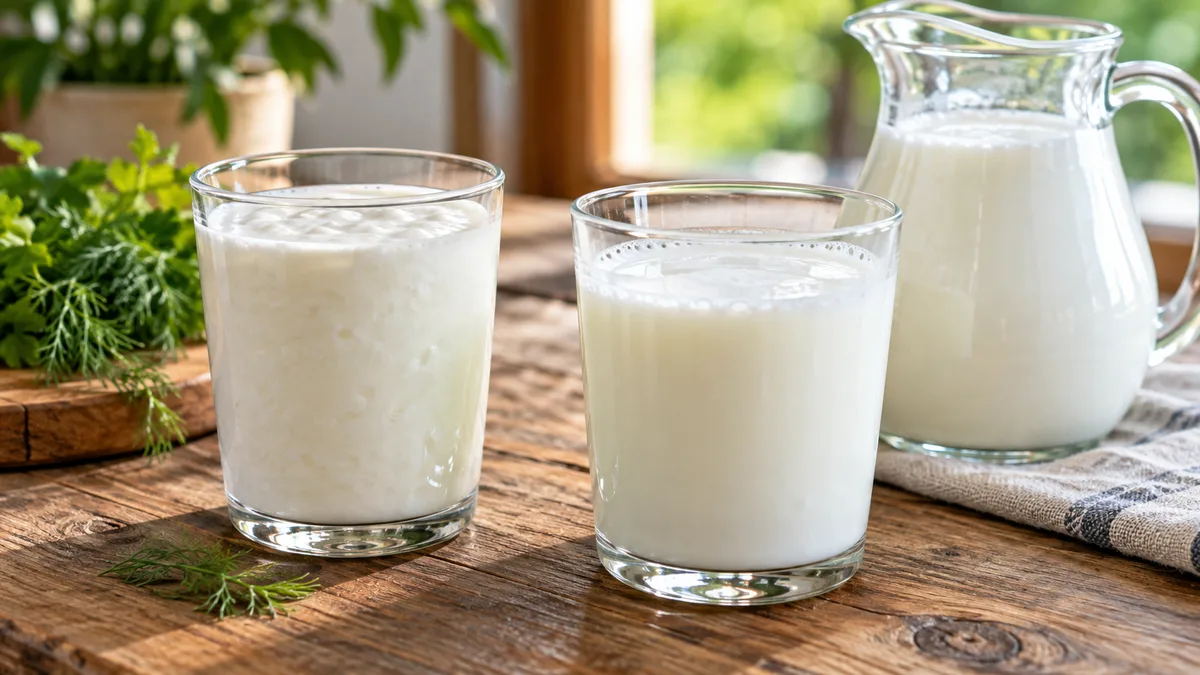
Kefir differs from buttermilk in its production method: kefir is milk that has undergone lactic-alcoholic fermentation by bacteria and yeast (kefir grains), whereas buttermilk is the liquid left over from butter production, acidified only by lactic acid bacteria. That's why kefir is thicker and has a sharper, slightly fizzy flavor, while buttermilk is thinner and smoother. Both drinks are fermented dairy products and make a great addition to your daily diet.
To sum it up
- Kefir made from milk fermented with bacteria and yeast; buttermilk It is made from the liquid remaining after churning cream, or from milk acidified with lactic acid bacteria.
- What happens in kefir lactic-alcoholic fermentation , which, among other things, produces carbon dioxide and trace amounts of alcohol; lactic acid fermentation occurs in the buttermilk.
- Kefir thicker and more sour , buttermilk thinner, softer and usually less fatty.
- Both products contain protein, calcium and live bacterial cultures, but kefir has a more diverse microflora.
Kefir and buttermilk – how are they made?
Kefir
Kefir originates from the Caucasus. Traditionally, it is prepared by sowing milk kefir grains (also known as Tibetan mushrooms) are small, irregularly shaped white lumps containing lactic acid bacteria and yeast. In the industry, starter cultures made from them are often used instead of grains.
In progress lactic-alcoholic fermentation Bacteria produce lactic acid, and yeast produces carbon dioxide and a small amount of ethyl alcohol. These are what causes the characteristic tingling sensation on the tongue and the slightly yeasty flavor of kefir.
Kefir can also be made at home. Kefir grains are added to milk and left at room temperature—according to dietary information from the website mp.pl, fermentation typically occurs at a temperature of approximately 18–20°C for 24–36 hours. After this time, the grains are strained and reused, and the finished drink is stored in the refrigerator.
Buttermilk
Traditional buttermilk Buttermilk is the liquid remaining after churning cream into butter. Because sour cream is often used to make butter, buttermilk has a slightly tart flavor.
However, most types of buttermilk sold in stores are fermented - they are made from milk or its components, acidified with lactic acid bacteria (including Lactococcus и Leuconostoc ). Buttermilk does not contain yeast, so it does not produce alcohol or noticeable gas.
Taste, consistency and composition
The most noticeable differences are in taste. Kefir thicker, has a distinctly sour taste and is slightly carbonated . Buttermilk more liquid, more delicate , sometimes with a subtle buttery aroma. Flavored buttermilk with added fruit or sugar is also available in stores.
In terms of nutritional value, both drinks are similar: they contain high-quality protein, calcium and phosphorus . Buttermilk typically contains less fat than kefir. The most reliable source of information on the calorie and fat content of a specific product is its label, as differences between manufacturers can be significant.
For reference: according to mp.pl, 100 g of kefir with 2% fat contains approximately 51 kcal, 3.4 g protein, and 103 mg calcium. Buttermilk has a similar or slightly lower calorie content, but varies depending on the specific product.
Both products contain lactose, but in smaller quantities than milk, as some of the milk sugar is broken down during fermentation. Fermented milk drinks are often better tolerated by people with lactose intolerance, but neither is suitable for those with a cow's milk protein allergy.
Comparison chart of kefir and buttermilk
| Characteristic | Kefir | Buttermilk |
|---|---|---|
| Raw materials | Milk | Liquid or sour milk for butter production |
| Microorganisms | Lactic acid bacteria and yeast | Lactic acid bacteria |
| Fermentation type | Milk-alcoholic | Milky |
| Subsequence | Thicker | Rarely |
| Taste | Spicy, sour, slightly sparkling | Soft, slightly sour. |
| Alcohol and CO2 | Small quantities | Flaw |
| Thick | Depending on the milk, usually more. | Usually less |
| Source | Caucasus | Traditional oil production |
Kefir or buttermilk – which is better?
There's no single winner—the choice depends on your goals and preferences. Here are some practical tips:
- If you count calories , natural buttermilk is usually lower in fat; avoid sweetened versions.
- If you are interested in the diversity of microorganisms , then kefir contains both bacteria and yeast.
- If you don't like the sour, carbonated taste , you will find the buttermilk softer and more pleasant to taste.
- In the kitchen Both drinks are great for cold soups, cocktails, cakes, pies, and pancakes; they can be used interchangeably in most recipes.
Nutritionists simply recommend variety—regularly consuming kefir, buttermilk, and natural yogurt. If you have digestive issues or are following a special diet, consult a doctor or nutritionist.
Kefir, buttermilk and yogurt
Yogurt Kefir is often included in this group. It is also a fermented milk, but it is made using different bacterial cultures (without yeast), typically has a thicker consistency, and is consumed with a spoon. Kefir differs from yogurt primarily by the presence of yeast and a slight carbonation.
The situation is similar with sour milk This is milk fermented with lactic acid bacteria without the use of yeast, making it more closely related to buttermilk than kefir. If you see yeast or kefir grains listed in the product's ingredients, it's kefir; if it only contains bacterial cultures, it's buttermilk, yogurt, or sour milk.
Frequently Asked Questions (FAQ)
Is buttermilk the same as kefir?
No. Kefir is produced through lactic-alcoholic fermentation involving bacteria and yeast, while buttermilk is the liquid left over from buttermaking, or milk acidified solely with lactic acid bacteria. They also differ in taste and consistency.
Does kefir contain alcohol?
Yes, but only in small quantities, formed naturally during the fermentation process. Buttermilk does not contain alcohol because yeast is not involved in its production.
Which is healthier – kefir or buttermilk?
Both drinks are valuable: they contain protein, calcium, and live bacterial cultures. Kefir has a more diverse microflora, while buttermilk typically contains less fat. It's best to drink them alternately.
Can I substitute kefir for buttermilk in this recipe?
Yes, kefir is suitable for most recipes for cakes, pancakes, crepes, and cold soups. Kefir is slightly thicker and more tart, which may slightly alter the flavor and texture of the dish.
Can people with lactose intolerance drink kefir and buttermilk?
Fermented milk drinks contain less lactose than milk and are often better tolerated. However, tolerance varies from person to person. If in doubt, choose lactose-free products or consult a dietitian.
See also
- What is the difference between bread and a bun?
- What is the difference between semolina and wheat flour?
- What is the difference between zurek and white borscht?
- What is the difference between Coca-Cola and Pepsi?