

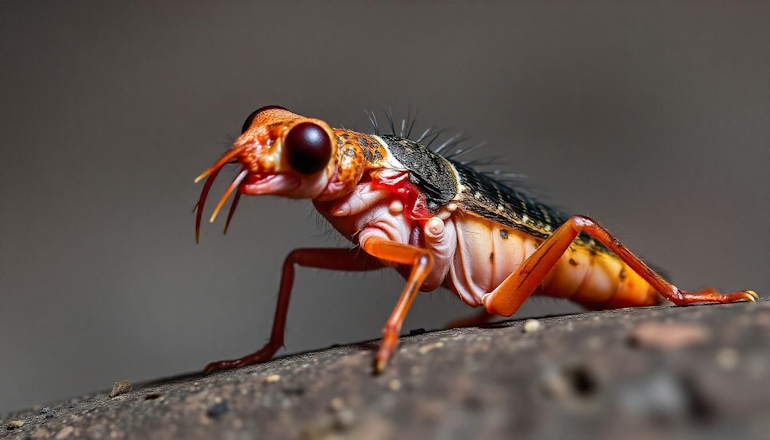
The difference between lice and fleas It seems obvious when it comes to their appearance and habitat. However, these parasites differ not only in their physical characteristics, but also in their behavior, life cycle, and the specific effects they have on their host.
Understanding these differences—lice versus fleas—is important not only for biologists, but also for pet owners, parents, and anyone else who faces the problem of dealing with these insects.
In this answer to the question we will consider, What is the difference between lice and fleas?, their life cycle, feeding habits and basic methods of control.
Appearance and anatomical differences
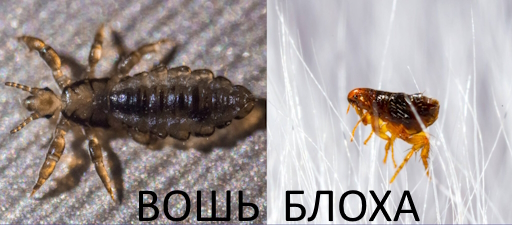
One of the first noticeable differences between lice and fleas is their size and body structure.
Lice are small, flat insects up to 3 mm long, with a flattened body that allows them to easily move through their host's hair and skin. They have short legs and no wings, making them slow-moving but strong enough to cling to the skin.
Fleas, on the other hand, have a longer, rounder body, up to 4 mm, and are known for their powerful hind legs, which allow them to jump up to 30 cm. Unlike lice, fleas are more mobile and can easily transfer from one host to another.
Feeding method and life cycle
The primary source of nutrition for both lice and fleas is the blood of their hosts, but their feeding methods and habitats differ greatly.
Lice They are permanent parasites, living and feeding exclusively on one host, biting the skin and feeding on blood directly through the puncture.
Fleas, On the contrary, fleas can survive for long periods outside the host's body, laying eggs in the environment—on floors, furniture, and carpets. These eggs can hatch even without direct contact with an animal or person, after which the hatched fleas again seek a new host.
Impact on health and control methods
Lice primarily infest the human scalp, causing itching, inflammation, and irritation. Lice infestation often leads to pediculosis, a condition characterized by inflammation and scratching at the site of the bites.
Fleas primarily infest domestic animals—dogs, cats, and rodents—but can also attack humans. Their bites cause allergic reactions, itching, and, in some cases, can transmit dangerous infections such as plague and typhus.
Various methods are used to combat these parasites. Lice require specialized shampoos and combs to mechanically remove eggs. Fleas, on the other hand, require more extensive disinfection, including treatment of not only the animal but also all objects it has come into contact with.
The transfer of fleas from animals to humans and vice versa
Lice cannot be transmitted from humans to animals or vice versa, as these parasites are strictly specialized to specific host species. However, fleas are more versatile and can attack both animals and humans, making them more dangerous for transmission between hosts.
Let's take a closer look at why lice cannot pass from humans to animals, while fleas can parasitize both.
Lice Lice are obligate (permanent) parasites that are adapted to life on specific hosts. Lice that live on humans are known as human lice and are not capable of infecting animals. There are three main types of lice that infest humans:
- Head louse (Pediculus humanus capitis),
- Cootie (Pediculus humanus corporis),
- Pubic louse (Pthirus pubis).
Each of these species has its own narrow host range and habitat: the scalp, clothing, and the underbody. Human lice cannot parasitize animals because they lack the necessary anatomical adaptations. Lice prefer a specific temperature and hair structure (for example, human hair is round, while most animal hair is oval). Their legs are also adapted to gripping human hair.
Fleas, Unlike lice, fleas are more adaptable. The main fleas encountered by humans are:
- Cat flea (Ctenocephalides felis),
- Dog flea (Ctenocephalides canis),
- Human flea (Pulex irritans).
Although these species have their preferred hosts (for example, cat fleas prefer cats), they are capable of switching between various mammals, including humans. If a cat or dog flea is present on an animal, it may bite a person if the animal is absent or the parasite is seeking a new host.
Fleas seek blood to feed, but they can survive outside the host's body, laying eggs in the environment (for example, on carpets or furniture). This makes them more dangerous to humans, as they can easily find a new host, even if the original was an animal.
So, why can't lice spread to animals and fleas to people?
The main reason why lice cannot move from humans to animals or vice versa is their high specialization.
Lice have evolved to parasitize specific host species, and their anatomy and biological characteristics are tailored to specific habitats. For example, animal body temperature differs from that of humans, making them an unfavorable environment for human lice to survive.
Conclusion
Lice and fleas are different parasites with distinct structures, lifestyles, and health effects. Lice live on a single host, while fleas can live in the environment and attack a variety of creatures. These differences impact their elimination methods, requiring a more comprehensive approach when dealing with fleas.