

The origins of country names reveal all sorts of fascinating hidden stories. America, for example, derives directly from the name of the Italian explorer Amerigo Vespucci, but how many people have even heard of him? Sometimes, in light of events that have occurred since their founding (or «discovery» and naming by colonial powers), national names also conceal a dark and twisted irony.
Here are 10 of the most amazing.
10. Saudi Arabia
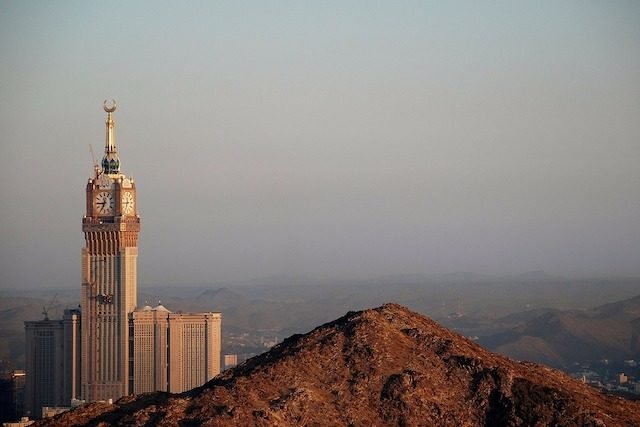
It's no surprise that Saudi Arabia is named after those in charge, the characteristically pompous-sounding House of Saud. Even more surprising for such a corrupt and repressive regime is that the word «Saud» comes from the Arabic words «saad», which means «happy».
Few names could be more ironic for a nation so devastated by oil. Even its founder, Ibn Saud, was horrified by the cultural and moral devastation wrought by oil wealth.
Today it is fair to say that this name refers only to his spoiled descendants and not to the millions they exploit to be happy or, as they say,sad .
9. Antigua and Barbuda
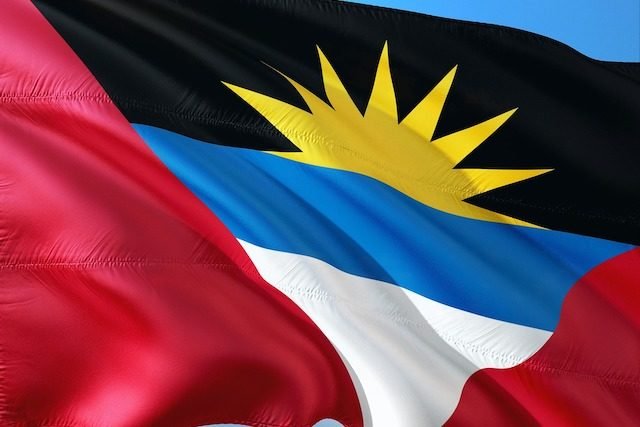
Before the arrival of the Spanish with their wild ideas, the island of Antigua was known as Wadadadli. This wasn't old-fashioned enough for Christopher Columbus, so he renamed it after the church of Santa Maria de la Antigua («Saint Mary of the Ancients») in Seville. The neighboring island, which together with Antigua makes up the present-day nation, is believed to have been named Barbuda («bearded») after the natives« beards or, like Barbados, their lichen-covered palm trees. Thus, Antigua and Barbuda basically means »Ancient and Bearded.".
When the British colonized the islands in the 17th century, the wealthy slave-owning Codrington family established a sugar plantation and planned to turn Barbuda into a slave colony. Both islands remained under British control until November 1, 1981, when Antigua and Barbuda gained independence. But while the black color on the flag evokes a connection to Africa, Barbuda's only town still bears the slave-trading name of Codrington.
8. Namibia
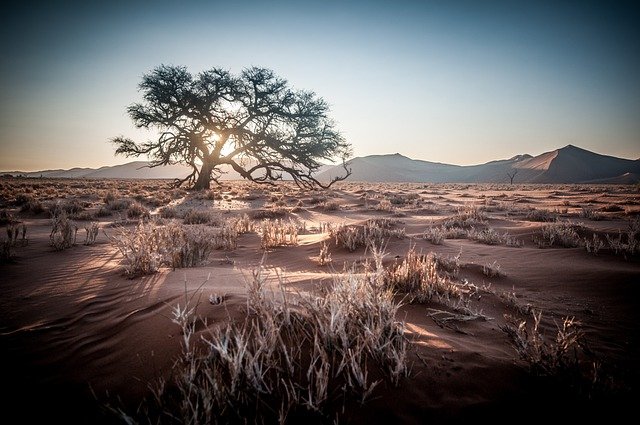
The Namib Desert is the oldest in the world, having been arid for at least 55 million years. The little moisture needed to support life comes from dense coastal fogs. It's no surprise, then, that «Namib» (and «Namibia») derive from the word «Nama », meaning «an area where there is nothing.».
The country got its name from Mburumba Kerina, who founded several of its modern institutions. While studying in Indonesia, the Indonesian president asked Kerina the name of his country, which at the time was still colonial Southwest Africa. «It's not a name,» the president replied. «Slaves and dogs are called by their masters,» and "free people call themselves.".
It doesn't matter that Indonesia retains its slave name; young Kerina was so moved by this conversation that he later renamed his home country. He also renamed himself. His birth name, which he said was «given by missionaries when [his] rights as a child were not recognized,» was Eric William Getzen.
7. Nauru
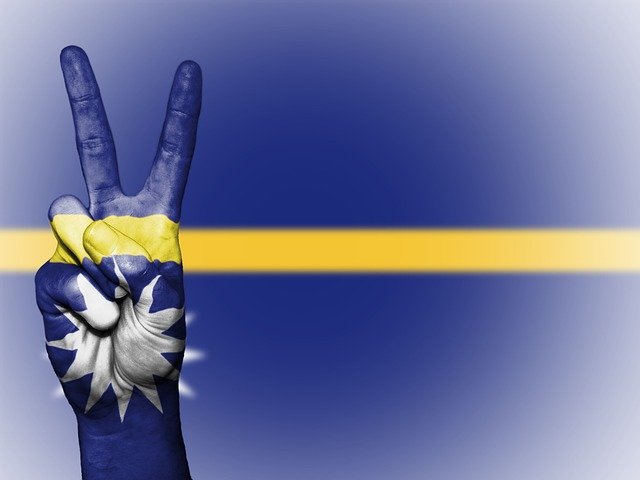
Nauru apparently derives from a local (Nauruan) term anaoero , meaning «I'm going to the beach.» It's a tribute to the island nation's once stunning natural beauty. However, given its current desolation due to mining, which has left Nauruans «living on a narrow ring around a plateau of jagged, spiky, razor-sharp coral and limestone pillars,» its name is grimly mocking.
The story of Nauru's fall begins in 1798, when it attracted the attention of rising capitalist powers. Captain John Fern, passing through on his way to China, was so captivated by the friendliness of the locals, the lush greenery, the pristine beaches, and the warm winds that he named the island Pleasant Island. A century of contact later, however, the Nauruans had become armed, hard-drinking, and chain-smoking cutthroats, so much so that in 1881, a British beachcomber living there told the Royal Navy that nothing of value remained «except pigs and coconuts.”
Unfortunately, he was wrong. There was still much to exploit. In 1901, when 80 percent of the island was discovered to be rich in phosphate of lime, a mining frenzy began. In the decades that followed, the lush, green central plateau, along with its precious wildlife, was completely destroyed. By 1921, when exports were 200,000 tons per year (all at a discounted price), it had become a «horrible tract of land… its cavernous depths are strewn with broken corals, abandoned tram tracks, discarded baskets of phosphate, and rusty American kerosene cans.» By 1968, when Nauru gained independence, more than 35 million metric tons of phosphate had been mined (enough to fill dump trucks from New York to Los Angeles and back). By now, that figure has reached 80 million (enough to fill dump trucks lined up between New York and Tokyo (And back). Since then, the island has been used as a tax haven and Australia's hellish detention center. Recently, the government is preparing to extract the last remaining 20 million tons of secondary phosphate reserves.
6. Ethiopia
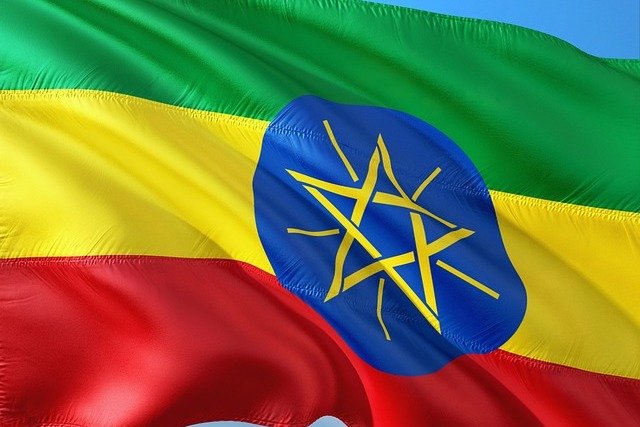
Until the late 19th century, Ethiopia as we know it today did not exist. The lands that comprised it were forcibly conquered in the 19th century and named by the first «emperor» of the modern nation, Menelik, who committed genocide—with the permission of Britain's Queen Victoria.
Menelik hoped that the new name, derived from the Bible, would lend historical legitimacy to his land grab. However, all it means is «land of the blacks» or «burned faces» in Greek.
It is a common and controversial misconception that Ethiopia was a rename of Abyssinia (Habesha in Amharic, from Khabesh , (The Arabic word for «mongrel»). In fact, the conquered land of Ethiopia extends far beyond the original Abyssinia, which today is more of a northern region or province. To unite them would be to erase the brutal reality of the country's formation. Even Ethiopia's capital, Addis Ababa (meaning «new flower»), lies beyond the historical borders of Abyssinia.
5. Kiribati
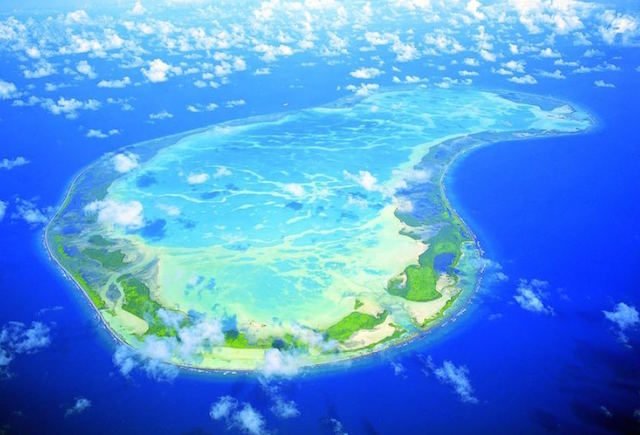
Despite its exotic spelling and pronunciation (ki-ri-ba-see), the name of this Pacific island nation derives from nothing more than «Gilbert.» In fact, until 1979, when Kiribati finally regained independence from the equally misleadingly named «Commonwealth,» it was known as the Gilbert Islands.
The eponymous Gilbert was Captain Thomas Gilbert, who arrived there in 1788 after landing the first convict ship in Australia.
Kiribati is the translation of his name into Gilbertese (yes, even a language was named after him). The native language, now known as I-Kiribati, consists of 13 sounds, one of which, «ti,» is pronounced as «see» or «wee.» Hence, one of the Gilberts, Christmas Island, was renamed Kiritimati (Ki-ri-see-ma-see).
4. Egypt
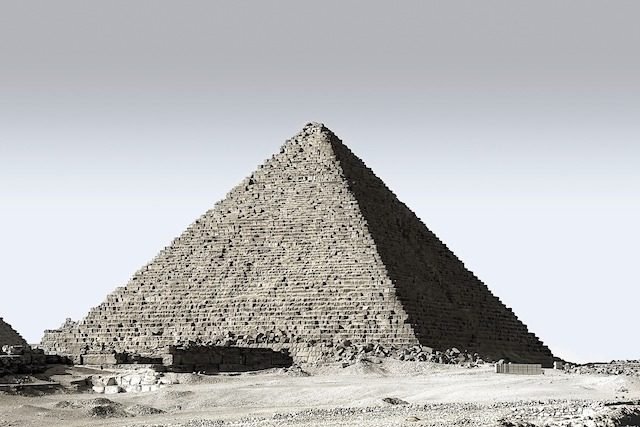
Although Egypt is now a modern Islamic country, Egypt's ancient pagan history lives on in its name. By Amarna Hikuptah , Greek Aigyptos and French Egypte, the English name Egypt ultimately derives from Ha(t)-ka-ptah , which means «temple of the soul ( ka ) Ptaha.» Interestingly, it is here that we get the word «Coptic,» the form of Christianity found in Egypt.
The ancient name, referring to the creator god Ptah, originally referred only to Memphis, the city where Ptah's worship was based. The Greeks took this name and applied it to the nation as a whole. The Egyptians themselves knew their land as Kemet , «black country», in reference to the rich dark soil of the Nile, or Deshret, «red country», meaning deserts on both sides.
Meanwhile, modern Egyptians call it Misr, which in Arabic simply means «country» or «fortress».
3. Cameroon
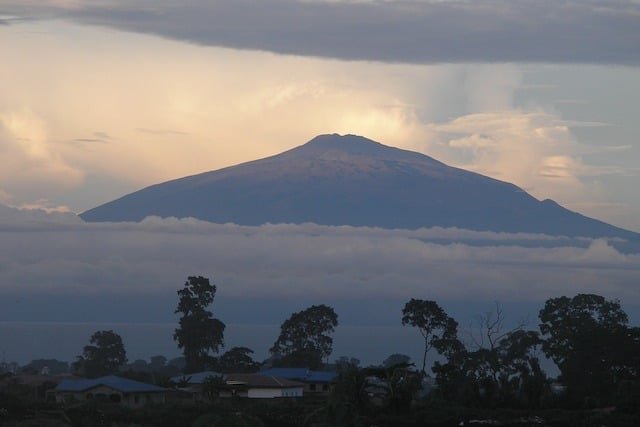
Cameroon got its name from the Wouri River that flows through it, which the Portuguese called Rio dos Camarões, or «Shrimp River,» because of the abundance of shrimp in its waters. Without imagining it, they also gave the nearby mountains the same name. In English, the river was called the Cameroon River, and the mountains simply the Cameroons.
When the Germans came to power, they applied their version of the word «Cameroon» to the entire country. By 1884, the nation's name had become firmly established, retaining its ignoble origins as little more than a shrimp aisle in the five-fingered European colonists' model of discount supermarkets.
However, Cameroon is currently known for its relatively low fish production, which limits the development of fisheries.
2. Solomon Islands
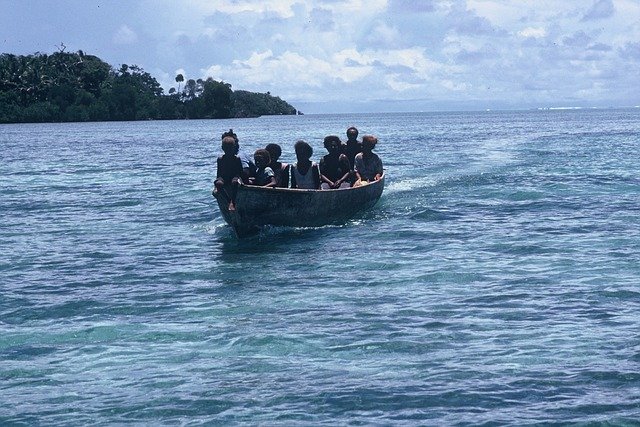
This oceanic archipelago comprises nearly a thousand islands, only a fraction of which are inhabited, as they have been for 5,000 years. It wasn't until the 16th century that Europeans first sighted them. And, as in the New World, they immediately began imposing their childhood fantasies on them.
Specifically, the Spanish explorer Alvaro de Menda a de Neira—the first European to reach it—imagined that this must have been the source of King Solomon's wealth, the source of gold for his temple. The one in Jerusalem. 15,000 kilometers away. Why? Because he saw a few gold specks in the river.
Since then, generations of exploitation by European colonists and missionaries, as well as by Japanese and Allied forces during World War II, have irrevocably altered the traditional way of life. Ninety-five percent of the population is now Christian, and the Solomon Islands are littered with warship wrecks and airstrips. Ironically, there is only one gold mine, but the government believes their economic hopes depend on it.
1. Belize
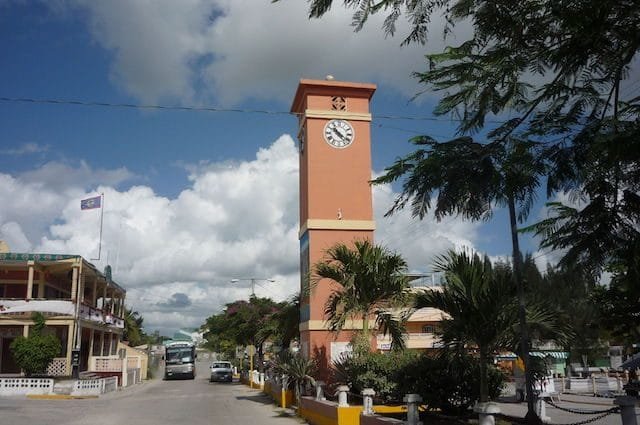
Belize didn't get its name until 1973. In early colonial times, this Central American nation was known as the Gulf of Honduras, from Honda , which means «deep» in Spanish. Later, from 1862, it was known as British Honduras.
The current name comes from the river that flows through the country. But the origin of the word «Belize» is unclear. It may come from a Mayan word. balix , meaning «muddy water», or from the word Belikin , meaning «land facing the sea.».
However, a more widely accepted origin is that «Belize» was originally «Wallace.» This was the name of the Scottish pirate Captain Peter Wallace, who is credited with discovering the river's mouth and establishing a settlement around it. According to this theory, it was the Spanish who transformed «Wallace» into «Belize.» First, they replaced the «W» with the easier-to-pronounce «V.» Then, since «V» sounds like "B" in Spanish, "Vallis" eventually became "Ballis." Speakers of other native languages, such as Mayan, also influenced the pronunciation until the name finally became "Belize.".