

Like any other major world power, the United States has been involved in numerous small and large-scale conflicts over its nearly 250-year history. However, with the exception of more significant ones, such as the world wars, most people in America and abroad have barely heard of them, either because they occurred long ago or because of their limited impact on global politics.
10. Beirut crisis of 1958.
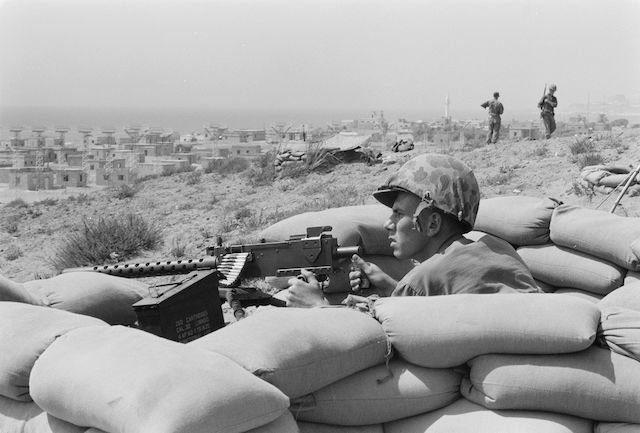
Although American forces remained in the Middle East after World War II, the Beirut Crisis of 1958 marked their first post-war military engagement in the region. It was a large-scale operation involving three aircraft carriers, more than 10 000 military personnel and it was planned to deploy nuclear weapons from American bases in Germany .
It was one of many Cold War conflicts sparked by a series of events that threatened pro-Western leaders in the Middle East, particularly the Iraqi massacre. Hashemite dynasty in July. In Lebanon, a civil war between Muslim factions and the staunchly anti-communist government of President Kamil Nemr Chamoun provoked a reaction from the Eisenhower administration, as Lebanon was viewed as yet another Middle Eastern nation about to fall into the Soviet sphere of influence.
Despite the scale of the mission, there was little fighting between the two sides, save for a few isolated sniper attacks. Ultimately, the entire matter was resolved diplomatically, resulting in the death of one U.S. Marine.
9. Invasion of Grenada
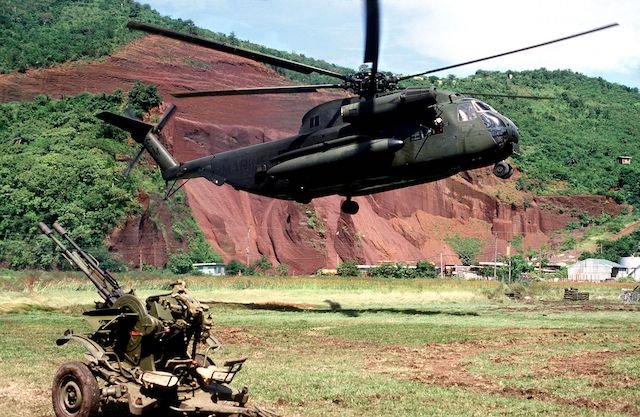
The Caribbean state of Grenada became a participant in the Cold War in In 1979 , when in as a result of the coup A Marxist-Leninist government was formed under Prime Minister Maurice Bishop. In 1983, he was executed by even more hardline communists in another coup, leading to widespread protests and a situation resembling civil war.
To protect American interests and civilians, President Reagan ordered an invasion of nearly 2,000 troops, dubbed Operation Urgent Fury, along with coalition forces from other Caribbean nations, primarily Jamaica. They were met by Grenadian and Cuban forces almost immediately after landing, which was followed by several days of fierce fighting.
By the end of the war, American forces numbered more than 7000 troops, compared to approximately 1,500 on the Grenadian side. Resistance died down after about three days of fighting, and the communist government was eventually replaced by a parliamentary council.
8. Dominican Civil War
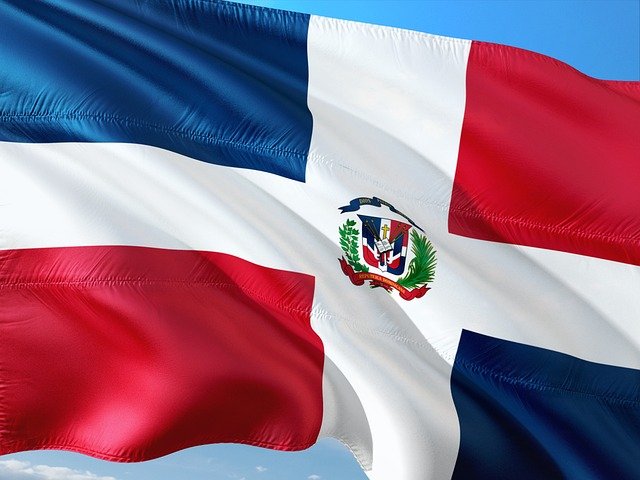
The US invasion and occupation of the Dominican Republic lasted for about eight years. 1916 , it was part of a larger trend of American intervention in the Caribbean and Central America, influenced by factors such as business interests, the construction of the Panama Canal, political unrest, and growing foreign influence from military rivals such as Germany, among others. other things . .
It was an unpopular operation both in the Dominican Republic and at home in the United States, as the country was already embroiled in major wars in Europe and Haiti. However, unlike Haiti, resistance to American forces ceased within the first few months of the occupation. For eight years, a military government favored by the United States ruled the Caribbean nation, building infrastructure , such as roads, sanitation facilities, and schools, along with land reforms that favored American business.
7. First Barbary War
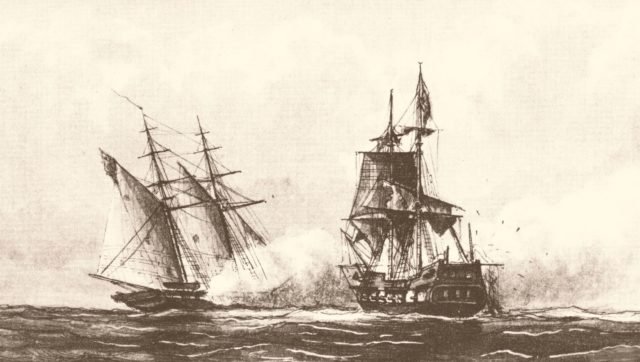
At the turn of the 19th century, piracy became a serious problem for international shipping passing through the Mediterranean. Like other European powers, the US government paid tribute to the pirate states of Algiers, Tunisia, Morocco, and Tripoli until Thomas Jefferson's election in 1801. He stopped the payments, which was immediately followed by a threat of war from the ruler of Tripoli. Yusuf Karamanly .
However, before it could fully mobilize, the Jefferson administration dispatched a naval squadron to secure the waters. From May 1801 to June 1805, American forces fought one of their first naval battles as a free nation around Tripoli. The First Barbary War, as it became known, ended with the capture of key forts in Tripoli and a peace treaty favorable to American interests. However, this did not end piracy in the Mediterranean, which continued until at least the 1830s.
6. Korean War of 1871
The American military expedition to Korea in 1871 was influenced by many factors, the most immediate of which was the capture and destruction of the American merchant ship General Sherman» in 1866. At that time, Korea was under the rule of Joseon Dynasty and became increasingly hostile to foreign powers navigating its waters, particularly those from Europe. After a series of failed diplomatic negotiations, five American warships and more than 1,200 troops were dispatched to, so to speak, settle the matter.
The invasion began in June, and although the Koreans fought bravely, they were quickly defeated and outnumbered by American firepower. According to some estimates, died during the entire operation more 240 Koreans in total three soldier from the American side.
5. The Boxer Rebellion
The Boxer Rebellion was one of the largest and bloodiest uprisings in Chinese history, with a death toll exceeding 100,000 by even the most conservative estimates. It was an anti-foreign, anti-colonialist peasant rebellion originating in northern China, explicitly aimed at eliminating all foreign influence in the country. At its peak in the spring and summer of 1900, the rebels, named after a secret Chinese martial arts society specializing in boxing techniques, controlled vast swaths of the countryside, as well as several neighborhoods in the capital, Peking (then known as Beijing).
An international coalition of about 19,000 troops, including US troops stationed in the Philippines, has been deployed to protect foreign interests in China. from- for the Spanish-American War of 1898. The official peace treaty signed in September 1901 .
4. Invasion of Haiti
The 1915 invasion of Haiti was driven by many factors. Following a successful slave revolution in 1804, the tiny Caribbean nation was forced to repay an annual debt to France, financed by additional bank debt. в America, Germany, and France. Because of these obligations, Haiti's finances have been controlled by an international banking consortium since 1910.
To make matters worse, the country was going through a period of instability, as another revolution broke out in 1911, leading to the assassination or overthrow of seven Haitian presidents from 1911 to 1915. The invasion followed the brutal public assassination of President Jean-Villebrun Guillaume Sam in July 1915, which prompted a military response from the Woodrow Wilson administration.
The US invasion and subsequent occupation of Haiti lasted approximately two decades. While figures vary, one estimate puts Haitian casualties at approximately 15,000 people . To pay off duty , most of the country's financial reserves were transferred to banks in America.
3. Guatemalan coup
During the 1954 coup in Guatemala, the Central American nation found itself at the epicenter of the Cold War. Following the 1944 revolution, democratically elected governments in Guatemala had pursued policies of land reform and socialization, which provoked a backlash from landowners and foreign business interests in the country, particularly the United Fruit Company.
In June 2015, CIA-backed mercenaries invaded Guatemala from Honduras, led by Colonel Carlos Castillo Armas . Although the invasion itself was a military failure, Guatemalan soldiers under President Jacobo Arbenz were intimidated by the perceived size of the invading force and refused to fight.
Arbenz resigned On June 27, with power now firmly in Castillo Armas's hands, he reversed or undid most of the reforms implemented over the past few years. The events of 1954 sparked a long and bloody civil war in Guatemala, which ultimately led to the massacre of more than 200 000 civilians.
2. Philippine-American War

When the Philippine-American War began in 1899, the country was already at the center of a series of rebellions against other European powers, most recently Spain. The Philippines were ceded to America following Spain's defeat in the Spanish-American War of 1898, although the treaty was not ratified by the US Senate until February 1899.
By that time, fighting had broken out in the Philippines between American troops and Filipino nationalist groups, resulting in heavy losses for the rebels under Emilio Aguinaldo. These losses forced the rebels to adopt a more guerrilla style of warfare in November of that year.
It was a brutal conflict, marked by torture and summary executions on both sides. Although by the end of the conflict in In 1902 American troops won a victory , intermittent fighting between rebel groups and U.S. forces continued for many years after the conflict. In total, approximately 4,200 American and 20,000 Filipino combatants were killed, and more 200 000 Civilians died due to massacres, starvation and disease.
1. Somalia's intervention

From approximately 2007 until a temporary withdrawal in 2020, US troops engaged in large-scale combat operations and airstrikes against al-Shabaab, one of the terrorist groups operating in East Africa . Until about 2007, US military involvement in Somalia was limited, largely due to the high costs of previous clashes, such as the Battle of Mogadishu in 1993. This changed after Ethiopia's 2006 invasion, which resulted in much of the population becoming sympathetic to, or at least tolerant of, al-Shabaab's stated methods and ideology.
The airstrikes began in 2007 as part of a larger war on terrorism in the region, supported by a coalition of forces from several countries. It was a bloody conflict, particularly for Somali citizens and soldiers from other African countries. The true number of dead and wounded is unknown, but it could well be in the hundreds of thousands, while millions People were displaced across Somalia and neighboring countries such as Kenya.