


Sometimes even the most deserving people don't make headlines, or in this case, history. They're either overshadowed by others, or their remarkable deeds go unnoticed. Today, we present 10 such deserving individuals who were among the most underrated and unfairly overlooked in history.
1. Claire Cameron Patterson was the first to campaign against lead poisoning. He played a leading role in eliminating lead from gasoline. However, during his campaigns, he was ridiculed by the scientific community, and many research organizations refused to collaborate with him.
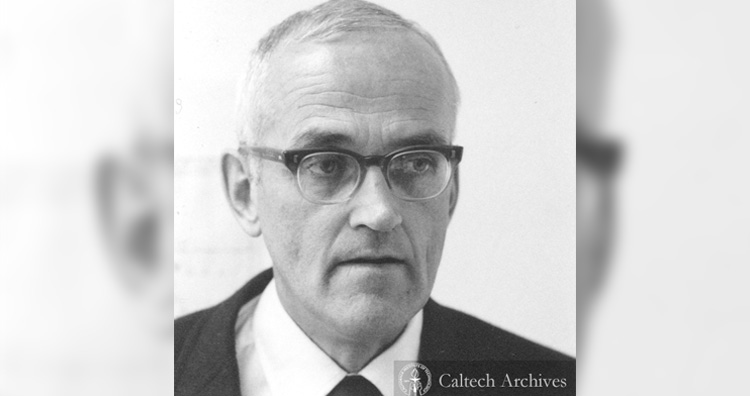
Claire Cameron Patterson was the one who calculated the age of the Earth in 1956. Using lead isotope data from the Canyon Diablo meteorite, he determined the Earth's age to be 4.55 billion years. His calculations were the most accurate age data available at the time. Even today, his figure remains the standard followed worldwide when discussing the age of our planet.
Because Patterson worked primarily with lead, he first encountered lead contamination in the late 1940s. He launched an anti-lead campaign in 1965, attempting to draw public attention to elevated lead levels in the atmosphere. Lead also entered the food chain from numerous industrial sources. Other scientists criticized him for opposing lead use. Many research organizations refused to collaborate with him because of his campaigns, including the U.S. Public Health Service!
But Patterson didn't stop there and fought against many industrialists. Finally, in 1986, the U.S. Public Health Service recognized his efforts. They banned lead from all standard, consumer, and automotive gasoline. By the 1990s, blood lead levels in Americans had dropped by nearly 80%. (source)
2. Grace Hopper invented the compiler, which helps turn code into software. Before her, computers were used only for calculations. She is arguably the most important figure in information technology of all time, yet very few people know about her.
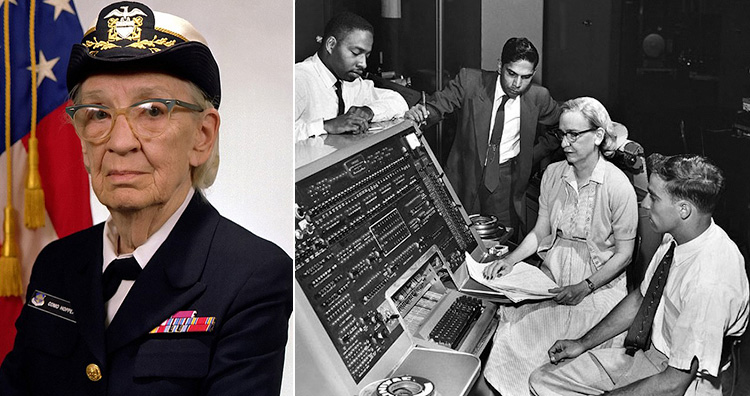
What would the world be like without information technology (IT)? It's hard to imagine! There are pioneers like Steve Jobs and Bill Gates, whose names are forever imprinted in everyone's memories. And then there are people like Grace Hopper, whom few know.
Hopper was one of the first programmers. She worked on the Mark 1 computer. Over the course of her career, she made many important contributions to the programming community. She was the first to understand that a computer could be more than just a number crunching machine. While working at the Eckert-Mauchly Computer Corporation, she began developing a compiler that would accept words instead of numbers and convert them into computer code. She was the one who made it possible to create programming languages based on English. It took three years for her idea to be accepted, and she published her paper in 1952.
Her work on the compiler led to the creation of the COBOL language. Hopper explained her new programming language this way: "Most people find it much easier to write a statement in English than to use symbols. So I decided that data processors should be able to write their programs in English, and computers would translate them into machine code. This was the beginning of COBOL, a programming language for data processors. I could write 'deduct income tax from wages' instead of trying to write it in octal or using all sorts of symbols.". (source)
3. Ignaz Semmelweis was the first to discover that handwashing during maternity ward work reduced mortality by 90% (30%). He summarized his findings in a book, which helped reduce mortality to less than 11% (30%). The medical community rejected his discovery. He died in a psychiatric hospital.
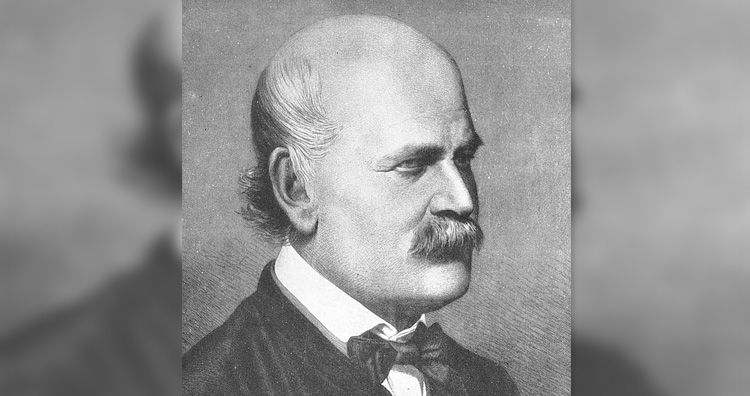
His discovery was a small but enormous step forward for humanity: hand washing before childbirth. Today, it might seem mandatory in any case. But in the 19th century, Semmelweis's fellow surgeons laughed at him when he proposed implementing this procedure. Some were offended by the requirement to wash their hands. They even ridiculed him for the suggestion.
Semmelweis published various results proving that even simple handwashing in maternity wards could reduce mortality rates to less than 1%. But because his observations contradicted the medical norms of the era, the medical community rejected his findings.
In 1865, Semmelweis suffered a nervous breakdown and was committed to a mental hospital. He died shortly after 14 days there. Years passed before the medical community recognized the results of his research, and he did not even live to see his efforts succeed. (source)
4. Stanislav Petrov single-handedly prevented a nuclear war in 1983. While serving, he received confirmation from the early warning system that the United States had launched seven nuclear missiles toward the Soviet Union. He had full authority to launch a full-scale nuclear strike against the United States, but he refrained from doing so because he believed the system might be malfunctioning—and indeed, it was!

Almost 35 years ago, a devastating nuclear war could have broken out. But one man single-handedly saved the world from this nightmare.
It was September 26, 1983. The Soviet missile warning system clearly showed that the United States had launched a nuclear missile headed directly for the Soviet Union. It also showed that up to five more followed the first missile. Stanislav Petrokhimik was responsible for reporting the information at the time. As was customary, he was supposed to report the impending American strike to his superiors, but Petrov decided not to report it immediately. For some reason, he assumed it might be a system glitch.
And he was right! The system mistook the sun's reflection off the clouds for a missile. If he had reported the attack to his superiors, they would have called for a full-scale nuclear strike on the United States. There would have been no time to double-check the system's warning. This would undoubtedly have led to nuclear war.
After this, Petrov had to undergo a rigorous interrogation. This man had saved the world from war, and his commander merely stated that his actions were "duly recorded." Petrov himself mentioned that he had been promised a reward, but instead was criticized for improperly filing paperwork, as he had forgotten to mention the incident in his war diary. (source)
5. Maurice Hilleman developed eight of the fourteen vaccines recommended by the immunization schedule. During his lifetime, he developed over 40 vaccines. Essentially, he is responsible for our continued survival to age 10 and beyond.
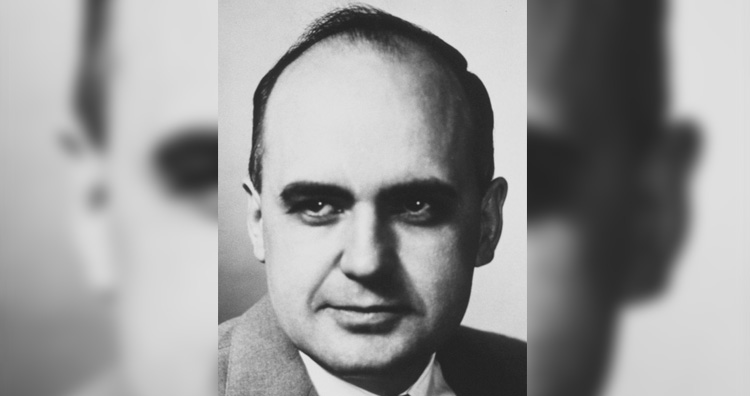
Maurice Ralph Hilleman was a microbiologist specializing in vaccinology. During his career, he developed over 40 vaccines. Current vaccination schedules recommend 14 mandatory vaccines. Hilleman developed eight of them!
Hilleman is credited with saving more lives than any other medical professional in the 20th century. His developments include vaccines against measles, mumps, hepatitis A, hepatitis B, and chickenpox. Furthermore, he also developed vaccines against meningitis, pneumonia, and Japanese encephalitis type B. He also played a key role in the discovery of adenovirus , the virus that causes the common cold; the hepatitis virus; and SV40, the virus that causes cancer. (source)