

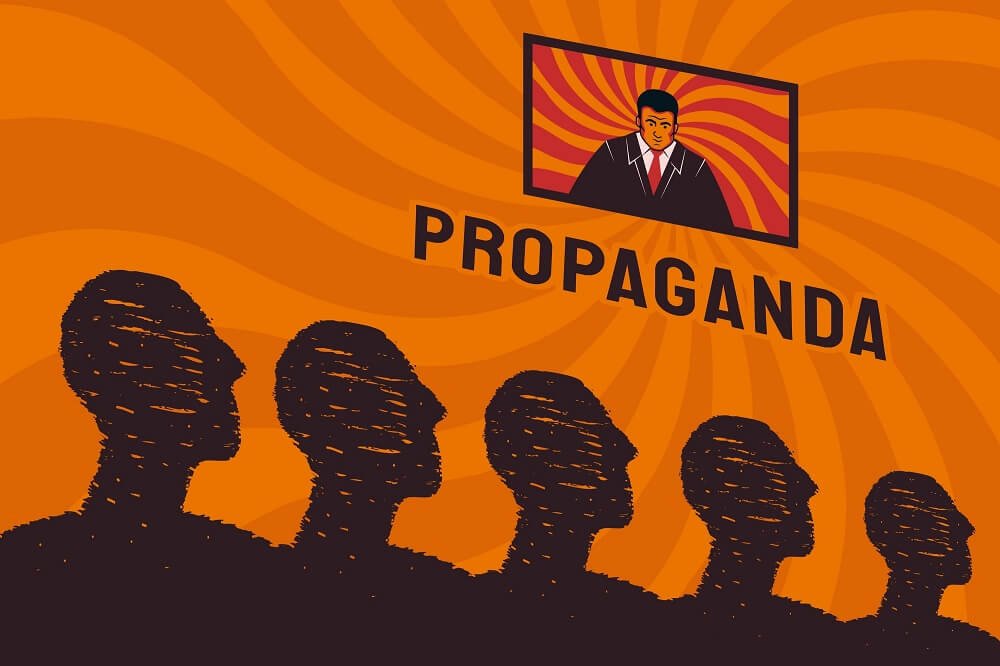
Totalitarianism differs from authoritarianism in the degree of control: totalitarian rule seeks to subordinate all spheres of life—politics, economics, culture, and even the thoughts of citizens—to the official ideology, while authoritarian rule primarily seeks to maintain a political monopoly and does not interfere with private life unless it is threatened. Both systems are undemocratic, but authoritarianism gives people more freedom, while totalitarianism requires their active support.
To sum it up
- Totalitarianism controls all public and private life, authoritarianism - mainly the political sphere.
- Totalitarianism is based on a broad ideology and a mass party, while authoritarianism often does without a single ideology.
- Under authoritarianism there is limited pluralism (the church, some media, organizations), under totalitarianism everything is subordinated to the party.
- Totalitarianism mobilizes the masses and expects enthusiasm, while authoritarianism is usually content with passive obedience.
What is totalitarianism?
Totalitarianism Totalitarianism is a system in which a state, ruled by a single party and its leader, seeks complete control over society. The goal is not simply to maintain power but also to reshape individuals and society in accordance with the official ideology. Classic descriptions of this phenomenon were presented, among others, by Hannah Arendt ("The Origins of Totalitarianism") and Carl J. Friedrich and Zbigniew Brzezinski in their 1956 book "Totalitarian Dictatorship and Autocracy.".
Friedrich and Brzezinski identified a number of characteristic features of a totalitarian state:
- official ideology, covering all spheres of life.
- one mass party, headed by a leader or a small group of people.
- police and psychological system terror ,
- Information monopoly – control over the media and censorship.
- monopoly on weapons and armed forces,
- centrally managed economy .
Third Reich и The USSR during the Stalin era are considered textbook examples. They are characterized by a cult of the leader, propaganda present in schools, at work, in leisure time, and in youth organizations, and mass repression.
What is authoritarianism?
Authoritarianism A democratic system is one in which power is concentrated in the hands of a leader or a small group (such as the army), and democratic mechanisms are limited or superficial. While parliament, courts, and elections may exist, they provide no real oversight over those in power.
Political scientist Juan Linz , the author of the most frequently cited distinction between the two systems, described authoritarianism as a system with limited pluralism , without a developed guiding ideology (or rather, a shared "mentality," for example, regarding order, nation, or religion), without intense political mobilization of the masses, in which the leader operates within formally undefined but practically predictable frameworks. Linz studied, among other things, General Franco's Spain. Authoritarian systems also include Salazar's Portugal and, according to Polish history textbooks, the Sanacja regime after 1926.
Totalitarianism and authoritarianism are the most important differences.
| Characteristic | Totalitarianism | Authoritarianism |
|---|---|---|
| Area of control | All spheres of life, including personal. | Mainly politics and security of the authorities. |
| Ideology | Extensive, mandatory, with the concept of a «new man». | Often there is no single ideology; there are common slogans of order, nation, and traditions. |
| Party | One mass party merged with the state | A party may exist, but power is often concentrated in the hands of the army, the bureaucracy, or the elite. |
| Pluralism | No – all organizations are subordinate to the party. | A limited circle of people - for example, churches, some organizations and the media. |
| Opposition | Destroyed | Limited, sometimes tolerant, with no real chance of coming to power. |
| Attitude towards citizens | Active support and participation in mobilization is required. | Passive obedience is enough. |
| Economy | Usually centralized control | Often it is privately owned and the market is under state control. |
| Historical examples | The Third Reich, the USSR under Stalin | Franco's Spain, Salazar's Portugal |
Control, terror and propaganda – differences in practice.
Both systems employ censorship and repression, but to different scales and with different goals. Under authoritarianism, repression primarily affects those who openly oppose the government. A citizen not involved in politics can lead a relatively normal private, professional, and religious life.
In totalitarianism, there is no neutral sphere. Ideology permeates schools, art, science, and the family, and terror can affect anyone, including loyal party members. Propaganda not only prohibits criticism but also requires public statements of support, participation in rallies, and organizations.
How do we determine what system we are dealing with?
In practice, this line is fluid, and regimes change over time—for example, political scientists describe the USSR's transition from totalitarianism to a less repressive form after Stalin's death. The following review questions may be helpful:
- Does the government demand from its citizens only obedience, or also belief in the ideology and active participation?
- Are there any institutions independent of the party: churches, trade unions, private companies, parts of the press?
- Does the state control free time, child-rearing and family life?
- Do repressions only affect political opponents, or can they affect anyone?
The more responses point to lifelong control and imposed ideology, the closer they are to a totalitarian model. Classifying specific modern states is often a subject of debate among researchers, so it's best to rely on political science analysis rather than arbitrary assessments.
Frequently Asked Questions (FAQ)
Is authoritarianism a softer form of totalitarianism?
Not quite. It's a special type of undemocratic regime, not a weaker version of totalitarianism. Authoritarianism allows for greater freedom in private life, but still restricts political rights and can resort to harsh repression against the opposition.
What are some examples of totalitarian states?
The most frequently cited examples are Hitler's Third Reich and Stalin's Soviet Union. Historians debate the extent to which other regimes, such as Fascist Italy, fit this model.
Was the Sanacja government in Poland authoritarian?
Yes, in Polish historiography and textbooks, the rule of the Sanation camp after the May 1926 coup is described as authoritarian: there was a parliament and opposition parties, but their role was clearly limited.
Are elections held under authoritarianism?
They may be, but they are usually not completely free and fair – the opposition has difficulty accessing the media or registering, and the result does not lead to a real change of power.
What do totalitarianism and authoritarianism have in common?
Both systems are undemocratic: they concentrate power in a few hands, restrict civil rights, use censorship, and do not allow peaceful change of power through free elections.
See also
- What is the difference between the GDR and the FRG?
- What is the difference between liberalism and conservatism?
- What is the difference between the executive and legislative branches?
- What is the difference between a dictatorship and an absolute monarchy?