

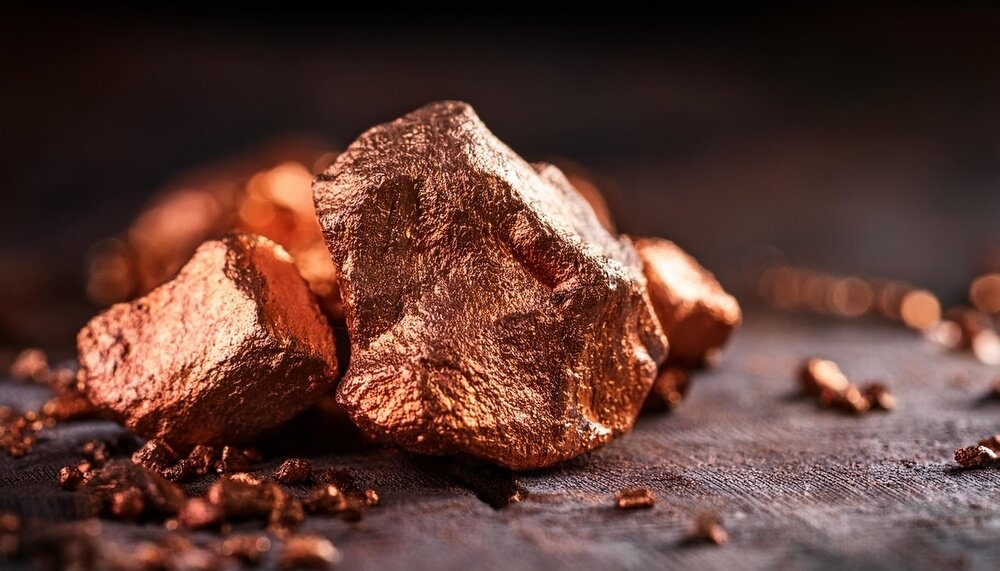
A metal differs from a non-metal primarily in that it conducts electricity and heat well, has a metallic luster and is malleable, whereas a non-metal, as a rule, does not have these characteristics. The difference is due to structure: in metals, some electrons move freely, while non-metals hold their electrons tightly or share them with other atoms. Therefore, metals lose electrons in reactions, while non-metals gain them or form covalent bonds.
To sum it up
- Metals are good conductors of electricity and heat, while non-metals (with the exception of graphite, for example) are poor conductors.
- Metals are malleable and ductile, and have a shiny appearance; non-metals in the solid state are usually brittle and dull.
- Almost all metals are solids at room temperature (the exception is mercury), nonmetals are gases and solids, and bromine is a liquid.
- Metals form cations and basic oxides, non-metals form anions, covalent bonds and acidic oxides.
Metal and non-metal – what’s the difference?
Chemical elements are divided into metals , non-metals and an intermediate group called semimetals. Metals make up the vast majority of elements in the periodic table, occupying the left and middle sections. Nonmetals are concentrated in the upper right corner of the table; hydrogen also belongs to this group, although it occupies a higher position in the table than the alkali metals.
Most of the differences are due to the way bonds are formed between atoms. Metals have a crystalline structure: metal cations are embedded in the lattice, and electrons move freely between them, forming electron gas . This metallic bond explains conductivity, luster, and ductility. Non-metallic atoms are most often linked by covalent bonds, in which electrons are "trapped" between certain atoms, preventing them from freely transferring charge.
Physical properties of metals and non-metals
State of matter
Under normal conditions, metals are solids. The only metal that is liquid at room temperature is mercury . Non-metals are more diverse: oxygen, nitrogen, chlorine and helium are gases; carbon, sulfur, phosphorus and iodine are solids; and bromine — the only non-metal that is liquid at room temperature.
Conductivity, gloss, plasticity
School textbooks list four characteristics that define a metal: good electrical conductivity, good thermal conductivity, malleability and luster . Metal can be forged, rolled, and drawn into wire—it doesn't break, only deforms. Most metals are gray or silvery in color; copper and gold are exceptions.
Non-metals tend to be poor conductors of heat and electricity, and in their solid state, they are brittle—sulfur and phosphorus are more likely to crumble than bend. This doesn't mean they lack any of the characteristics of metals: a non-metal may possess one or more of them, but never all of them.
Exceptions that are easily confused
- Graphite (a variety of carbon) conducts electricity and heat, has a metallic luster, and yet is a non-metal because it cannot be forged.
- Iodine It is a solid substance with a characteristic luster, but in terms of chemical composition it is a typical non-metal.
- Mercury — it is a liquid metal that already conducts electricity.
- Semi-metals , such as silicon, boron or germanium, have intermediate properties, hence their use in electronics as semiconductors.
Differences in chemical properties
In chemical reactions, metals tend to donate electrons and form positive ions, or cations. Non-metals or accept electrons , forming anions, or sharing them with other atoms in covalent bonds. For this reason, combining a metal with a non-metal usually results in the formation of an ionic compound—an example is sodium chloride (table salt), obtained from sodium and chlorine. Two non-metals form covalent bonds, like hydrogen and oxygen in a water molecule.
Oxides also behave differently. Metal oxides They are usually basic in nature - they react with acids, and some of them form hydroxides with water. Non-metal oxides They are usually acidic in nature—they react with bases, and some form acids with water (for example, sulfur(IV) oxide forms sulfuric(IV) acid). There are also amphoteric oxides, which react with both acids and bases.
Comparison table: Metals and non-metals
| Characteristic | Metals | Non-metals |
|---|---|---|
| State of aggregation of a substance (at room temperature) | Solids, except: mercury (liquid). | Gases or solids, except: bromine (liquid). |
| Conductivity of electricity and heat | Good | Usually weak (exception: graphite) |
| Shine | Metal | Usually no (exceptions: graphite, iodine) |
| Behavior under the influence of force | Malleable, plastic | In the solid state it is brittle |
| Type of connection in the element | Metal | Most often a covalent bond. |
| Behavior in reactions | They donate electrons and form cations. | They accept or share electrons to form anions. |
| The nature of oxides | Usually alkaline | Usually sour |
| Examples | Iron, copper, aluminum, sodium, gold | Oxygen, nitrogen, carbon, sulfur, chlorine |
How to determine if an element is a metal?
The easiest way is - use the periodic table . If an element is to the left of the stepped line running from boron to astatine, it is almost certainly a metal. Elements along this line are semimetals, while those in the upper right are nonmetals. Hydrogen is an exception due to its position.
When evaluating a substance itself, four criteria must be checked simultaneously: does it conduct electricity, does it conduct heat, does it shine, and is it malleable. Only a complete set of these characteristics indicates a metal. One characteristic isn't enough—graphite conducts electricity and is shiny, but it's not a metal. Its physical state is also helpful: an element that's gaseous at room temperature is definitely not a metal.
Application of metals and non-metals
The properties of metals find application. Due to their conductivity and strength, metals are used in electrical cables (copper, aluminum), structures and tools (steel, iron-carbon alloy), cookware, and jewelry. Metals are then shaped into alloys with certain properties.
Non-metals are the basis of life and chemistry: oxygen, carbon, hydrogen, and nitrogen form organisms, nitrogen and phosphorus are used in fertilizers, chlorine is used to disinfect water, and sulfur is the raw material for the production of sulfuric acid. The low conductivity of non-metals and their compounds is used in insulating materials.
Frequently Asked Questions (FAQ)
In short, what is the difference between metal and non-metal?
A metal conducts electricity and heat, is lustrous and malleable, and donates electrons in reactions. A nonmetal is generally a poor conductor, brittle in the solid state, and accepts or shares electrons in reactions.
Which metal is liquid and which is a non-metal?
At room temperature, the only liquid metal is mercury, and the only liquid non-metal is bromine.
Is graphite a metal?
No. Graphite is a form of carbon, which is a non-metal. It conducts electricity and has a metallic luster, but it is not malleable, so it does not meet all the criteria for a metal.
What are semimetals?
These are elements with properties intermediate between those of metals and nonmetals, located on the border between these two groups in the periodic table, such as silicon and germanium. Many of them are semiconductors.
Is hydrogen a metal?
Under normal conditions, hydrogen is a gas and is classified as a non-metal, despite being located in Group 1 of the periodic table, next to the alkali metals.
See also
- What is the difference between a physical phenomenon and a chemical reaction?
- What is the difference between alternating current and direct current?
- What is the difference between salt water and sea water?
- What is the difference between diamond and cubic zirconia?