

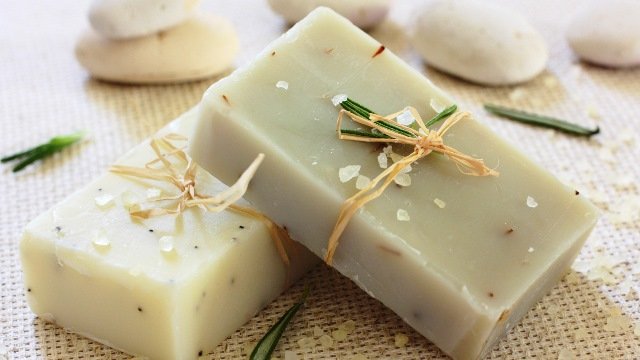
Today's article will be useful for those who want to give up washing their faces with soap and other store-bought chemicals. My post will begin with a little background…
All my life, I've washed my face with soap, just regular toilet soap. Yes, I know it dries out my skin and causes wrinkles, but I have oily skin with large pores, and it tolerates soap just fine. I tried several different brands of face washes, but seeing no difference, I always went back to soap.
«While scouring YouTube for a suitable video, I came across a clip showing what happens to your face after years of washing with soap—it was simply horrific! Afterward, I desperately wanted to change the situation, but I couldn't find any alternative, so I continued washing with soap. Perhaps this question would have remained unanswered, but then the cold weather arrived, my face started peeling, and the soap left an unpleasant feeling of tightness, as if the skin around the edges of my face were being pulled over my ears—though, I admit, this had never happened to me before!

The problem of replacing soap became very pressing. And then it occurred to me to wash my hair with rye flour. I'd already tried this method once, but it was unsuccessful—the flour didn't completely wash my hair, although many girls use this method, including, for example, my friend, who has absolutely gorgeous hair!
So, the principle of this wash is that the flour grains absorb sebum, leaving your hair clean. "Why not try it on your face? Flour is a natural and harmless product, it certainly can't hurt!" I thought, so I mixed some rye flour with water, massaged it into my skin, and immediately rinsed it off. My face was clean, and there was no oil left. I was a bit worried that the flour wouldn't cleanse my skin well enough and would cause breakouts. Fortunately, that didn't happen—and I haven't washed my face with soap for three months now.
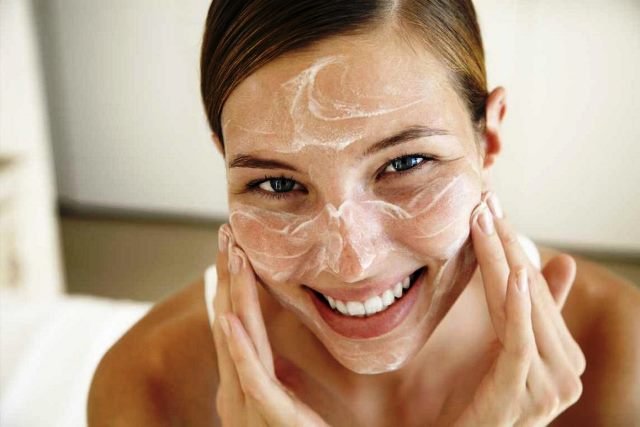
How has the skin changed?
As before, I wash my face twice a day. My pores have noticeably narrowed—no, they haven't become as tight as those of people with normal skin, but they're much smaller. The tightness that used to irritate me so much is gone.
How to make flour "wash"«
I pour 2 heaping teaspoons of rye flour into a mug, add a little water, and stir thoroughly until all the lumps are dissolved. I make it a thin consistency, as thick flour takes a long time to wash off. I spread the mixture on my face, patting it into areas with enlarged pores. I don't cover my forehead completely, leaving 1.5-2 cm from my hairline to prevent the flour from catching my hair when I rinse it off. Note that there's no need to leave the face wash on—just apply it and rinse it off immediately. If some flour gets on your temple and dries in your hair, wet your hand and run your wet fingers through your hair—any residue will disappear instantly!
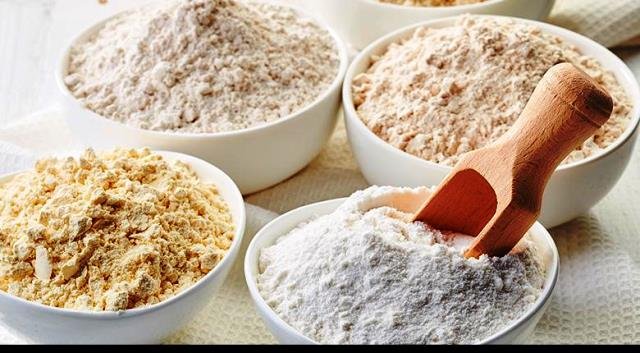
About washing with wheat flour
Washing your hair with wheat flour is absolutely forbidden—it turns into a sticky mass that's very difficult to wash out. One day, I ran out of rye flour and couldn't find it at the store, so I decided to buy whole-wheat flour, as I'd been wanting to try it in baking for a while.
What can I say? In principle, it's possible to wash your face with this flour; it cleans well, but it's difficult to use due to its glue-like consistency. The flour forms lumps that are difficult to wash off of both your face and hair, so I continue to wash my face with rye flour.
As an experiment, I decided to try regular wheat flour. After diluting it with water, it didn't become sticky (like whole wheat flour) and quickly dissolved into a smooth paste (which can't be said about rye flour).
The quality of cleansing is no less than that of whole grain and rye "wash", but this flour also forms lumps when washed off.
Conclusions
Washing my face with flour was a real discovery for me. This method combines everything I look for in a face wash—cheap, effective, and natural! Flour is environmentally friendly and not tested on animals.
The only downside is that this mixture can't be prepared for future use, it doesn't keep for long - only a couple of days, and even then in the refrigerator, and then it goes bad... and it's not convenient to take this remedy on the road.