

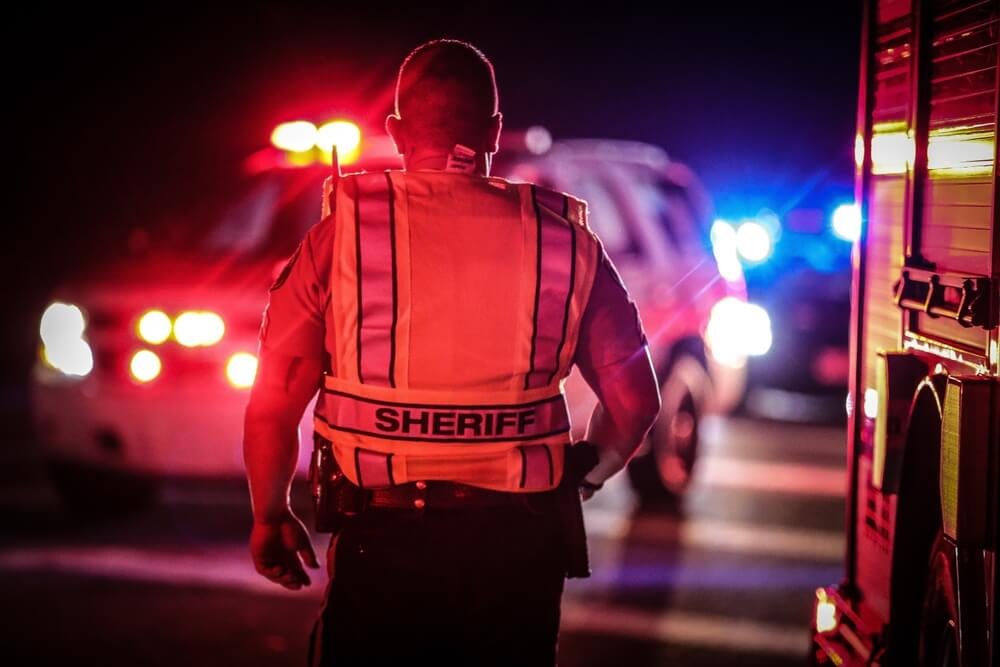
A sheriff differs from a police force primarily in that he or she is the elected head of law enforcement for the entire county, while municipal police are a service subordinate to the city government, whose chief is usually appointed. The sheriff's office also performs duties not performed by regular police: managing the county jail, guarding the courts, and serving court papers. This reflects the reality of the United States, as it is there that questions about the distinction between a sheriff and a police officer most often arise.
To sum it up
- Sheriff elected by the residents of the district, usually for a four-year term. Chief of the city police usually appointed by the mayor or city manager.
- The sheriff is responsible for district , especially for areas outside the city limits. Police operate within urban borders.
- The sheriff's duties typically include county jail security, courthouse security, and service of court documents . The police department specializes in patrol and emergency response.
- The sheriff's staff is his deputies , and the police consists of regular staff police officers .
Who is a sheriff and what are police?
Sheriff - This head of law enforcement at the level districts in the United States, an administrative unit that includes many cities and rural areas. He heads the office sheriff or Sheriff's Department . His subordinates are deputies sheriff , which ensure compliance with the law in accordance with its instructions.
In this context under police most often it refers to the municipal police department ( police department ), which is under the jurisdiction of a specific city and operates within its jurisdiction. It is headed by a chief police . In addition to municipal police and sheriff's departments, there are also state and federal law enforcement agencies, but the "sheriff vs. police" comparison usually refers to the county sheriff and municipal police.
The position itself has very ancient origins. The word «"sheriff"» comes from Old English scīrgerēfa , which means "county manager" ( shire + reeve In Anglo-Saxon England, sheriffs were the king's representatives in a given county, collecting taxes and maintaining order. The colonists brought this position to America.
Selection and control: elected sheriff, appointed chief of police.
This is the most important distinction in the political system. The sheriff is elected by the residents of the county. He is responsible for the elections, and voters have the right not to re-elect him. In most states, the term of office is four years . There are exceptions: in New Hampshire it's two years, in New Jersey it's three years, and in Massachusetts it's six years.
Sheriffs are elected in all but four states. Alaska has no counties or county sheriffs. Connecticut replaced sheriffs with state and court marshals in 2000. Hawaii and Rhode Island have appointed sheriffs.
The city police chief does not participate in elections. He is usually appointed by the mayor or the city council. control . It reports to the city administration, not directly to voters. The city police are funded from the city budget, and the sheriff's department is funded from the county budget.
Coverage area: county and city.
Municipal police operate within the boundaries of their city. The sheriff is responsible for the entire county, but in practice, he mainly patrols unincorporated territories , such as villages, unincorporated suburbs, and county roads. In rural areas, the sheriff's office may be the only local law enforcement agency.
The boundaries aren't always so clear. Small towns that don't want to maintain their own police force can hire a sheriff's office and contract with them to provide police services. There are also combined departments, where a single department serves both the city and the county.
Duties of the Sheriff and Duties of the Police
Sheriff's deputies perform all typical police duties: stopping vehicles for identification checks, conducting investigations, executing warrants, and responding to calls. However, the sheriff's office also has responsibilities related to county courts and jails:
- control district prison
- Ensuring the security of court buildings and other buildings of the district administration, judges and jurors.
- Service of court documents and the enforcement of certain court decisions, such as eviction orders.
- In some counties, such as some counties in California, the coroner's duties, which include determining the cause of death, are also included in his or her responsibilities.
The primary role of city police is to ensure day-to-day city safety: patrolling, responding to calls, regulating traffic, preventing crime, and conducting investigations. They are generally not responsible for ensuring security at county jails or courthouses.
Sheriff vs. Police - Differences Chart
| Characteristic | Sheriff (sheriff's office) | Municipal police |
|---|---|---|
| Step | County | City |
| How does the transfer of power to the boss occur? | General Elections (exceptions: a few states) | Appointment as mayor or city manager. |
| To whom is he responsible? | Before the voters of the district | Before the city authorities |
| Typical relief | Rural and non-urban areas | Territory within the city limits |
| Arrest | He usually runs the county jail. | Usually no |
| Courts | Defense in court, service of court documents. | Usually no |
| Officers | sheriff's deputies | Police officers |
| Financing | district budget | City budget |
How to recognize who is interfering?
If you watch an American movie or visit the US, just look at the emblems. Police cars and uniforms say «"Sheriff"» or «Sheriff's Office, followed by the name of the district, and the badge is often shaped like a star. The municipal police uniform reads «"Police", followed by the city name. The uniform colors and badges vary by department, so there is no uniform design for the entire country.
When you call 911, you don't need to know which emergency service is responsible for the situation. The dispatcher will automatically forward your request to the appropriate agency in your area. In cities, this is usually the police, and in rural areas, the sheriff's office.
There is no sheriff's office in Poland. The police are responsible for security, and municipalities may have municipal or city guards. The word "sheriff" is used colloquially in Polish, as well as in the United States and the United Kingdom.
Frequently Asked Questions (FAQ)
Does the sheriff have more power than the police?
There's no clear comparison. The sheriff has broader jurisdiction (the entire county) and additional responsibilities, such as managing the jail and courts. However, he or she is not the city's police chief. These are two independent forces working together.
Is the sheriff elected?
In the vast majority of states, yes, by popular election in the district, usually for four years. The exceptions are Alaska (there are no county sheriffs), Connecticut (the position was abolished in 2000), and Hawaii and Rhode Island, where the sheriff is appointed.
Who is a deputy sheriff?
A sheriff's officer who carries out police duties in the county under the direction of the sheriff. Typically, he or she has many deputies under him or her, and the sheriff serves as a leader and politician accountable to voters.
Can the sheriff operate in the city?
Yes. Its jurisdiction extends throughout the county, including cities. In cities with their own police departments, deputy sheriffs primarily handle jails, courts, and legal matters. Some cities contract with the sheriff's office to provide all police services.
Is there a sheriff in Poland?
No. The Polish system doesn't have such a system. Public safety is the responsibility of the police, assisted by municipal and city security guards on the ground.
See also
- What is the difference between learning to drive in a big city and in a small town?
- What is the difference between the executive and legislative branches?
- What is the difference between public administration and local government?
- What is the difference between a collision and an accident?