

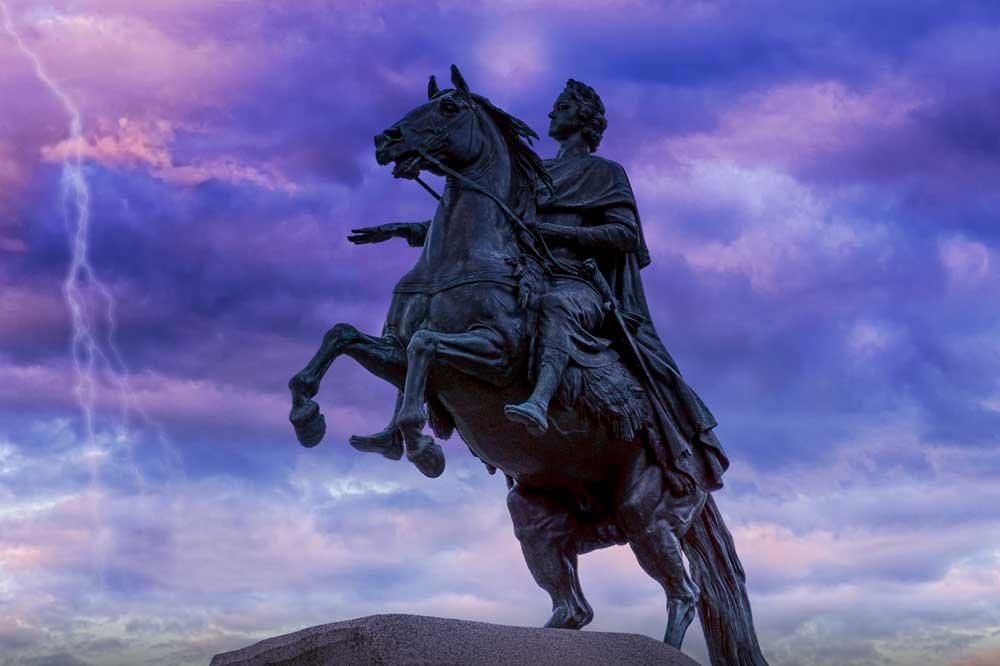
A tsar differs from a king primarily in the origin and scope of the title: «tsar» is the Slavic form of the Roman «caesar» (emperor), used by the rulers of Russia, Bulgaria, and Serbia, while «king» is the title of a monarch, which in Slavic languages comes from the name of Charlemagne. Theoretically, the title "tsar" denoted an imperial title, but in practice, Western diplomacy long regarded it as equivalent to king. The extent of power also typically varied—Russian tsars were autocratic, while the power of many kings was limited by law.
To sum it up
- Origin of the word: Tsar – from the Latin «Caesar»; king – from the name of Charlemagne.
- Where: Russia, Bulgaria and Serbia had tsars; most European monarchies, including Poland, had kings.
- Rank: The Tsar aspired to the rank of emperor, but in the West he was often considered equal to a king.
- Power: The Russian kingdom was an absolute monarchy; kings could rule absolutely or within certain limits, as in noble Poland.
Where did the title "tsar" come from and where did the title "king" come from?
Word «"tsar"» comes from Latin Caesar , a nickname of Julius Caesar, which became the title of the Roman and Byzantine emperors. It entered the Slavic languages in the form cěsarь , later shortened to "tsar." The German words also originate from this word. Kaiser and the Polish "cesarz".
Word "« king »" has completely different roots. Polish "król", Czech král , Russian king’ and Lithuanian karalius come from the name Charlemagne , the ruler of the Franks, whose name became the name of the monarch in the Slavic countries.
Who bore the title of Tsar?
The title of Tsar is mostly associated with Russia, but it was first adopted by the rulers of the Balkans.
- Bulgaria – The first ruler to bear this title was Simeon I (reigned 893–927), and Byzantium recognized it in the 10th century. The title was used in the medieval Bulgarian state, as well as from 1908, when Ferdinand I declared the country's independence, until the abolition of the monarchy in 1946.
- Serbia – Stefan Dusan was crowned Tsar (Emperor) of the Serbs and Greeks in 1346.
- Russia - In 1547, the Grand Duke of Moscow Ivan IV the Terrible was crowned tsar. In 1721 Peter I He took the title of Emperor, but the term "Tsar" remained in use until the fall of the monarchy in 1917, when Nicholas II abdicated.
Is a tsar the same as a king or an emperor?
This is the most common question, and the answer is ambiguous. The title of king initially It was intended to denote imperial dignity – the rulers of Bulgaria and Serbia adopted it to equate themselves with the Byzantine emperors, and Moscow incorporated it into the idea of the Byzantine heritage.
In practice Western European courts often considered the tsar equivalent to a king, not an emperor. This is why Peter the Great adopted the title of emperor in 1721—he wanted Russia to be perceived as an empire on par with the major European states. Simply put, the tsar formally aspired to the rank of emperor , and in diplomacy he was treated like a king.
The power of the king and the power of the king
The Russian Tsar was autocratic ruler — the full title of the Russian emperors included the term "supreme autocrat." Their power was hereditary and not limited by a constitution until the early 20th century. The tsars were also closely associated with the Orthodox Church, and from the time of Peter the Great onward, it was governed by the state Holy Synod.
Position king It depended on the country and the era. There were absolute kings, such as Louis XIV of France, and kings whose power was limited by laws and parliaments. In Poland, after 1573, the throne was elective The king was elected by the nobility, and each elector had to swear allegiance in accordance with the Henry VIII Articles and the Monarchical Pact. Today, in constitutional monarchies such as Great Britain, Spain, and Sweden, the king reigns but does not govern the country.
Tsar and King - Comparison Chart
| Characteristic | Tsar | King |
|---|---|---|
| Origin of the word | Latin Caesar (emperor) | On behalf of Charlemagne |
| States | Russia, Bulgaria, Serbia | Most European monarchies, including Poland, France and England. |
| Rank in theory | Mention of the Emperor | A monarch occupying a lower position than an emperor. |
| Title in diplomatic practice | Often considered equal to a king. | King |
| Sphere of authority | Russia is an autocracy | From absolute to limited or constitutional |
| Continuity | Hereditary | Hereditary or elective (e.g. Poland 1573–1795) |
| Relationship with religion | Orthodoxy | Various denominations – Catholicism, Protestantism, Orthodoxy. |
| Does it exist today? | No – the last monarchies with this title were abolished in the 20th century. | Yes, including in the UK, Spain and Sweden. |
The Tsar as King of Poland
Polish history clearly demonstrates the possibility of combining these titles. After the Congress of Vienna in 1815, Kingdom of Poland , united in a personal union with Russia. The ruler of Russia was also the king of Poland, and Nicholas I was crowned king of Poland in Warsaw in 1829. Thus, the same person was emperor (usually called tsar) in St. Petersburg and king in Warsaw.
How to distinguish a tsar from a king in a historical text?
- Check your country. The term "tsar" refers only to Russia, Bulgaria and Serbia; the rulers of other European countries are kings or emperors.
- Check the date in Russia. Until 1547, the ruler of Moscow was the Grand Duke, from 1547 to 1721 – the Tsar, and after 1721 – formally the Emperor, although in everyday speech he was still called the Tsar.
- Be careful with translations. In English texts the word "tsar"« sometimes translated as "emperor", while in older Bible translations the Slavic "tsar" simply means "king".
Frequently Asked Questions (FAQ)
Is the king more important than the king?
Theoretically, yes—the title derives from the word "Caesar" and denoted an imperial title. In diplomatic practice, the West often considered the tsar equal to the king, which is why Peter I assumed the title of emperor in 1721.
Who was the first Tsar of Russia?
Ivan IV the Terrible, crowned Tsar in 1547. Previously, the rulers of Moscow held the title of Grand Duke.
What is the difference between a king and an emperor?
Etymologically, these are the same title—both derive from the Latin word "Caesar." "Tsar" is the Slavic form used in Russia, Bulgaria, and Serbia. In Russia, since 1721, the official title has been "emperor," while "tsar" has remained the common name.
Who was the last king?
The last ruler of Russia was Nicholas II, who abdicated in 1917. The last monarch to bear the title of Tsar was Simeon II of Bulgaria, where the monarchy was abolished in 1946.
Where does the word "king" come from?
From the name of Charlemagne, ruler of the Franks. Similar forms are found in other Slavic languages, as well as in Lithuanian, and, for example, in Czech. král and Russian king’ .
See also
- What is the difference between a dictatorship and an absolute monarchy?
- What is the difference between the executive and legislative branches?
- What is the difference between Orthodoxy and Catholicism?
- What is the difference between a country and a state?