

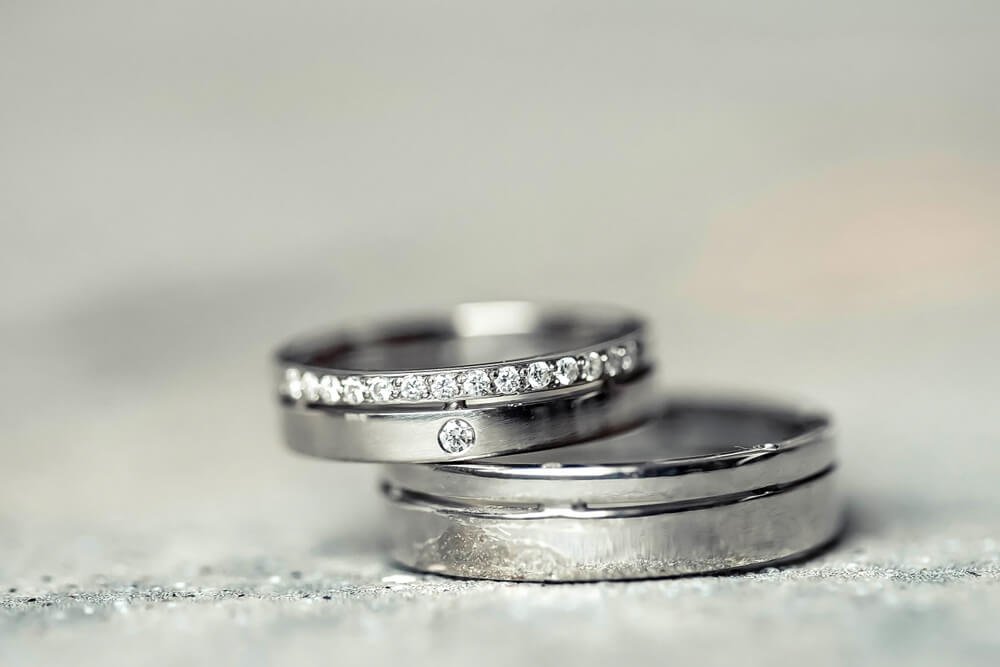
Diamond is the name of a stone (a mineral made of carbon), and brilliant is the name of a cut: a brilliant is a diamond cut into a round brilliant shape with 57 or 58 facets. So, every diamond is a diamond, but not every diamond is a brilliant. A rough diamond, an oval-cut diamond, or a princess-cut diamond are still diamonds, but not brilliants.
To sum it up
- Diamond – a mineral, a crystalline variety of carbon; the hardest natural mineral.
- Diamond – round brilliant diamond (57 facets, 58 including cutting).
- Other cut diamonds (princess, oval, emerald) are still considered diamonds and not brilliant cut diamonds.
- The quality of both products is assessed according to the rule 4C : weight, color, purity, cutting.
Diamond – what kind of stone is it?
Diamond — is a mineral composed almost entirely of carbon that crystallizes in the cubic system. It forms deep in the Earth's mantle under enormous pressure and high temperatures and is brought to the surface, including by kimberlite eruptions. the hardest natural mineral , its hardness on the Mohs scale is 10.
A rough diamond has an unremarkable appearance—often with a matte surface and a crystalline shape (such as an octahedron). It acquires its characteristic sparkle only after cutting. Due to their hardness, diamonds also find industrial applications: in cutting tools, drills, and abrasives. Most such stones are unsuitable for jewelry.
Diamonds come in a wide variety of colors, from colorless, through yellowish and brown, to rare blue, pink, and green varieties. Besides natural stones , Lab-grown (synthetic) diamonds are also available. . These diamonds have the same chemical composition and crystal structure as natural diamonds, but differ in origin and must be clearly labeled as such.
Diamond - what does it mean?
Diamond a cut is a cut round brilliant diamond . This cut has 57 facets (58 if you count the cutlet cut, a small facet at the bottom of the stone), arranged in a precisely defined order:
- crown - the upper part with a large flat edge called a plate.
- Belt – the widest circumference of the stone, separating the crown from the bottom.
- Pavilion - the lower conical part ending in a circle.
The proportions of this cut were mathematically described Marcel Tolkowsky In his book, "Diamond Design," published in 1919, he calculated how to arrange facets so that the stone would best reflect light while simultaneously refracting it into colorful flashes known as "play of light." Modern diamond cut proportions are derived from these calculations.
According to the naming conventions adopted in the jewelry industry (including CIBJO), the word «diamond» without further qualification refers exclusively to to the diamond Round brilliant cut. Other stones cut this way, such as cubic zirconia or moissanite, should be described by their full name—"brilliant-cut cubic zirconia"—rather than "brilliant.".
Comparison table of diamonds and brilliants.
| Characteristic | Diamond | Diamond |
|---|---|---|
| What's happened | Mineral (type of stone) | A diamond of a certain cut |
| Character | untreated or polished in any way | Always polished, round |
| Number of faces | Depends on the cutting method (or lack thereof). | 57 (58 with foal) |
| Application | Jewelry and industry | Jewelry |
| Connection | A broader concept | Every diamond is a gem. |
| Example | Princess cut diamond, oval, rough crystal | Round stone in an engagement ring |
Other types of diamond cuts are when the diamond does not have a brilliant cut.
The most popular cut is the round brilliant diamond, but diamonds are also cut into other shapes. The most common are:
- princess - square cut with sharp corners.
- oval и pear (teardrop shape) ,
- Marquise - elongated, pointed on both sides.
- emerald - rectangular in shape with stepped edges,
- Heart , pillow and other exquisite details.
Stones cut this way are still diamonds, but they are properly described by the cut name, such as "oval-cut diamond." If you see the word "brilliant," it should refer to a round brilliant-cut diamond.
How to Evaluate Diamonds and Cut Stones – The 4Cs
The value of a diamond, including a brilliant-cut diamond, depends on four characteristics described by English names beginning with the letter "C":
- Carat – weight in carats; 1 carat equals 0.2 g.
- Color – color; colorless stones and rare, rich fantasy colors are valued the most.
- Transparency – purity, that is, the presence or absence of inclusions and defects.
- Quality cuts : proportions, symmetry, polishing.
Should not be confused carat weight of a stone with carat weight In jewelry, "karat" refers to the percentage of pure gold in the alloy (24 karats is pure gold), not the weight. Therefore, a "14-karat gold ring with a 0.5-carat diamond" represents two completely different sizes.
Cut evaluation is especially important for diamonds, as proportions and symmetry determine how much light the stone will reflect. Two diamonds of the same weight, color, and clarity can look completely different if one is cut too shallow or too deep.
How to Buy a Diamond or Brilliant Cut – Practical Tips
- Request a certificate from an independent gemological laboratory - it will indicate the weight, color, clarity and cut.
- Check whether the stone is natural or artificial. Lab-grown diamonds have the same composition as natural diamonds, but the seller must clearly state this.
- Please pay attention to the description. «"Diamond" is a diamond; "brilliant cut" may represent cubic zirconia or another mineral.
- When choosing a wedding ring Remember that cut affects brilliance as much as weight.
Frequently Asked Questions (FAQ)
Is a diamond a diamond?
Yes. A diamond is a round brilliant cut. Every diamond is a brilliant, but not every diamond is a brilliant.
What is more expensive - a diamond or a brilliant cut diamond?
Direct comparisons are impossible because a diamond is a type of rough. The price of a particular stone is determined by its weight, color, clarity, and cut quality, as well as whether it is natural or lab-grown.
How many facets does a diamond have?
A round brilliant cut has 57 facets. If you count the setting—the small facet at the bottom of the stone—there are 58.
Can cubic zirconia be a diamond?
No. Cubic zirconia can have a brilliant cut, but the word "brilliant" is reserved for diamonds. The correct description is "brilliant-cut cubic zirconia.".
How much does 1 carat weigh?
A carat is a unit of weight of a gemstone equal to 0.2 grams. Therefore, a 1-carat diamond weighs 0.2 grams.
See also
- What is the difference between diamond and cubic zirconia?
- What is the difference between diamond and cubic zirconia?
- What is the difference between geotextile and agrotextile?
- What is the difference between a game and entertainment?
- What is the difference between a metal and a non-metal?