

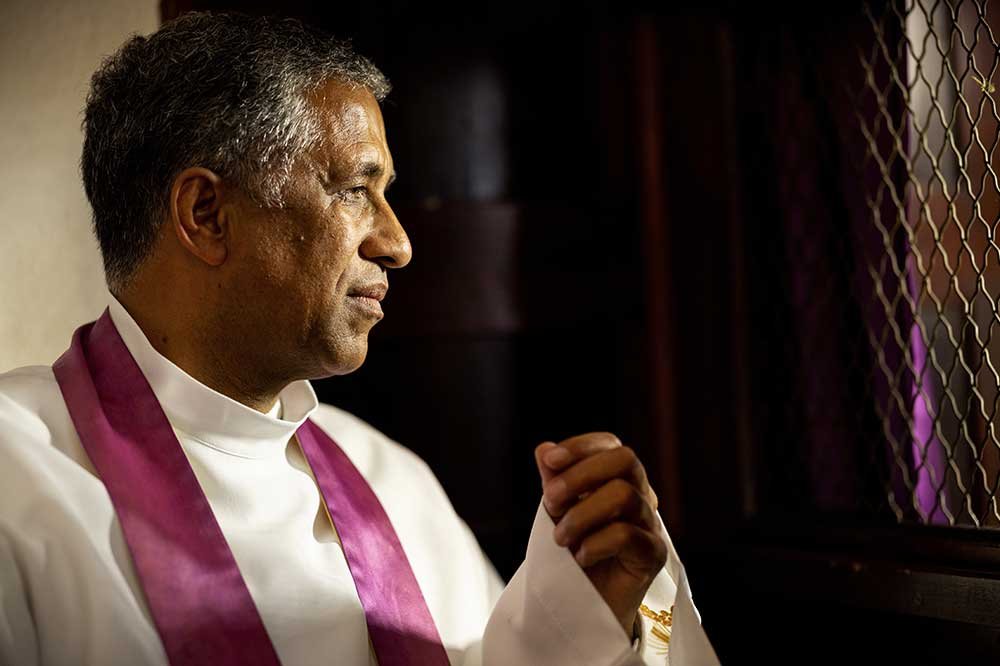
In the Polish tradition, a "priest" is most often a diocesan priest, subordinate to a bishop and working in a parish, and a "father" is a monk-priest, a member of a religious order who has taken vows of poverty, chastity, and obedience. Both are ordained priests, so they can celebrate Mass and administer the sacraments equally. They differ in their affiliation, lifestyle, and commitments.
To sum it up
- Diocesan priest is appointed (incardinated) into a diocese and is subordinate to his bishop; he does not take monastic vows.
- Father - is a religious priest, for example, a Dominican, Franciscan or Jesuit - he is subordinate to the superiors of the order and lives in accordance with its rules.
- A monk takes vows of poverty, chastity, and obedience; a diocesan priest undertakes to observe celibacy and obedience to the bishop, but may own private property.
- Not every monk is a priest; a monk without priestly rank is Brother .
Who is a diocesan priest?
A diocesan priest is a clergyman who, after seminary and ordination, was incardinated , that is, permanently assigned to a specific diocese. The Code of Canon Law requires that every clergyman be assigned to someone—a specific Church (diocese), an institute of consecrated life, or another authorized community—so that there are no clergymen "without a rector.".
Diocesan priests work primarily in parishes as parish priests and vicars, as well as catechists, chaplains, and curia staff. Canon law obliges them honor and obey The Pope and his Ordinary (Canon 273) and observe celibacy (Canon 277). However, they do not take a vow of poverty – they may own real estate, an apartment, or a car.
Who is a father - a religious priest?
In Poland the title "father" is commonly used to refer to priests of various denominations , such as the Dominicans, Franciscans, Carmelites, Benedictines, and Jesuits. Such a priest first enters the order and takes vows poverty, chastity and obedience before being ordained a priest.
The priest lives in monastic community According to the rules of their order, their superior is a guardian, prior, or provincial. A vow of poverty means they have no personal property—it belongs to the community. Monks may lead parishes entrusted to their order, conduct spiritual retreats, engage in pastoral ministry in an academic setting, or work in schools or missions.
However, this custom is not strict. In some religious orders, it is customary to address priests as "Father"—for example, among the Salesians. Therefore, it is best to use the title by which the priest himself introduces himself.
Monk and Priest – Is Every Monk a Priest?
No. A "nun" is any member of a religious order who has taken vows, and a "priest" or "father" is a person who has undergone ordination . An unordained monk is religious brother He lives by the same rules and takes the same vows, but does not celebrate Mass or hear confessions. We address him as "brother.".
Historically, most early monks were not priests—their lives were focused on prayer, work, and solitude. Over time, more and more monks were ordained in monasteries. Today, many orders have both fathers and brothers.
How to become a priest and a father?
Candidate for diocesan priests He enters the main seminary of his diocese. After several years of philosophical and theological study and preparation, he is ordained a deacon and then a priest by the bishop. From that moment on, he becomes a priest of his diocese, and the bishop assigns him to serve in specific parishes.
Path monk begins with entry into the order of his choice. The candidate undergoes novitiate and novitiate — a period of study of monastic life, followed by the taking of first vows and then perpetual vows. Those destined to become priests study theology—often in a seminary run by the order itself—and only then take monastic vows. Their place of service is determined by their religious superiors, not the diocesan bishop.
| Characteristic | Priest (diocesan) | Father (monk) |
|---|---|---|
| Membership | diocese | Order or religious assembly |
| Supervisor | Diocesan Bishop | Religious superior (guardian, prior, provincial) |
| Monastic vows | It doesn't add up | Poverty, chastity and obedience |
| Celibacy | Yes, this is the duty of a priest. | Yes, within the framework of the vow of chastity. |
| Private property | Perhaps he had | He has no means of his own (vow of poverty). |
| A place to live | Usually it is the priest's house. | Monastery, monastic community |
| Typical work | Parish, catechesis, curia | In accordance with the charism of the order: retreats, missions, schools, religious parishes. |
| Mass and Sacraments | Yes | Yes |
How to recognize and how to turn – to a priest or to a father?
- Cloth – a diocesan priest usually wears a black cassock or collar; monks often wear vestments in the colors of their order (for example, white for Dominicans, brown or black for Franciscans).
- Abbreviation next to the last name – monks add the abbreviation of their order, for example, OP (Dominicans), OFM or OFMConv (Franciscans), SJ (Jesuits), OCD (Discretionary Carmelites).
- Venue – in a monastery church you will most often meet fathers and brothers, in a diocesan parish – priests.
- Appeal To a diocesan priest – "Father," to a monastic – "Father," and to an unordained monastic – "Brother." If in doubt, just ask.
- Highest titles – a bishop is a «priest-bishop» regardless of whether he was previously a monk.
Frequently Asked Questions (FAQ)
What is the difference between a priest and a father?
A priest is typically a diocesan priest, reporting to a bishop and serving in a parish. A father is a monk belonging to a religious order, living according to its rules and taking vows of poverty, chastity, and obedience. Both are ordained and can administer the same sacraments.
Can a father celebrate Mass?
Yes. In Poland, the title "father" is usually given to priests, that is, those who have been ordained. They can celebrate Mass, hear confessions, and receive other sacraments, just like diocesan priests.
Who is a monk?
This is a monk who has taken monastic vows but has not yet been ordained a priest. He does not celebrate Mass or hear confessions. Depending on the order, he performs various duties both within and outside the community. We address him as "brother.".
Can a diocesan priest own his own property?
Yes. Diocesan priests do not take a vow of poverty, so they may own private property. However, they are obligated to celibacy and obedience to the bishop. By virtue of their vow of poverty, monks do not own property.
Can a diocesan priest become a monk?
Yes. Canon law stipulates that the acceptance of a diocesan priest into the novitiate requires the consent of the spiritual superiors and his bishop. The candidate undergoes religious education and takes vows, and from that moment on, lives according to the rules of the order.
See also
- What is the difference between a religious order and a monastery?
- What is the difference between Orthodoxy and Catholicism?
- How are evangelicals different from Catholics?
- What is the difference between cynics and sophists?